

By Omeiza Ajayi
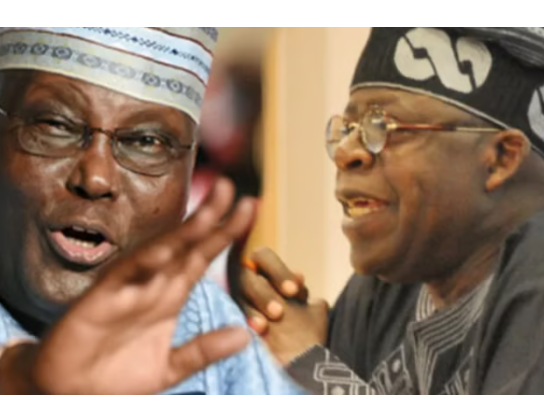
ABUJA: Former Vice President Atiku Abubakar has faulted President Bola Tinubu’s proposed Vienna-listed bond arrangement, describing it as another disturbing sign of an administration that keeps expanding its appetite for borrowing while diesel prices above ₦2,000 per litre and crippling energy costs cripple Nigerian factories.
In a statement issued by his Senior Special Assistant on Public Communication, Phrank Shaibu, Atiku said it is indefensible that, at a time when Nigerian factories are spending as much as half of their operating costs simply to keep the lights on, the government is again looking overseas for more financing without first explaining why vastly improved revenues have failed to reduce its dependence on debt.
“This is the central contradiction Nigerians are entitled to question. Government says revenues are up. It says subsidy removal has saved enormous sums. Oil prices are substantially above the benchmark used for the 2026 budget. Yet borrowing is accelerating, factories are suffocating under energy costs and ordinary Nigerians are still struggling to afford the basics,” the statement read.
Atiku insisted that “before the Tinubu administration goes to Vienna in search of more money, it must first tell Nigerians what has happened to the money already coming in.”
The crisis confronting Nigerian manufacturers, according to the statement, provides perhaps the clearest picture of what is wrong with the economy. According to him, diesel has risen to about ₦2,000 per litre and above in some industrial locations, while the Manufacturers Association of Nigeria MAN says energy-related expenses now consume more than half of manufacturers’ operating costs. He said manufacturers spent about ₦1.34 trillion on alternative energy in 2025, yet expenditure in the first half of 2026 alone had already approached the same level.
“Consider what that means for a factory in Lagos, Kano, Aba or Nnewi. Before the manufacturer pays workers, buys raw materials, transports finished products, services bank loans or makes a profit, a huge part of the operating budget has already disappeared into simply keeping the machines running,” Atiku said, adding that “no economy can industrialise under those conditions.”
He warned that a manufacturer spending half of his operating costs on energy will eventually have to raise prices, cut production, lay off workers or close the factory, stressing that whichever option is taken, ordinary Nigerians pay through higher prices, fewer jobs and reduced household income.
On the Vienna transaction itself, the statement noted that ESME Limited, a special-purpose vehicle involving Nigerian public institutions and Austrian interests, is preparing to issue bonds on the Vienna market to finance investments in Nigeria.
However, Atiku said Nigerians have not been given a sufficiently clear picture of the financial structure, the size of the proposed transaction, the cost of borrowing, the repayment terms or the extent of the Federal Government’s exposure.
“That is where the problem of transparency becomes impossible to ignore. Nigerians are constantly told that revenues have increased, Federation Account Allocation Committee FAAC allocations have risen, enormous savings have been made from subsidy removal and oil earnings have improved. At the same time, government borrowing continues to grow at an extraordinary rate,” the statement said.
He also queried the widening gap between the government’s revenue claims and its borrowing appetite, noting that the 2026 budget was prepared on an oil benchmark of $64.85 per barrel, yet crude prices have moved substantially above that level. “If oil earnings are exceeding projections, revenues are rising and the government has indeed saved the huge sums it claims from subsidy removal, why is the appetite for borrowing increasing rather than falling?” he asked.
He called on President Tinubu to publish the full architecture of the Vienna transaction and provide Nigerians with a comprehensive reconciliation of its increased revenues, claimed subsidy savings, additional oil receipts and rapidly expanding debt obligations.
“Nigerians should not require forensic accountants to collect fragments from different ministries, agencies and financial statements before understanding the condition of their own country’s finances. There should be a clear public trail from revenue to expenditure, from borrowing to projects, from guarantees to liabilities and from higher oil earnings to the public accounts.
“Bola Tinubu must open the books. Nigerians deserve to know what has been earned, what has been borrowed, what has been spent, what has been guaranteed and what obligations are being created in their name. The question is no longer complicated: if more money is coming in and even more money is being borrowed, where is the money, and where is the paper trail?”, he asked.
The post Atiku faults Tinubu’s Vienna bond plan amid rising energy costs appeared first on Vanguard News.