

By Emma Ujah, Abuja Bureau Chief
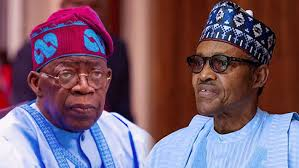
As the debate over frequent borrowings by the current administration rages, Think Business Africa, a policy and communications group, has described Late President Muhammadu Buhari, not Bola Tinubu as the largest borrower, since the current democratic era from 1999 to date.
The Tinubu administration has been criticised for its continuous borrowings, despite the removal of fuel subsidy and tax reforms that have significantly increased government revenue in the last three years.
The group explained in a report released, today, that the sharp rise in the Naira amount of the nation’s debt stock was due more to the Naira revaluation in 2023 which suddenly increased the foreign component of the debt, rather than the amount of new loans taken by the administration.
The group said in a report issued yesterday, “President Tinubu is not Nigeria’s largest borrower since the return to democratic rule in 1999. Claims that the current administration has borrowed more than all previous administrations combined are inconsistent with available dollar-denominated debt data.
“A careful review of the evidence suggests that Nigeria’s debt narrative requires greater nuance. President Bola Ahmed Tinubu cannot accurately be described as the largest borrower of Nigeria’s democratic era based on internationally comparable dollar-denominated metrics.
“The sharp increase in naira debt figures since 2023 reflects, in significant part, the exchange-rate revaluation of inherited foreign-currency obligations rather than equivalent new borrowing. At the same time, Nigeria’s debt challenge should not be minimised.
“The country’s debt-service burden places substantial pressure on public finances and limits the government’s capacity to invest in infrastructure and human development. The national conversation should therefore move beyond simplistic headline figures toward a more constructive discussion
Nigeria’s external debt stock stood at approximately $42.5 billion when President Tinubu assumed office in May 2023. By December 2025, it had risen to approximately $51.9 billion, representing a net increase of around $9.4 billion.
The group contrasted with Nigeria’s external debt which increased from approximately $10.3 billion in 2015 to $42.9 billion by 2023, representing a net addition of about $32.6 billion during the Buhari administration.
It argued, “The evidence therefore indicates that the largest increase in Nigeria’s external debt stock in the democratic era occurred between 2015 and 2023.
“The perception of unprecedented borrowing under the current administration stems largely from the revaluation of inherited foreign-currency obligations following the June 2023 exchange-rate adjustment.
“Much of the apparent increase in Nigeria’s debt stock in naira terms reflects the exchange-rate revaluation of inherited foreign-currency obligations, rather than equivalent new borrowing.
“In dollar terms, Nigeria’s domestic debt declined by about $6.5 billion under the current administration, and total public debt rose by only around $2.7 billion between Q1 2023 and Q4 2025.”
Think Business Africa said that following exchange-rate unification in June 2023, the naira depreciated significantly against the US dollar, “adding, “This had a substantial accounting effect on the domestic valuation of Nigeria’s external debt stock. The approximately $42.5 billion inherited by the current administration was valued at around ₦19.6 trillion under the previous exchange-rate regime.”
The report, however, failed to recognize that the borrowing under Later Buhari was for a period of eight years, while President Tinubu has only spent three years, so far.
The group admitted Nigeria faces a genuine fiscal challenge, saying, “Rising debt-service obligations accumulated over many years continue to constrain fiscal space for infrastructure, healthcare, education, security, and other critical expenditures.”
The post Buhari, not Tinubu, is highest borrower – Report appeared first on Vanguard News.

 Daily Post
 Arise TV
 InformationNG
 Channels TV
 Business Day
 This Day
 Punch Nigeria