

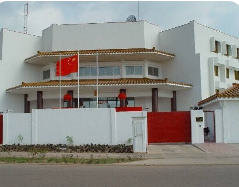
The Chinese Embassy has urged Nigerian media organisations to distinguish between reporting on Taiwan and descriptions that could suggest the island is a sovereign country separate from China, prompting discussions on diplomatic sensitivities and editorial independence.
Speaking at a meeting with media executives in Lagos, Mr Xu Fan, Director of Bilateral Relations and Commerce at the Chinese Consulate General in Lagos, said China’s position on Taiwan was rooted in historical records, international agreements and the diplomatic framework established after the Second World War.
He cited United Nations General Assembly Resolution 2758 of 1971 and Nigeria’s diplomatic recognition of the People’s Republic of China, maintaining that the One-China Principle remained the political foundation of diplomatic relations between Beijing and Abuja.
Xu noted that Nigeria reaffirmed its commitment to the principle during President Bola Tinubu’s state visit to China in September 2024.
He clarified that China did not object to Nigerian media reporting on Taiwan but was concerned about terminology that could be interpreted as recognising the island as a sovereign state.
The explanation prompted an exchange with Nigerian media executives, who stressed the importance of editorial independence and the freedom of journalists to report issues in the public interest.
The meeting also examined Nigeria-China relations, trade, investment and media cooperation, highlighting the importance of dialogue between Chinese diplomatic institutions and Nigerian media organisations.
The session was convened by Hon. Peter Ogbonna Eze, representative of Buffalo and Bay Media, and featured Ambassador Anderson Madubike, a former Nigerian High Commissioner to Australia, former Consul General in Shanghai, China, and former Chargé d’Affaires to South Africa.
Earlier, Eze described Nigeria-China relations as a partnership that had expanded beyond traditional diplomatic engagement to encompass infrastructure, trade, education, technology, agriculture, investment and people-to-people exchanges.
He urged media organisations to report the relationship accurately and in context, stressing that informed public discourse was essential to maximising the benefits of bilateral cooperation.
“The media does not merely report events. It shapes how societies understand countries, people, policies and opportunities,” Eze said.
Madubike, drawing on his diplomatic experience, described Nigeria-China relations as robust, citing extensive diplomatic, commercial and infrastructure ties between the two countries.
He said the media had a critical role in sustaining diplomatic relations by shaping public perceptions, providing reliable information and promoting mutual understanding.
“Diplomacy opens doors, but the media helps to keep those doors open,” he said.
According to him, treaties and government agreements alone could not sustain long-term relationships between nations without public understanding and engagement.
The diplomat stressed the importance of reporting the human dimension of Nigeria-China relations, including the experiences of Nigerian students, entrepreneurs and traders in China, as well as Chinese investors, engineers and business operators in Nigeria.
He noted that credible information about markets, regulations, infrastructure, incentives and investment opportunities could encourage business partnerships and strengthen economic ties.
The interaction also featured concerns about the trade imbalance between Nigeria and China, import dependence and complaints by Nigerian traders that some Chinese businesses were competing with them in the retail market.
Responding, Xu acknowledged the concerns but argued that the solution should involve establishing clearer regulatory boundaries between wholesale and retail operations rather than excluding Chinese businesses from Nigeria.
He said the Chinese Embassy had engaged Chinese traders, market authorities and other stakeholders to explore practical solutions.
Xu also advocated a shift from a relationship dominated by trade in finished products towards greater Chinese investment in local manufacturing.
He said Chinese companies could establish more factories and production facilities in Nigeria to create jobs, transfer skills and contribute to the country’s industrial development.
The Chinese diplomat disclosed that bilateral trade reached approximately $28 billion in 2025, describing the figure as evidence of the growing economic relationship between both countries.
He also said China had become Nigeria’s largest market for engineering contractors, its second-largest export market and China’s third-largest trading partner in Africa.
Xu further highlighted China’s decision to extend zero-tariff treatment to 53 African countries with which it maintains diplomatic relations, including Nigeria.
He said the policy presented opportunities for Nigerian agricultural products, including sesame, cashew nuts and cocoa, to gain greater access to the Chinese market, subject to applicable rules of origin, inspection and quarantine requirements.
He urged Nigerian businesses to improve product quality, strengthen branding and take advantage of opportunities in the Chinese market.
Illegal mining involving some Chinese nationals in Nigeria also featured prominently in the discussions.
Xu distinguished between law-abiding Chinese businesses and individuals involved in illegal activities, insisting that violations of Nigerian law were unacceptable to the Chinese government and diplomatic authorities.
He said the Chinese Embassy and relevant authorities were cooperating with Nigerian institutions by providing information and supporting efforts to identify Chinese nationals allegedly involved in illegal mining.
According to him, the Chinese government would not shield individuals found to have violated Nigerian laws.
Participants also called for deeper Chinese investment in manufacturing, technology transfer, industrial development and local value addition, arguing that bilateral cooperation should deliver greater benefits to Nigeria beyond infrastructure development and the importation of finished goods.
The discussion highlighted the need for a partnership that promotes local production, employment, skills development and technological advancement.
On media freedom, Nigerian executives reiterated that editorial independence remained a fundamental principle of journalism and that disagreements over sensitive diplomatic issues should be addressed through dialogue, clarification and the right of reply.
In his concluding remarks, Xu described Nigerian media organisations as “partners and friends, not enemies.”
He offered to strengthen cooperation with Nigerian media through professional exchanges, training programmes, seminars, media delegations and other institutional initiatives.
He said Chinese authorities would continue to facilitate opportunities for Nigerian journalists to visit China, experience its development and gain a deeper understanding of its society, culture, economy and political system.
Xu also invited participating media organisations to propose practical joint initiatives, including media programmes, publications and professional exchange projects.
The engagement highlighted both the opportunities and challenges in Nigeria-China relations, particularly the need to reconcile diplomatic sensitivities with editorial independence and responsible journalism.
Participants agreed that sustained dialogue, accurate reporting and stronger people-to-people engagement were essential to building mutual trust and ensuring that bilateral relations delivered greater benefits to both countries.
The post China urges Nigerian media to uphold one-China principle appeared first on Vanguard News.