

By Favour Ulebor, Abuja
ABUJA — China’s Ambassador to Nigeria, Yu Dunhai, has said the country’s zero-tariff policy for African countries is already yielding significant benefits for Nigeria, with bilateral trade and Nigerian exports recording substantial growth within months of its implementation.
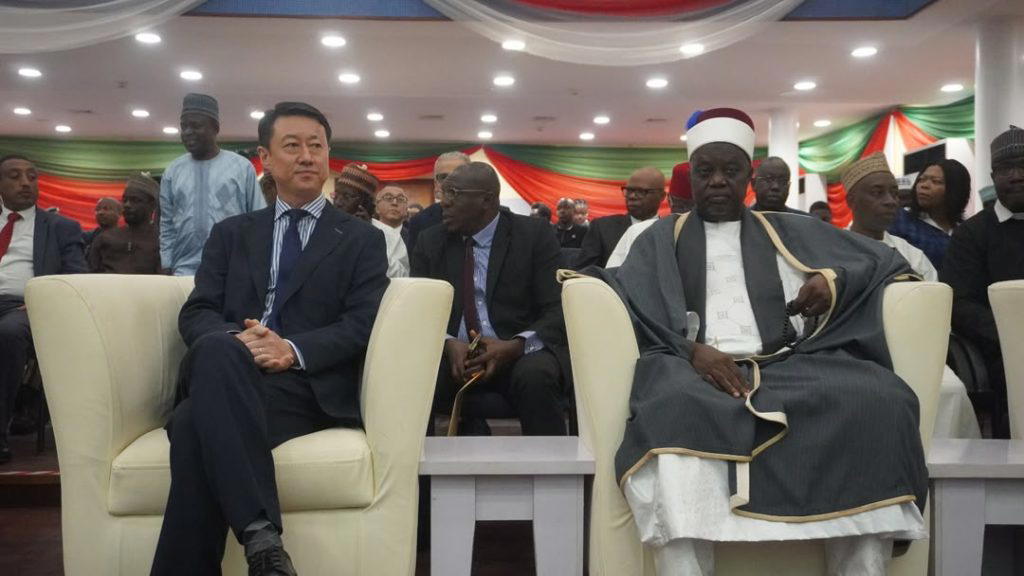
Yu spoke on Friday at a seminar on “China’s Zero-Tariff Measures and Africa’s Economic Structural Transformation” organised in Abuja.
He said the initiative was helping to expand trade, reduce export costs and support industrial development across Africa.
According to him, China began granting zero-tariff treatment to all 53 African countries with which it has diplomatic relations from May 1, 2026, following an announcement by Chinese President Xi Jinping in February.
Yu said China-Africa trade reached a record $207 billion in the first half of 2026, while Chinese imports from Africa increased by 24 per cent between May and June.
He said Nigeria was among the major beneficiaries of the policy, with bilateral trade reaching $18 billion in the first half of 2026, representing a 35 per cent increase compared with the corresponding period in 2025.
The ambassador added that Chinese imports from Nigeria rose by 80 per cent to $2.3 billion during the period.
He said the policy had significantly reduced export costs for Nigerian businesses, citing savings on exports of sesame, cattle bone granules and liquefied propane.
According to him, the initiative was also encouraging local processing, creating employment opportunities and stimulating growth in logistics, warehousing and transportation.
“China’s zero-tariff policy is a long-term strategic commitment rooted in mutual respect and shared benefits,” Yu said.
He assured that the Chinese Embassy in Nigeria would continue to support the implementation of the policy to enable more Nigerian products to access the Chinese market.
Speaking at the event, the Minister of Foreign Affairs, Bianca Odumegwu-Ojukwu, represented by the ministry’s Permanent Secretary, Dr Dunoma Umar Ahmed, said the policy presented an opportunity for Nigeria and other African countries to deepen industrialisation rather than remain exporters of raw materials.
She said the Federal Government was focused on attracting investments capable of establishing manufacturing capacity, creating jobs and developing industrial value chains.
“The President has consistently emphasised that Nigeria must move beyond an economic model that relies predominantly on the export of unprocessed commodities,” she said.
The minister stressed that Nigeria was seeking investments that would establish factories, facilitate technology transfer, develop local suppliers and strengthen industrial production.
She, however, noted that preferential access to the Chinese market would have limited impact if African countries continued to export mainly raw materials while importing finished products.
She said Nigeria’s large market, abundant natural resources and membership of the African Continental Free Trade Area positioned the country as a potential manufacturing hub for investors targeting the African market.
Earlier, Director of the Centre for China Studies, Abuja, Mr Charles Onunaiju, described the zero-tariff initiative as a major opportunity for Africa’s economic transformation.
He, however, warned that African countries must address domestic constraints to maximise the benefits of expanded access to the Chinese market.
Onunaiju said the continent needed to strengthen regional value chains through the African Continental Free Trade Area and improve production standards to take full advantage of the policy.
Also speaking, Chairman of the House of Representatives Committee on Nigeria-China Parliamentary Relations, Ja’afaru Yakubu, described the policy as a significant trade development capable of supporting export diversification, industrialisation and participation in global value chains.
He, however, identified infrastructure deficits, limited access to finance, inadequate technology and regulatory constraints as some of the challenges that could hinder Africa from fully exploiting the opportunities created by the policy.
Yakubu also appealed to the Chinese Embassy to address visa challenges confronting Nigerian traders and businesspeople, particularly those from Kano, saying easier access to visas would further strengthen trade relations between the two countries.
The seminar was organised by the Centre for China Studies in collaboration with the Chinese Embassy in Nigeria and brought together government officials, diplomats, manufacturers, exporters, farmers and trade experts to explore ways of leveraging China’s zero-tariff policy to drive economic transformation across Africa.
The post China zero-tariff policy boosts Nigeria’s exports, industrial growth — Ambassador appeared first on Vanguard News.