

By Clifford Ndujihe, Politics Editor
WITH military coups making a dramatic comeback across parts of Africa, a new study has warned that Nigeria cannot afford to assume that another military takeover is impossible, arguing that the political, economic and institutional conditions that triggered coups elsewhere on the continent are still present in Nigeria.
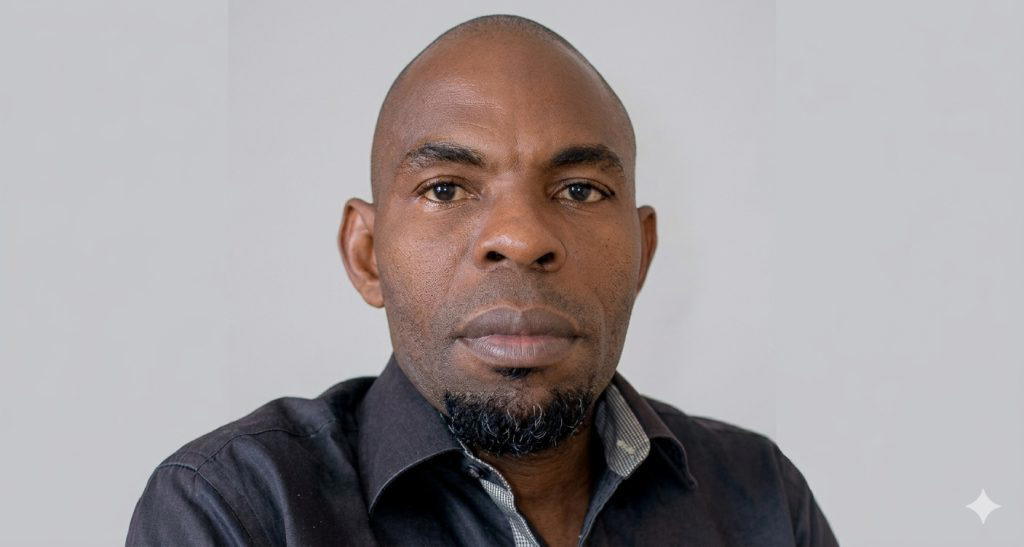
The study, titled: “Closing the Barracks Gate? Notes on Preventing Military Coups in Nigeria,” by Dr Abdul-Wasi Moshood an associate professor of Political Science at the Lagos State University, LASU, examines the resurgence of military intervention in African politics and its implications for Nigeria.
Its central argument is that keeping soldiers permanently in the barracks requires more than condemning coups after they occur. It requires making democracy deliver, strengthening institutions, reducing elite impunity and foreign interference, addressing the legacies of colonialism and professionally reorganising the military.
Are Nigerians better off under military rule?
Former Cross River State governor and presidential candidate of Peoples Redemption Party, Mr Donald Duke, weekend declared that Nigerians were better off under military rule, arguing that 27 years of civilian government had imposed enormous costs without delivering corresponding improvements in the lives of the people.
“The people were better off under the military. At least governance was not that expensive,” Duke said in an interview at the weekend, adding that the assessment should be measured against the welfare of citizens and the “democracy dividends” delivered since Nigeria returned to civilian rule in 1999.
“I’m speaking broadly now. If we focus on the well-being of the people, what we term democracy dividends, how much has been delivered?
“We’re still having the same problems we had 27 years ago. It’s getting worse. The number of children out of school has not improved; it’s deteriorating. The healthcare system is not improving; it’s deteriorating. Infrastructure deficiency over the last 27 years—are we better off? The question is: are we better off today than we were in 1999? Hardly so. Hardly so,” he added.
Three major drivers of military intervention in Africa
Moshood, in the study identified three major contemporary drivers of military intervention in Africa: the democratic dilemma, foreign influence and colonial legacies.
He also argued that existing theories of military intervention, though useful in explaining past coups, do not fully explain the resurgence of military takeovers in contemporary Africa.
Against this background, he examined recent coups in Mali, Niger, Guinea and Chad, and considered their relevance to Nigeria.
Why Nigeria matters
Nigeria’s strategic importance and long history of military rule make it a critical case in the debate.
The country spent about 29 years under military rule before the return to democratic government in 1999. Since then, it has enjoyed uninterrupted civilian rule, but the study warns against taking the development for granted.
The study recalled that following the disputed and divisive political atmosphere surrounding the 2023 presidential election, some youths marched to the Defence Headquarters in Abuja and called for military intervention.
The military takeover in neighbouring Niger Republic, it added, heightened concerns about a possible “contagion effect” in Nigeria.
The study therefore asked two key questions: What are the drivers of contemporary coups in Africa? And how can these drivers be addressed to prevent military resurgence in Nigeria and Africa?
Its objective is not simply to establish whether another coup is possible but to examine the conditions that could make military intervention attractive and how those conditions can be eliminated.
Methodology: History, theories, expert views
The study adopted a largely qualitative, historical and conceptual approach.
It traced military intervention from ancient Rome through colonial Africa and post-independence military regimes, reviews theories on coups, examines recent African cases and draws on interviews or personal communications with security and political experts.
Rather than statistical modelling, the research relied mainly on historical evidence, comparative analysis and theoretical interrogation.
It engaged scholars including Finer, Janowitz, Huntington, Adekanye, Claude Ake, Fanon and Welch, among others, while incorporating perspectives from military and political actors, and linked Nigeria’s military past with contemporary developments across Africa.
Nigeria’s long military shadow
Nigeria’s military intervention in politics dates to the January 15, 1966 coup led by Major Chukwuma Kaduna Nzeogwu and other officers.
Major-General Johnson Aguiyi-Ironsi subsequently became Head of State but was killed in the July 1966 counter-coup.
General Yakubu Gowon succeeded him and ruled until July 1975, when he was overthrown by officers led by Brigadier-General Murtala Mohammed.
Murtala Mohammed was assassinated in the February 1976 coup attempt led by Lieutenant-Colonel Buka Suka Dimka. General Olusegun Obasanjo subsequently handed power to the civilian administration of President Shehu Shagari in 1979.
The Second Republic ended in December 1983 when the military returned under Major-General Muhammadu Buhari. He was overthrown by General Ibrahim Babangida in 1985.
Babangida eventually handed over to an Interim National Government in 1993 following the annulment of the June 12 presidential election.
General Sani Abacha subsequently seized power and ruled until his death in 1998. General Abdulsalami Abubakar then assumed power and supervised the transition to the Fourth Republic in 1999.
The history underscores one point: military rule is not alien to Nigeria, and some of the conditions that facilitated past interventions have not completely disappeared.
Democracy and coup dilemma
One of Moshood’s major arguments is that the resurgence of coups is partly linked to what he calls the democratic dilemma.
The argument is not that democracy itself causes military intervention. Rather, democracy becomes vulnerable when elected governments fail to deliver security, welfare, justice, economic opportunity and credible institutions.
The study argues that while democracy has survived crises in developed countries by adapting, many African democracies have struggled to produce comparable dividends.
It draws on Schlesinger’s argument that democracy must continually adapt if it is to survive.
According to the study, the problem in Africa is not democracy itself but the manner in which it is practised.
Where corruption, poverty, inequality, insecurity and political exclusion become entrenched, citizens can become disillusioned with civilian government.
That disillusionment creates an opening for military actors to present themselves as saviours.
The study rejects that option, noting that military regimes have historically promised to restore order, fight corruption and return countries to democracy, only to prolong their stay in power.
‘Democracy must work’
The argument is particularly relevant to Nigeria, where dissatisfaction over insecurity, unemployment, poverty, corruption and political exclusion can fuel anti-democratic sentiments.
The study warned that democracy cannot be protected simply by constitutional provisions or sanctions against coup plotters.
Foreign powers and coups
The second major explanation advanced by the study is foreign influence.
It argues that Africa’s natural resources and strategic importance have historically attracted external powers whose interests have influenced domestic politics.
The pattern, according to the study, runs from slavery and mercantilism through colonialism to modern-day neo-colonialism.
The 1884 Berlin Conference, it argues, created artificial boundaries and spheres of influence that continue to affect African political stability.
African soldiers were used in colonial wars and later became participants in proxy conflicts during the Cold War.
The study contends that the strategic interests of powers such as France, Russia, China and the United States continue to influence political developments in Africa.
Navy Captain Ola said:
“Ideologically driven non-state actors are most often the agents of hostile foreign influences that could be used to destabilise the sovereignty of African and developing states.”
He added that multinational corporations could also influence political structures and processes in vulnerable democracies through local actors.
The study consequently argues that foreign interests should not be ignored when analysing the resurgence of military intervention.
Colonialism’s enduring legacy
The third pillar is the colonial legacy perspective.
The author argues that colonialism fundamentally altered the relationship between African societies and their armed forces.
Before colonialism, military structures in many African societies were embedded in wider social and political systems. Colonial rule created formal standing armies designed primarily to protect colonial interests.
The result, according to the study, was a professional military institution increasingly separated from civilian society.
It cites Fanon, Welch and other scholars in arguing that colonial recruitment practices, military organisation and artificial boundaries left enduring political consequences.
In Nigeria, regional and political divisions created or reinforced by colonial rule contributed to tensions that later manifested in the coups and counter-coups of the 1960s and eventually the civil war.
The study argues that these historical wounds remain relevant to contemporary politics.
‘Coup contagion’ and Nigeria
The study’s most important warning is that Nigeria cannot isolate itself from the coup resurgence sweeping parts of West and Central Africa.
Recent coups in Mali, Guinea, Chad and Niger demonstrate, according to Moshood, that military intervention remains possible where democratic institutions are weak and public dissatisfaction is high.
The military takeover in Niger is particularly significant because Nigeria shares a long border with the country.
The study therefore warns against complacency. It argues that some of the conditions that produced coups elsewhere – poverty, insecurity, institutional weakness, corruption, political exclusion and public frustration – are also present in Nigeria.
The 2023 political crisis and calls by some Nigerians for military intervention are cited as evidence that anti-democratic sentiments should not be dismissed.
How to keep soldiers in the barracks
Moshood’s prescriptions include comprehensive military reorganisation, greater professionalism and reduced military involvement in politics.
He recommends keeping military officers away from partisan politics and exposing them more to professional responsibilities.
He also suggests using the military during peacetime in areas such as agriculture, healthcare and social services without compromising its core security functions.
But his broader recommendation is political: the ruling elite must improve governance and ensure that democracy produces tangible benefits.
Fix democracy, close the barracks gate
The central thesis of the study is straightforward: preventing coups requires removing the conditions that make military intervention attractive.
Those conditions include poor governance, corruption, insecurity, poverty, weak institutions, political exclusion, foreign interference and an alienated military establishment.
The study’s strongest contribution is its attempt to connect these factors with Nigeria’s military history and the recent return of coups to Africa.
Its weaker point is that some claims, particularly those concerning foreign involvement in specific coups, require stronger documentary evidence. Its largely conceptual methodology also limits the extent to which its conclusions can be generalised.
Nevertheless, its central warning is significant: democracy cannot be defended merely as a constitutional ideal; it must deliver security, justice, development and dignity.
The military, for its part, must remain professional and insulated from partisan politics, while regional institutions such as ECOWAS and the African Union must be more consistent in defending constitutional government.
Ultimately, the study argues, the surest way to keep soldiers in the barracks is not merely to lock the gates. It is to make democracy work.
The study’s final warning is clear: if democracy continues to fail citizens, the temptation to seek an alternative will persist.
Therefore, closing the barracks gate permanently requires more than locking the military out of politics.
It requires good governance, credible institutions, economic inclusion, professional armed forces and a democracy capable of delivering for the people.
As Moshood puts it, Nigeria and other African countries must “make democracy work” if they are to permanently restrict the military to the barracks.
The post Coup Threat: Why Nigeria can’t afford complacency – Expert appeared first on Vanguard News.