

Global trade has a reputation problem. Over the years, moving crude, minerals, and industrial goods across borders meant that there will be extract, ship, and profit. Sustainability was just an afterthought.
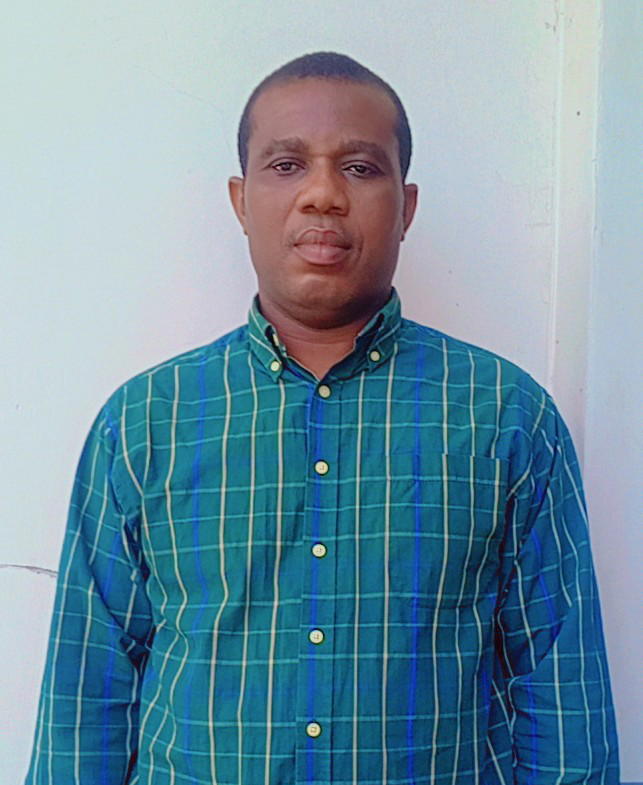
Damian Chibuikem Abraham thinks that model is expired.
He believes that “Trade doesn’t have to be extractive to be profitable.” the CEO of GAC-DIO International Services Limited says from his Lagos Mainland office, that “If we build responsibility into the supply chain from the start, we unlock markets, not just cargo.”
Abraham didn’t begin in sustainability. He started in satellite rooms. As a young engineer at NIGCOMSAT in 2012, he was monitoring telemetry and writing reports on ground station data. He even flagged energy efficiency gaps in satellite operations, a small clue that efficiency would become his signature.
That mind set followed him into operations at ECOD Company Nigeria Limited and later into boardrooms at AC-DIOG Intercontinental Limited. But it was his 2025 Certificate in Green and Circular Economy, and Sustainable Development from Shanghai Business School, which was issued by China’s Ministry of Commerce, that formalized the shift. “China isn’t waiting to see if green trade works,” he says. “China is building the standards now, Nigeria should be at that table, not outside the room.”
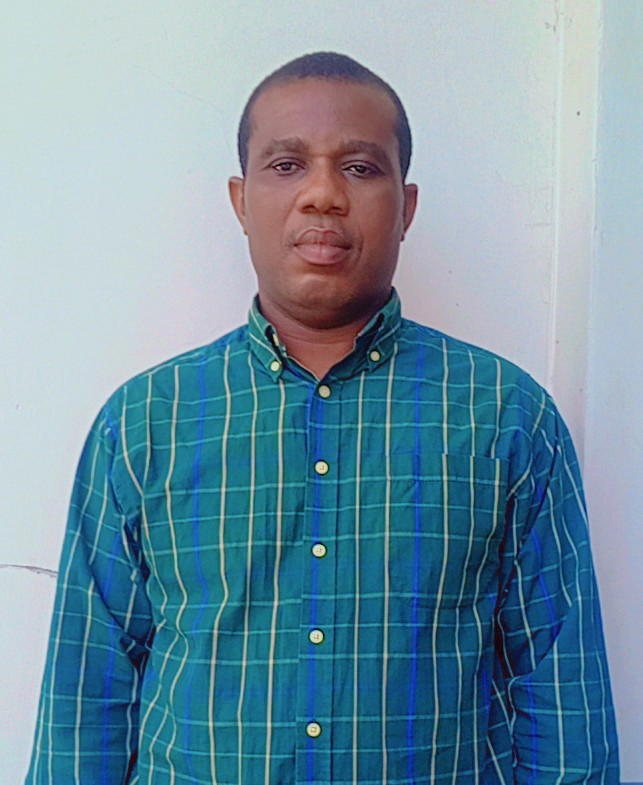
Since November 2022, Abraham has used his role as CEO of GAC-DIO to push ESG from slide decks into real trade flows. The company deals in industrial products, crude oil, solid minerals, and refined petroleum sectors, not exactly known for going green.
His approach is very practical, implement ESG focused initiatives that supports sustainable business practices and responsible resource utilization, while still hitting growth targets. That means rethinking partners, contracts, and logistics. “Global buyers are asking for traceability and carbon data now” he explains. “If you can’t provide it, your cargo doesn’t move. ESG is becoming a trade passport.”
However, some of Abraham’s best green insights came from ceramic tiles. As President of the Association of Ceramic Tile Distributors since 2021, and a multi-year Best Distributor award winner with West Africa Ceramics and Time Ceramic, he learned how circular thinking applies to everyday goods. “In ceramics, waste in the value chain kills margin,” he says. “We started tracking breakage, returns, packaging reuse. Same logic applies to minerals or refined products. If you reduce loss, you reduce environmental impact and you make money.” That distributor’s discipline now shapes how GAC-DIO looks at resource efficiency across commodities.
Abraham is still an engineer at heart. He’s a registered member of the Computer Professionals Registration Council of Nigeria and is currently rounding off an M.Sc. in Electrical and Electronics Engineering. He talks about OSI networks and embedded systems with the same ease as he discusses market trends. “Supply chains are systems,” he says. “If one node is wasteful or non-compliant, the whole chain is at risk. Green practices are really about system integrity.”
For him, unlocking global trade means making Nigerian exporters compliant, competitive, and credible in a market that’s shifting fast. Carbon border taxes, ESG reporting, green financing they’re no longer Western ideas. They’re trade terms.
Nigeria’s future trade advantage, Abraham argues, won’t just be what we export. It’ll be how responsibly we export it. “We have the crude, the minerals, the talent,” he says. “But the countries that win the next decade will be the ones that prove their goods didn’t cost the planet. That’s the unlock.” And if his track record from satellite precision to ceramics distribution to energy commodities proves anything, it’s that he knows how to take a system apart and build it back cleaner.
The post Damian Chibuikem Abraham redefines global trade through green practices appeared first on Vanguard News.

 This Day
 Punch Nigeria
 Daily Post