

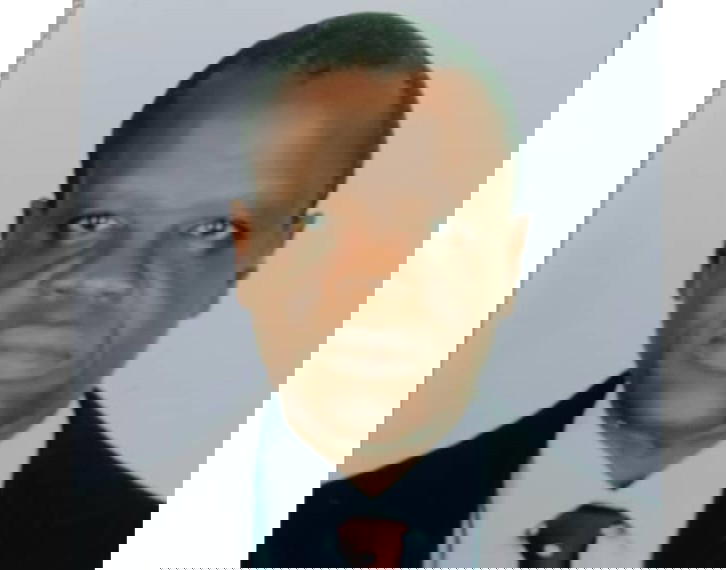
Chief Daniel Osi Orbih, popularly known as Kulukulu 1, who died on Monday, August 31, at the age of 64, was undoubtedly one of the most steadfast political actors of Nigeria’s Fourth Republic.
His family announced his death without disclosing the cause. He is survived by his wife, Florence, his daughters, Winifred Anwosiobor and Mildred Omonemi, siblings and members of the extended Orbih family.
Though Orbih became so closely identified with the Peoples Democratic Party, PDP, that admirers sometimes spoke of the party as being in his DNA, his Fourth Republic political journey did not begin there.
In the transition to civil rule, Orbih was in the All Peoples Party, APP, and emerged as running mate to Lucky Imasuen, the party’s candidate in the 1999 Edo governorship election.
That background is significant because it shows that Orbih had established a political identity before becoming associated with Chief Tony Anenih, the legendary PDP strategist under whose influence he would subsequently flourish.
Politics was, in any case, part of the Orbih family tradition. A biographical account from his Ogbona community records that his father, Chief M.C.K. Orbih, had been elected to the House of Representatives in 1959 and remained active in public affairs.
After moving into the PDP, Orbih rose steadily until 2008 when he assumed leadership of the Edo chapter. For roughly 12 years, he became the face and voice of a party that had lost control of the state to Adams Oshiomhole.
That period arguably produced the political identity for which Orbih will be best remembered.
Opposition politics in Nigeria can be unforgiving. Once a governor takes control of the machinery of state, opposition parties often become shadows of themselves. Orbih refused to allow that fate to befall the PDP.
He transformed opposition into almost a full-time vocation.
Though he and Oshiomhole came from the same Etsako axis and had once enjoyed a close personal relationship, their political encounters became legendary. He told this correspondent that the two had previously been close enough for their families to exchange holiday visits. Yet, in politics, Orbih became one of Oshiomhole’s most persistent tormentors.
His weapon was often documentation.
One memorable confrontation involved conflicting public references to Oshiomhole’s year of birth. Orbih produced an affidavit and other records while questioning why official and public accounts appeared to give different years. The governor’s camp responded that the discrepancy arose from an error in a birthday brochure.
More devastating politically was the 2013 encounter between Oshiomhole and widow Joy Ifijeh.
After the governor was recorded telling the pleading street trader to “go and die,” the recording became a national embarrassment. Orbih got to hear of the incident and paid his way to obtain the video of the incident from those who accompanied the governor during that infamous encounter. Orbih and the Edo PDP then aggressively publicised the incident forcing Oshiomhole to apologise and even invite the widow for tea.
Yet Orbih was more than a political attack dog. He understood timing.
When the relationship between Oshiomhole and his successor, Governor Godwin Obaseki, began to deteriorate, Orbih gradually recognised that Obaseki could come over to the PDP. He as such pulled back his criticisms of Governor Obaseki.
Eventually, after Obaseki was disqualified from the APC governorship primary in 2020 and defected to the PDP, political necessity brought former adversaries together.
Orbih became chairman of the PDP campaign council and publicly campaigned for Obaseki’s re-election against APC candidate Osagie Ize-Iyamu.
It was a remarkable demonstration of political pragmatism.
His years as Edo PDP chairman also showed that an opposition party could remain electorally competitive against an incumbent state government. In both the 2015 and 2019 presidential elections, the PDP defeated the APC in Edo.
Orbih later cited those two presidential victories as part of the legacy of his leadership.
His imprint, however, stretched beyond Edo.
Perhaps one of the most consequential episodes involving Orbih occurred in Rivers State and ultimately helped alter the balance of power within the PDP.
Orbih chaired the panel that conducted the disputed Rivers PDP congress from which rival factions produced competing claims to the state leadership.
The battle eventually reached an Abuja High Court. In April 2013, the court removed the Godspower Ake-led executive aligned with then Governor Rotimi Amaechi and recognised the Felix Obuah-led faction associated with Nyesom Wike.
Crucially, the court upheld Orbih’s deposition that the result being paraded by the Ake faction was not the result of the congress he conducted. Contemporary accounts reported that Orbih and the panel secretary backed the list presented by Obuah and Walter Opuene as authentic.
The consequences were enormous.
Control of the Rivers PDP machinery shifted away from Amaechi and strengthened Wike, then Minister of State for Education. The political struggle subsequently grew into a national confrontation involving Amaechi, Wike and powerful forces within the PDP.
Wike would eventually become Rivers governor in 2015 and later Minister of the Federal Capital Territory. Orbih remained one of his closest political associates.
That explains the emotion in Wike’s tribute following his death. The minister described Orbih as “a friend indeed” and his passing as the fall of “one of the biggest trees in the political forest of Edo State.”
For this correspondent, however, the loss is also personal.
About a month before his death, noticing his absence from functions where he would ordinarily have been seen, I called him. His voice was barely audible. Perhaps because of the familiarity built over about two decades, he still took the call.
I immediately sensed that he was gravely ill. What I did not imagine was that it would be our last conversation.
Dan Orbih belonged to a generation of politicians for whom political association was built not merely around election seasons but through relationships, loyalty, endurance and long battles.
He fought many.
He won some and lost some.
But he rarely disappeared from the battlefield.
At 64, Kulukulu 1 has left the stage much earlier than many who knew him would have imagined. Edo has lost one of its most durable political combatants; the South-South has lost a formidable party organiser; and many of us have lost a friend whose telephone number we will instinctively remember long after we can no longer call it.
May God grant Florence, Winifred, Mildred and the entire Orbih family the fortitude to bear an irreparable loss.
The post Dan Orbih: The warrior who never left the battlefield, by Emmanuel Aziken appeared first on Vanguard News.