

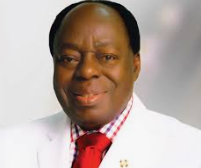
By Dapo Ipoola
Ekiti State is one of the Southwestern states in Nigeria that was carved out from the old Ondo State. Long time before the creation of Ekiti by the late former military Head of State, Gen. Sanni Abacha, there were stentorious agitation by notable Ekiti elders who were hell-bent on having a of their own. After raising countless memos for the actualization of Ekiti, the state was created alongside six others which includes Ebonyi, Bayelsa, Gombe, Nasarawa, and Zamfara States, on October 1, 1996. Upon creation of Ekiti, it was a triumph of a long time dream and aspiration; a victory over oppression and suppression.
On this day, the State erupted into dances and the celebration of a dream came true. Ekiti is one of the smallest but most educated states in Nigeria with the highest number of Professors in Nigeria. It comprises over 131 notable towns and communities, with about 85% Christians, 10% Muslims, and 5% traditional worshippers. In Nigeria, Ekiti is the most homogeneous state in tribe and languages. The State borders the North Central by Kwara with 61km, and Southeast through Ondo State, Northeast through Kogi State, and the West through Osun State with about 84km.
The tortuous journey for the creation of Ekiti was midwived with the concerted efforts of notable elders like Chief Deji Fasuan, a seasoned Economist and a retired federal Permanent Secretary, who chaired the committee that championed that birthed Ekiti. Alongside Chief Deji Fasuan were Chief J.E. Babatola, Prof. C.O. Filani, Chief Deji Falegan, and the present Governor of Ekiti State, Biodun Abayomi Oyebanji, a 26years young man who took the minute of every meeting that led to the creation of Ekiti. Providence must have smiled on him while he was busy following the elders in every of their nocturnal meetings and strategies.
In playing the lead role was Aare Afe Babalola, SAN, CON, who played unassailable leadership, advocacy, and advisory roles. Aare Afe Babalola deployed his influence, legal prowess, and strategic diplomacy for the actualization of Ekiti. He was the central player and a motivating actor behind the coordination of committees that lobbied the then federal military government of Gen. Sanni Abacha, for the birth of Ekiti. The Founder of Afe Babalola University, ABUAD, devoted his wits, time, and resources to champion the creation of Ekiti, and effulgently presented the papers for the creation of Ekiti before the Arthur Mbanefo Panel. Though, the State might be small in size but it’s known as the Intellectual Capital of Nigeria, with many firsts in different human endeavors. Academically, Ekiti has produced many firsts and academic giants in persons of Prof. Adegoke Olubunmo, one of the very first Nigerian Professors of Mathematics, Prof. J.F. Ade-Ajayi, the pioneer of modern African Histography and the first African to receive a PhD in History, from the University of London, and he later became the Vice Chancellor of the prestigious University of Lagos; Prof. Adeyinka Adeyemi was the first Professor of Architecture in the entire West African sub-region.
Lady Deborah Opeyemi Jibowu was a trailblazing Nigerian educationist, administrator, and the first Nigerian female Science Graduate, and her husband, Sir Olumuyiwa Jibowu, was the pioneer Nigerian Jurist, and the first African Judge of the Supreme Court of Nigeria, and Prof. Ojo Rasaki, a renowned first African Professor of Dance and Choreography and Performing Aesthetics, are all from Ekiti.
Colonel Adekunle Fajuyi was the first military Governor of the Western Region of Nigeria. Till today, he is still being celebrated nationally as a hero for his ultimate loyalty and sacrifice for choosing to be executed alongside his visiting Commander-in-Chief, Major Gen. Johnson Aguiyi-Ironsi, during the 1966 counter coup. Oba Adejuwon, the late Olujudo of Ido-Ekiti, was the first person to acquire the first car in Ekiti, on April 5, 1922. This was at a time when automobiles were non-existent outside the major colonial coastal capitals. Upon delivering the car, it was driven into the region by a European man.
Ekiti is not only synonymous for education but also an agrarian State known for peasant farming with products like cocoa, yam, cassava, rice, a few mineral deposits like kaolinite, granite, columbite, tournaline, baryte, charconite, gemstone, phosphate, aquamarine, and gold coal in sizeable quantity. The State is also known for many wonders of nature with Ikogosi Warm and Cold Springs, where warm and cold water meets, Arinta Waterfalls, Olosunta and Oriole Hills, Erin-ayonugba River, and Fajuyi Memorial Park.
As one of the landmark court cases handled by this enigma of law was that historic legal battle that involved the late Alaafin over the installation of Moshood Kasimawo Olawale Abiola, MKO. Chief Afe Babalola (SAN) represented the Alaafin of Oyo, Oba Lamidi Adeyemi III, in a landmark legal case in January 1988, to defend the installation of Chief M.K.O. Abiola as the Aare Ona Kakanfo of Yorubaland.
The Ashipa of Oyo, Chief Amuda Olorunosebi, opposed the selection of M.K.O. Abiola as the Aare Ona Kakanfo, and sought to block the ceremony. Just days before the scheduled installation on January 14, 1988, a court action and an ex-parte motion (an emergency application made by one party without waiting for the other side) were filed to stall the installation. Upon receiving an urgent phone call from the palace in Oyo, on a Tuesday, days before the Saturday’s installation, Chief Afe Babalola rushed to the court.
Aare Afe Babalola successfully countered the application by citing international legal authorities from England, Canada, and Australia, enabling Justice Aderemi to dismiss the suit, allowing the installation of M.K.O. Abiola to proceed as planned on January 14, 1988.
Leading the first pack is Aare Afe Babalola again. This great legal giant has been recognized as a man of many firsts, including being the first African whose beneficiaries established an annual Hall of Fame to celebrate him during his lifetime. His University, Afe Babalola University, ABUAD, has also broken numberless regional records in academics, infrastructure, medical facilities, and planetary demistification and adventures. Today in Africa, Afe Babalola University, ABUAD, is the best private institution of learning. ABUAD as an ivy league leads where others follow. In Ekiti, Aare Afe Babalola is the largest employer of labor and private sector tax payers. As a father and founder, he has provided mentorship, leadership, and scholarship for thousands of individuals who wouldn’t have amounted to anything meaningful in life. In Ekiti, posterity can never be complete without mentioning the many shaping roles played by Aare Baamofin of Yoruba land.
The post Ekiti @ 30: The roles Afe Babalola played appeared first on Vanguard News.