

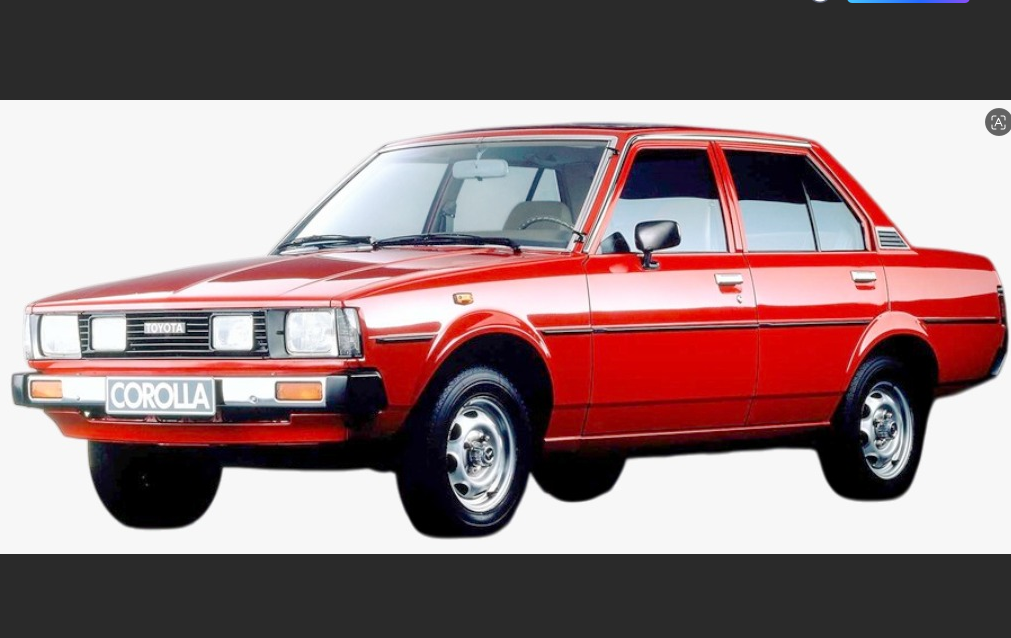
By Theodore Opara
The Toyota Corolla is a car with a pedigree like no other. Since its debut in Japan in October 1966, the nameplate has grown into the best-selling car in automotive history, with more than 57 million units produced globally across 12 generations.
Read Also: Who failed travellers on Benin-Asaba road?
Some of its closest rivals are the Ford F-Series at about 43 million units, Volkswagen Golf at 37 million, Volkswagen Passat at 34 million and Honda Civic at 28 million. None comes close to the Corolla’s remarkable tally.
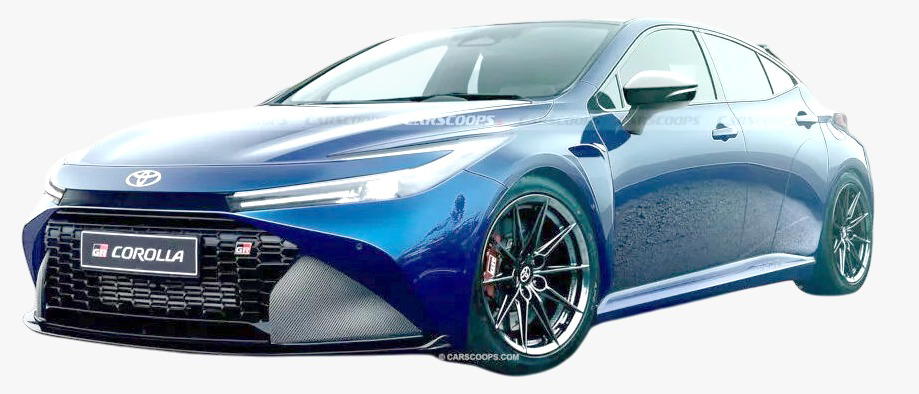
Toyota could hardly have imagined at launch that the Corolla would achieve such longevity. Yet the model quickly established itself as a benchmark, built around affordability, practicality and what became legendary reliability. Its enduring success also reflects Toyota’s ability to reinvent the Corolla for every new era without abandoning the qualities that made it popular.
The first-generation Corolla arrived with a modest 1.1-litre four-cylinder engine producing about 60 horsepower, targeting Japan’s growing middle class with an affordable, economical and dependable vehicle. It was subsequently introduced to North America, where it gradually won buyers over, particularly as fuel economy became increasingly important.
The second generation improved the formula with larger engines, modernised styling and expanded body styles. The 1973 oil crisis then gave the Corolla a major boost as consumers increasingly sought fuel-efficient cars. By 1974, it had become the world’s best-selling car for the year, confirming Toyota’s growing global dominance.
The fourth and fifth generations brought greater refinement, improved aerodynamics and, eventually, front-wheel drive, marking a major shift in the Corolla’s evolution. The sixth generation added another milestone when Toyota began producing the model in Cambridge, Ontario, in 1988. Through the seventh and eighth generations, comfort, safety, technology and efficiency continued to improve.
Entering the new millennium, the ninth and tenth generations faced stronger competition from the Honda Civic, Mazda3 and emerging Korean brands. Although critics increasingly described the Corolla as boring, buyers remained loyal because of its low ownership costs, durability and strong resale value.
The eleventh generation brought sharper styling, better interiors, improved suspension and greater sophistication, while the 12th generation, launched in 2019, represented a genuine renaissance. Built on Toyota’s TNGA platform, the latest Corolla combines striking design, improved handling, quality and hybrid efficiency with the traditional strengths of reliability and value.
The Corolla’s story is ultimately one of continuous evolution. From a modest 1966 family car to a global automotive icon, it has helped shape Toyota’s rise into the world’s largest automaker. With more than 57 million units produced and counting, the Corolla’s place in automotive history appears secure.
The post Evolution of world’s best-selling car, Corolla appeared first on Vanguard News.