

By Joseph Erunke, Abuja
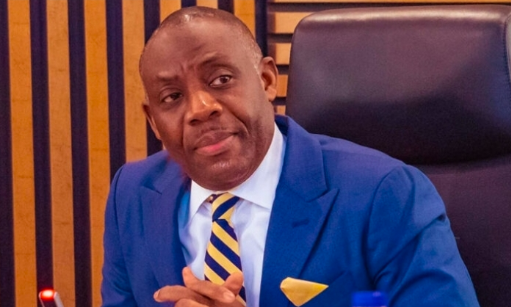
Minister of Education, Dr. Tunji Alausa, has declared that the federal government will no longer spend scarce public resources on what it considers unproductive foreign scholarship programmes.
This came as he revealed that Nigeria once spent N650 million on just 150 students sent to Morocco under the Bilateral Education Agreement, BEA.
Alausa, who made the disclosure in Abuja while fielding questions at the unveiling of the Tertiary Institutions National Laureate Prize, said the decision to discontinue the federal government-funded aspect of the BEA scholarship scheme was driven by the need to redirect resources to Nigeria’s tertiary institutions, where the required academic capacity now exists.
He said the government could no longer justify sending Nigerian students abroad to study courses that are readily available in Nigerian universities and other tertiary institutions.
According to him, the BEA programme was established about two decades ago when Nigeria lacked sufficient capacity in certain specialised fields, but the situation has changed significantly.
“We have built enormous capacities in our tertiary institutions, universities and colleges. Now we are asking where we are sending students.
“We are sending students to Algeria, which is a French-speaking country, to study English. We are sending students to Morocco, a French-speaking country, to study journalism and psychology,” he said.
The minister disclosed that shortly after assuming office, he received a proposal for the approval of about 150 Nigerian students to study in Morocco at a cost of N650 million for one year.
He said the proposal immediately raised concerns because the students would first have to spend a year learning French before commencing their academic programmes, despite the fact that the courses were available locally.
Alausa said: “I felt this was not morally right. Number one, we have all those courses in Nigeria. Number two, they were going to spend the first year learning French before they started the programme. And number three, if we put N650 million to support students in Nigeria, it will support thousands of them.
“So, the bilateral agreement was not making sense to us as a government. It was a way to waste government funds. And this President will not waste any funds, any public funds,” he added.
The minister, however, clarified that the government was not opposed to foreign scholarships generally, stressing that countries willing to continue offering scholarships to Nigerian students remained free to do so.
He said the government’s position was that it would no longer commit public funds to programmes that did not provide value commensurate with the resources expended.
Alausa also used the occasion to assure Nigerians that the newly introduced Tertiary Institutions National Laureate Prize had been designed with long-term sustainability in mind, rather than as another government initiative that would collapse after a few years.
He said the prize, alongside other education-sector reforms, had been structured around sustainable funding mechanisms, including dedicated funding from the Tertiary Education Trust Fund, TETFund, and other financially sustainable platforms.
According to him, the government’s broader education reforms are part of President Bola Ahmed Tinubu’s agenda to ensure that public expenditure produces measurable outcomes.
He said the National Laureate Prize would cover six thematic areas, with participation open to universities, polytechnics, monotechnics and colleges of education, irrespective of whether they are federally, state or privately owned.
He explained that the prize would operate through institutional, zonal and national selection stages, with emphasis on merit while also ensuring representation across Nigeria’s six geopolitical zones.
Students would not be allowed to submit entries directly. Instead, each participating institution would establish a selection committee to identify its best projects before they proceed to zonal and national levels.
He also said supervisors and external examiners would be required to digitally affirm projects submitted for consideration, in a bid to strengthen transparency and prevent the submission of unverified or plagiarised work.
The minister said the initiative was designed to change Nigeria’s culture of recognition by ensuring that researchers, innovators, scholars and other intellectuals receive the same level of national attention often accorded to entertainers and sports personalities.
Alausa declared: “The innovators in our country matter. The scholars in our country matter. The researchers in our country matter. The people in our laboratories and intellectual institutions deserve national celebration.”
He said the National Laureate Prize represented a deliberate attempt by the government to “open a new frontier” where intellectual excellence, research and innovation would be celebrated and rewarded nationally.
He said the six thematic areas would initially attract two categories of prizes, including an overall “best of the best” award and awards for outstanding entries within each thematic area.
The post FG won’t waste funds on ‘worthless’ foreign scholarships, Alausa declares appeared first on Vanguard News.