

By Gabriel Ewpeu
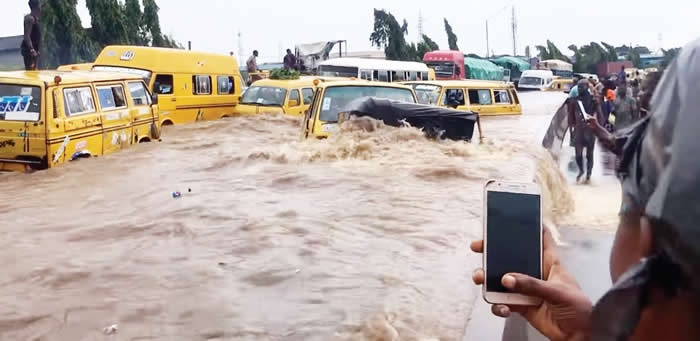
ABUJA — The Nigeria Hydrological Services Agency (NiHSA) has forecast a high risk of riverine flooding in Kaduna, Niger and 32 other states between August 19 and 25, 2026.
The agency urged communities located on floodplains to relocate to safer, higher ground and advised state and local authorities to activate early-warning and emergency response measures.
The Director-General and Chief Executive Officer of NiHSA, Arc Umar Mohammed, disclosed this in the agency’s latest flood advisory.
According to Mohammed, rising river levels could trigger flooding in several locations during the seven-day period.
“The validity of the flood is from August 19-25, 2026. High riverine flood risk forecast for the next seven days across Kaduna, Niger and 31 other states,” he said.
“Rising river stages are expected to cause flooding. Communities on the floodplain should prepare to move to higher ground.”
States listed in the forecast include Taraba, Ondo, Oyo, Rivers, Abia, Adamawa, Akwa Ibom, Anambra, Bayelsa, Benue, Borno, Cross River, Delta, Ebonyi, Edo, Enugu, Gombe, Imo, Jigawa, Kogi, Kwara, Nasarawa, Lagos, Ogun, Osun and Plateau, alongside Kaduna and Niger.
NiHSA identified a number of communities and public facilities considered exposed to flood risk.
In Kaduna State, the agency listed 2,006 communities, 453 schools, 69 health facilities, 12 markets and 213 religious buildings.
For Niger State, it identified 898 communities, 524 schools, 268 health facilities, 12 markets, 318 religious buildings and 23 hectares of farmland.
In Delta State, 1,046 communities, 1,850 schools, 505 health facilities, 192 markets, 492 religious buildings and 16 hectares of farmland were listed as exposed.
Cross River State was identified as having 2,508 communities, 756 schools, 406 health facilities, 147 markets, 492 religious buildings and 1,862 hectares of farmland exposed to the risk.
In Imo State, the agency listed 743 communities, 909 schools, 456 health facilities, 110 markets, 197 religious buildings and 244 hectares of farmland.
Mohammed advised state and local governments to move people, livestock and valuables from floodplains to pre-identified higher ground.
He also urged authorities to mobilise early-warning volunteers, clear blocked drainage channels and water outlets, and pre-position relief materials, water-treatment supplies and first-aid equipment.
The agency advised residents against crossing flooded roads, bridges or fast-moving water, whether on foot or in vehicles.
It also urged communities to avoid construction or settlement on floodplains and monitor NiHSA’s bulletins for updates on river levels.
NiHSA Assesses Abuja Flood Risks
Meanwhile, NiHSA officials have conducted an assessment of flash-flood-prone areas in Abuja as part of efforts to identify factors contributing to flooding in the Federal Capital Territory.
The assessment team, led by the agency’s Director-General, examined flood-affected locations, drainage systems, waterways, bridges and other infrastructure.
The exercise focused on the extent of flooding, its impact on communities and infrastructure, and factors contributing to the rapid accumulation and movement of floodwater.
At Efab Estate, Lokogoma, residents raised concerns about recurring flooding, inadequate drainage infrastructure and developments in flood-prone areas.
The Vice Chairman of the estate, Victor Esenyi, said residents had previously approached relevant authorities over the flooding concerns.
Another resident, Engr. Niyi Ajayi, said intense rainfall generated large volumes of runoff that placed pressure on existing drainage infrastructure, resulting in flooded roads and risks to properties.
The assessment team also inspected a major water channel linked to the Lugbe axis, as well as bridges and other structures that could affect the movement of stormwater.
Following the assessment, Mohammed advised the estate management to formally submit its concerns to NiHSA for further consideration.
The team later visited the Gudu area, where the Delight Event Centre was affected by flooding, while the bridge linking Gaduwa and Durumi was also inundated.
A customer at the event centre, Julius Okoro, said the flooding occurred shortly after heavy rainfall, adding that about 74 vehicles were submerged. He said no lives were lost.
NiHSA said the recent flooding in parts of the FCT highlighted the need for improved drainage infrastructure and better protection of natural waterways.
The agency noted that, while heavy rainfall could trigger flash floods, factors such as rapid urbanisation, inadequate drainage capacity, obstruction of waterways, development on floodplains and poor waste management could worsen the impact.
Areas recently affected by flooding include Wuse 2, Katampe, Mabushi, Lugbe, Gwarinpa, Nyanya, Asokoro, Maitama, Utako, Wuye, Gudu and the Gaduwa-Durumi axis.
Mohammed recommended the channelisation of critical waterways, construction of bridges, improved drainage infrastructure and stronger protection of natural water channels.
He also stressed the need to enforce planning regulations and prevent developments that obstruct natural drainage routes and floodplains.
The NiHSA chief called for stronger collaboration among FCT authorities, urban planners, emergency management agencies, communities and other stakeholders to improve flood preparedness.
The agency urged residents to take flood warnings seriously, keep drainage channels free of refuse, avoid settling along waterways and floodplains, and refrain from walking or driving through floodwater.
NiHSA said it would continue to strengthen hydrological monitoring, early-warning systems and technical assessments to support flood-risk management across the country.
The post High riverine flood to hit Kaduna, Niger, 31 other states in 7 days – NiHSA appeared first on Vanguard News.