

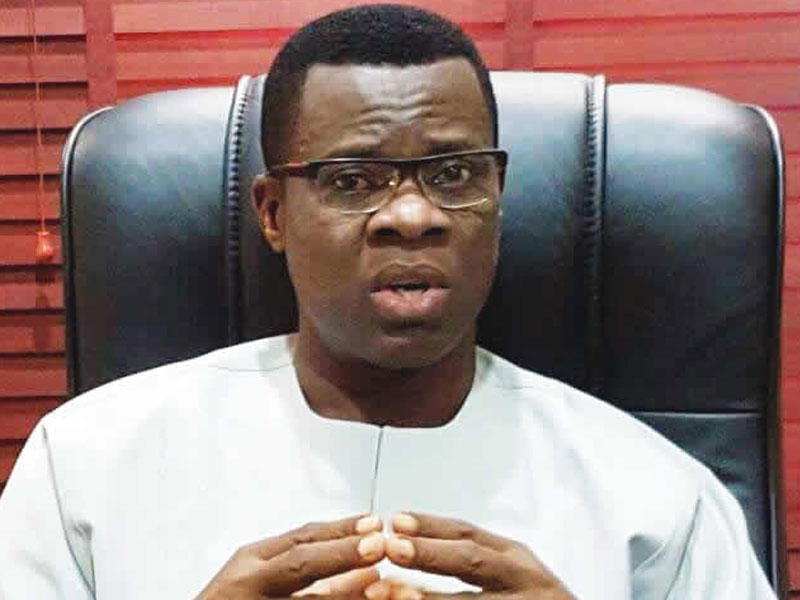
By Jide Ajani
Mr Mike Igini served at different times as Resident Electoral Commissioner (REC) in Edo and Akwa
Ibom States.
Before then, Igini, a lawyer, was involved in the June 12 episode, the fallout of
the June 12, 1993 presidential election won by the late Chief MKO Abiola but unfortunately annulled by the military.
The annulment threw Nigeria into unprecedented crisis. In the final analysis, the Buhari administration set aside June 12 as Nigeria’s Democracy Day as against May 29, the day the military handed over power to civilians in 1999. As Nigeria celebrated the 33rd anniversary of June 12 on Friday, Igini, in this interview, reflects on democracy in Nigeria. Excerpts:
As Nigeria marked Democracy Day on June 12, what significant achievements has the country recorded under democratic governance?
The achievement most frequently cited is the uninterrupted continuity of civilian rule since 1999, making Nigeria’s longest period of constitutional governance since independence. There have also been regular elections and periodic transfers of power between political parties.
Yet continuity of civilian rule should not be conflated with democratic success. Democracy is not merely the absence of military government; it requires accountable leadership, credible elections, robust institutions and meaningful popular participation. As political scientist Larry Diamond observed, elections alone do not constitute democracy.
The most enduring legacy of the June 12, 1993 struggle ought to have been the entrenchment of free, fair and credible elections. Instead, Nigeria’s electoral process has become increasingly contentious. Disputed outcomes, judicial determination of electoral mandates and the steady erosion of internal party democracy have diminished public confidence in the system. Perhaps the most troubling manifestation of this decline is the emergence of candidates who neither participated in nor won party primaries. Such practices subvert the will of party members and reduce democracy to ritual rather than representation.
After more than two decades of democratic rule, Nigeria continues to grapple with endemic poverty, insecurity, institutional fragility and deficient public services. Democracy has endured as a constitutional arrangement, but its substantive benefits remain largely unrealised.
In your view, have Nigerians fared better under democracy than they did during military rule?
In formal terms, Nigerians enjoy constitutional rights that were largely absent under military rule. Citizens can criticise government, organise politically and participate in public affairs. However, the distinction is less clear in practice.
Allegations of arbitrary detention of journalists, bloggers, activists and government critics persist. In some cases involving bailable offences, prolonged detention has raised concerns about due process and the selective application of justice. The true test of democracy is not the existence of constitutional guarantees, but the willingness of institutions to uphold them. When courts appear inconsistent and the rule of law is unevenly applied, civil liberties become fragile.
Economically, many Nigerians remain unconvinced that democracy has improved their condition. Rising inflation, unemployment, insecurity and declining purchasing power continue to define everyday reality. Democracy remains preferable to military rule, yet for many citizens its promised dividends remain largely unrealised.
To what extent are Nigerians currently enjoying the dividends of democracy?
For many Nigerians, the dividends of democracy remain limited. Political rights exist formally, but their practical value is weakened by economic hardship and insecurity. Democracy depends on effective checks and balances. Where the legislature is weak in oversight and the judiciary is perceived as inconsistent in safeguarding constitutional principles, democratic governance is significantly weakened. As Montesquieu argued, liberty depends on the separation of powers; once these safeguards erode, the concentration of power becomes difficult to prevent.
In practice, political office holders and their networks appear to benefit disproportionately from the system, while ordinary citizens face rising living costs, poor public services, inadequate healthcare, failing education systems and persistent insecurity. For many, democracy has become associated more with elite privilege than public welfare.
What areas of democratic governance have improved, and where is the country still falling short?
Nigeria’s most notable democratic gain is the consolidation of constitutional rule and the entrenchment of elections as the legitimate basis of political authority. Citizens are more politically aware, and electoral competition, however imperfect, remains the central route to power. Beyond this procedural foundation, however, institutional performance remains weak.
Electoral credibility has been undermined by recurring disputes, litigated outcomes and declining public trust. Internal party democracy has also deteriorated, with candidate selection increasingly shaped by elite negotiation rather than open competition. More broadly, accountability mechanisms remain fragile. Corruption persists with limited consequences, oversight institutions are often inconsistent and the separation of powers is weakened in practice. As Fareed Zakaria observed, “democracy without constitutional liberalism is not simply inadequate, but dangerous.” His warning underscores a central truth: elections alone cannot sustain democracy without strong institutions, the rule of law and effective restraints on executive power. Nigeria’s challenge is therefore not the continuation of elections, but the consolidation of institutions capable of ensuring credible political competition, enforcing accountability and preserving democratic integrity.
How would you assess the impact of over 27 years of uninterrupted democratic rule on ordinary Nigerians?
For ordinary Nigerians, the democratic experience has delivered limited tangible improvement. While political freedoms are more visible than under military rule, these gains have not translated into meaningful economic security or social progress. Daily life remains marked by economic pressure, unemployment, inflation and inadequate public services, alongside persistent insecurity.
These realities have significantly reduced the practical value of formal democratic rights, as survival concerns increasingly overshadow civic participation. A defining feature of the democratic era is the widening gap between the governing elite and the wider population. Political office has become closely associated with privilege and access, while ordinary citizens continue to struggle with constrained opportunities and declining living standards. Ultimately, democracy is not judged by electoral continuity alone but by whether governance improves citizens’ lives and remains accountable to them.
On this measure, many Nigerians would argue that the democratic project remains incomplete, having yet to fulfil its promise of inclusive development and responsive government. Whenever l remember some of plans he told me of what Nigerian will be under his leadership with his farewell to poverty program, l weep in my heart and every June 12 anniversary is a reminder of a squandered and missed opportunity for our country.
The post JUNE 12: I weep every time I remember what MKO Abiola told me – Mike Igini appeared first on Vanguard News.

 Business Day
 This Day
 Vanguard Nigeria
 Daily Post
 Modern Ghana
 Punch Nigeria