

By Chioma Obinna
LAGOS — Lagos State Governor, Mr. Babajide Sanwo-Olu, on Thursday unveiled a new healthcare development roadmap for the state, disclosing that Lagos requires about 40,000 doctors to adequately meet the healthcare needs of its growing population.
The governor, who disclosed that the state currently has about 7,000 doctors, also highlighted shortages in other health professions, including an estimated deficit of about 40,000 nurses.
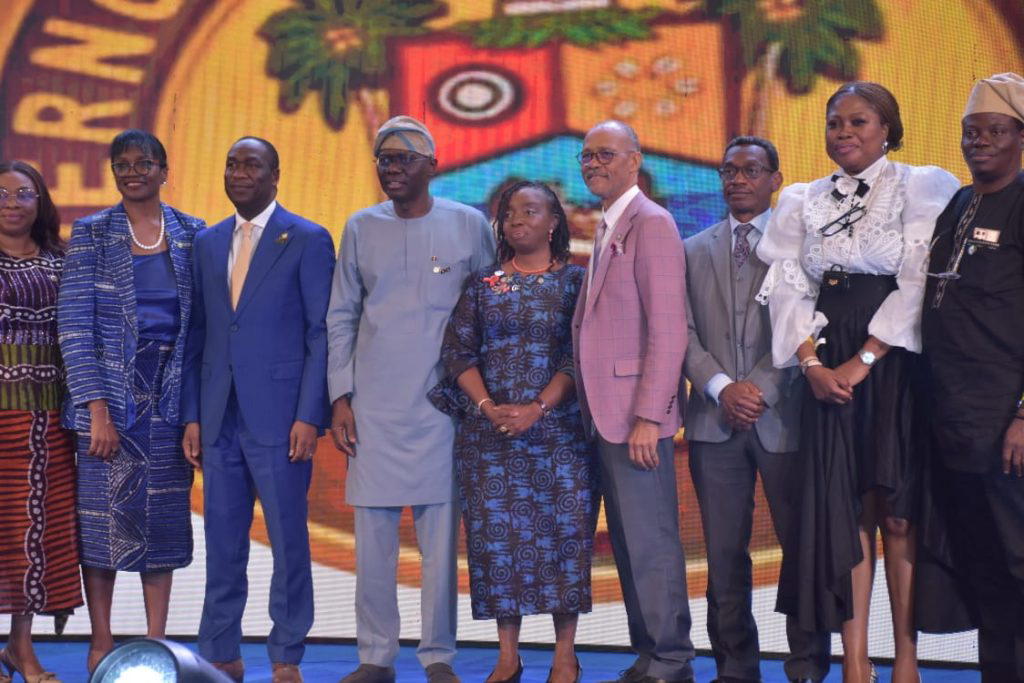
Speaking at the opening of the 2nd Eko Health Convention in Lagos, themed “Building a Healthier Lagos: Connecting Access with Excellence,” Sanwo-Olu said the next phase of the state’s health reform agenda would focus on building a sustainable system that combines wider access with improved quality of care.
He said the government was moving beyond infrastructure delivery to creating institutions and systems capable of sustaining quality healthcare for residents.
“Access without excellence is a queue. It is a clinic within walking distance where the drugs have run out. Excellence without access is a showpiece. It is a world-class hospital that a mother in Ajegunle will never enter. Lagos is not interested in either,” he said.
The governor said the objective of the administration was to build a healthcare system where residents could access quality medical services irrespective of their location or economic status.
“Delivering a project is one thing. Building an institution that will still be delivering when all of us in this hall have moved on is another thing entirely,” he said.
A major component of the new roadmap, according to Sanwo-Olu, is the expansion of digital healthcare through the Lagos Smart Health Information Platform (SHIP), a health information exchange system designed to improve patient care through better data management.
He said the first phase of the platform had reached about 30 per cent implementation, covering general hospitals, teaching hospitals and more than 300 primary healthcare facilities across the state.
The governor explained that SHIP would enable medical records to move with patients across facilities, reduce repeated tests and support better healthcare decisions through improved data utilisation.
“When the record travels, the clinician sees the whole patient. When the data comes together, the policymaker sees the whole city. We move from reacting to anticipating,” he said.
Sanwo-Olu also disclosed that enrolment under the state’s Ilera Eko health insurance scheme had reached 1,502,994 residents as of May 2026.
He said more than half of the beneficiaries were women, adding that the increasing use of the scheme showed that healthcare coverage was translating into actual access rather than merely providing insurance cards.
He said the state’s healthcare financing reforms were aimed at reducing dependence on out-of-pocket payments by residents at the point of illness.
The governor added that the LASHMA Assistance in Distress programme, designed to provide emergency care regardless of a patient’s ability to pay, had saved 18 lives since its launch in March.
He said the intervention had supported emergency cases, including road traffic injuries, surgical emergencies, obstetric crises and strokes.
“In an emergency, a Lagosian should be stabilised first and asked about payment afterwards,” he said.
On healthcare manpower, Sanwo-Olu said the state was responding to shortages through recruitment, improved working conditions, accommodation for health workers and increased investment in medical training.
He also disclosed that Lagos faces a healthcare funding gap of about N100 billion between current budgetary allocation and what the sector requires, noting that declining donor support had made sustainable financing reforms necessary.
The governor said the state was developing a dedicated University of Medicine and Health Sciences to expand the training of doctors, nurses, pharmacists and other healthcare professionals.
He said the success of the health system should not only be measured by the number of hospitals constructed but by how effectively institutions continue to serve residents.
Speaking at the event, the Commissioner for Health, Prof. Akin Abayomi, said the Eko Health Convention provided a platform for stakeholders across the healthcare sector to collaborate.
Abayomi said the Ministry of Health was responsible for ensuring quality healthcare delivery across public, private and informal sectors.
“The Ministry of Health is not the Ministry of Health for public facilities. It’s the Ministry of Health for all Lagosians,” he said.
He said the state was working to regulate the informal health sector, including traditional medicine practitioners, alternative medicine providers and patent medicine vendors, to ensure residents receive quality care.
The commissioner said Lagos was positioning itself as a medical tourism destination through investments in specialist healthcare facilities and initiatives aimed at encouraging professionals abroad to return.
He added that the transition of the Lagos State College of Medicine into a broader University of Medicine and Health Sciences would increase the state’s capacity to train healthcare professionals.
Abayomi said the government was pursuing a “brain gain” strategy by encouraging professionals who had relocated abroad to return with new skills and experience.
He also highlighted the role of technology in expanding access through telemedicine, virtual learning and remote medical expertise.
The commissioner urged residents to embrace health insurance and avoid self-medication, particularly in cases of suspected malaria.
He said improved testing had reduced malaria test positivity in public health facilities from about 60 per cent to around 5 per cent, indicating that many illnesses previously treated as malaria were caused by other conditions.
According to him, malaria prevalence in Lagos had also declined from about 15 per cent 15 years ago to about 2 per cent.
The Special Adviser to the Governor on Health, Dr. Kemi Ogunyemi, urged healthcare workers to remain committed to strengthening the state’s health system.
She said the government was investing in skills development, innovation and professional growth while encouraging healthcare professionals who had relocated abroad to contribute their expertise to Lagos’ development. “Government cannot do it all. We need everybody,” she said.
The post Lagos needs 40,000 doctors, says Sanwo-Olu, unveils new healthcare roadmap appeared first on Vanguard News.