

By Sola Ogundipe
Ganiat Ojo believed the headache would eventually disappear. The 55-year-old petty trader had lived with the pain for months, brushing it off as the price of long days at the market and the constant struggle to provide for her family. Like many Nigerians, she hardly ever checked her blood pressure. There was always another bill to settle, another customer waiting and yet another reason to put off a trip to the hospital.
Then, one afternoon, she collapsed in her shop. Neighbours thought she had simply been overwhelmed by exhaustion, but they rushed her to hospital anyway. Doctors later confirmed she had suffered a massive stroke caused by severe, uncontrolled hypertension. She never regained consciousness and died the following day, leaving behind four children.
Stories like hers play out quietly across Nigeria every day. Most never make the headlines. Yet taken together, they expose one of the country’s biggest public health tragedies: millions of Nigerians are dying years, and sometimes decades, earlier than they should.
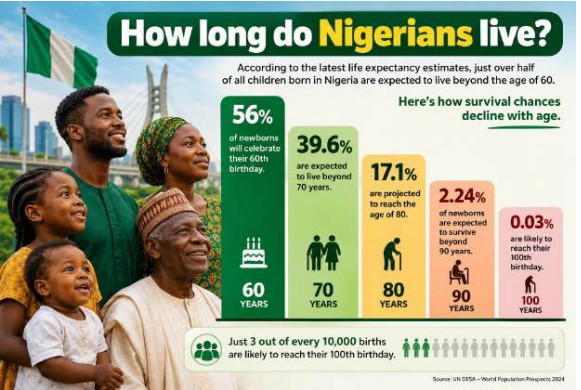
Estimates from the United Nations Population Division and the World Bank put life expectancy at birth in Nigeria at about 54 years, among the lowest anywhere in the world. The global average, by comparison, now exceeds 73 years, according to the World Health Organization (WHO). In countries such as Japan, Switzerland and Singapore, living into one’s 80s or even 90s is no longer exceptional.
Health experts say the reasons stretch well beyond medicine. Poverty, weak health systems, poor nutrition, environmental hazards, chronic stress, limited access to healthcare and widening social inequalities all shape how long Nigerians live.
Timeline of progress
Life expectancy reflects how well a country protects the health and wellbeing of its people from birth through old age. At independence in 1960, a Nigerian could expect to live for about 37 years, according to World Bank estimates. Infectious diseases were widespread, child mortality was extremely high and healthcare services were scarce, especially outside major towns and cities.
Today, average life expectancy has risen by almost two decades. Advances in public health mean more children now survive birth and early childhood than in the past. Yet, 57years can not be good enough. Expanded immunisation programmes have cut deaths from vaccine-preventable diseases. Better maternal healthcare has helped more women survive pregnancy and childbirth. Improvements in malaria control, nutrition and sanitation have also played an important role in extending lives.
Even so, Nigeria’s progress has lagged behind that of many comparable countries. Although life expectancy has continued to rise, the country remains among those with the shortest lifespans in the world. At the same time, the health burden has shifted. Infectious diseases no longer dominate as they once did. Instead, non-communicable diseases such as hypertension, diabetes, stroke, heart disease, chronic kidney disease and cancer are becoming increasingly common.
What is life expectancy?
According to the United Nations World Population Prospects 2026, analysed by GeoRank, a Nigerian who reaches the age of 65 can expect to live to about 77.2 years. Someone who reaches 70 is expected to live to around 79.4 years, while a person who turns 75 can expect to live to approximately 82.1 years. For those who celebrate their 80th birthday, average life expectancy increases further to about 85.2 years.
These figures do not mean everyone will live to those ages. Instead, they show that once people survive the highest risks of infancy, childhood and middle age, their remaining life expectancy increases significantly.
Nigeria’s relatively low life expectancy is driven less by the biology of ageing than by deaths that occur decades before old age. Complications of pregnancy, infectious diseases, uncontrolled hypertension, diabetes, road traffic injuries, violence and other largely preventable causes continue to claim lives far too early.
As the WHO points out, life expectancy reflects far more than the performance of hospitals. It is also a measure of how effectively a country protects its people through good nutrition, clean water, education, safe roads, economic opportunity, environmental protection and access to quality healthcare throughout life.
Why low life expectancy?
Nigeria’s relatively low life expectancy cannot be traced to a single disease or one failure within the health system. It is the cumulative result of many factors acting over a lifetime, beginning with where people are born and the care they receive in childhood, and extending to whether they can afford treatment as adults.
A person’s chances of living a long and healthy life are shaped not only by medicine, but also by income, education, nutrition, housing, access to clean water, proper sanitation, safe roads and quality healthcare.
Where you live matters
Where Nigerians live can have a profound effect on how long they are likely to live. People in major cities generally have better access to specialist hospitals, diagnostic centres, pharmacies and emergency care. In many rural communities, the picture is very different. Health facilities are fewer, journeys to seek treatment are longer and shortages of skilled health workers are far more common. As a result, illnesses are often diagnosed much later, medical emergencies take longer to receive appropriate care and preventable deaths occur more frequently.
The Director-General of the WHO, Dr Tedros Adhanom Ghebreyesus, has repeatedly argued that “where a person is born should never determine how long they live.” He maintains that persistent gaps in life expectancy are driven by unequal access to healthcare, poverty and inadequate investment in public health.
Global health expert and Group Chief Executive Officer of Amref Health Africa, Dr Githinji Gitahi, echoes that view. “People do not die simply because hospitals are unavailable; they die because the social conditions needed for healthy living are absent.”
His observation reflects a growing consensus among public health experts that hospitals alone cannot deliver longer lives. Good health also depends on safe communities, nutritious food, quality education, clean environments and economic opportunities that enable people to make healthier choices.
The rise of chronic diseases
Non-communicable diseases, including hypertension, diabetes, stroke, heart disease, chronic kidney disease and cancer, now account for an increasing share of illnesses and premature deaths in Nigeria.
Unlike many infectious diseases, these conditions often develop quietly. High blood pressure, diabetes and kidney disease may produce few, if any, warning signs until irreversible damage has already occurred.
By the time many patients finally seek medical care, they are already dealing with complications such as stroke, heart failure or kidney failure, conditions that are far more difficult and expensive to treat. Yet many of these illnesses can be prevented, delayed or effectively managed through routine screening, early diagnosis and continuous care. Prevention, however, remains one of the weakest links in Nigeria’s health system.
The Coordinating Minister of Health and Social Welfare, Professor Muhammad Ali Pate, has consistently argued that many of the conditions responsible for premature deaths can either be prevented or successfully treated if they are detected early.
He has also stressed that improving life expectancy demands far more than treating disease. Strong primary healthcare, effective disease prevention, better nutrition, education, sanitation and broader social development are all essential to improving population health.
WHO Representative in Nigeria, Dr Walter Mulombo, has likewise identified financial hardship as one of the biggest barriers to healthcare. “People should not have to choose between feeding their family and seeing a doctor,” he said. For millions of Nigerians, however, that remains an everyday reality.
A health system under pressure
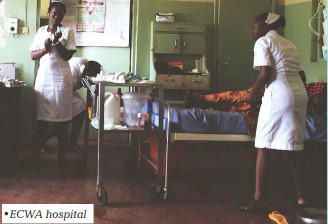
Another major challenge is the steady loss of Nigeria’s health workforce. Every year, thousands of doctors, nurses and other health professionals leave the country in search of better pay, safer working conditions and greater career opportunities abroad. The impact is felt across the entire health system.
Hospitals struggle to replace departing staff. Waiting times grow longer, specialist services become harder to access and those who remain are often expected to care for far more patients than recommended, placing enormous strain on an already overstretched workforce.
Without enough skilled health workers, the system becomes trapped in a cycle that feeds on itself. Delayed diagnosis, interrupted treatment, overcrowded facilities and preventable deaths continue to shorten the lives of many Nigerians.
Hidden forces stealing years
For many Nigerians, the greatest threats to a long life are woven into the fabric of everyday living. They are found in the daily struggle to make ends meet, hours lost in traffic, rising food prices, insecurity, polluted air, unsafe roads, poor housing, limited access to healthcare and the constant uncertainty of what tomorrow may bring.
Public health experts describe these as the social determinants of health, the conditions in which people are born, grow, work and grow older. Together, they shape not only the quality of people’s lives, but also how long they are likely to live.
When survival becomes stressful
Stress is a normal part of life. But when it becomes relentless, it begins to take a toll on the body. Millions of Nigerians now live under prolonged economic and social pressure. Stress alone may not cause disease, yet over time it can aggravate existing health conditions, weaken the immune system and increase the risk of premature death.
The Nigerian Cardiac Society has warned that cardiovascular disease is becoming an increasingly serious public health challenge. It estimates that about one in three Nigerian adults is living with hypertension, many of them without knowing it.
Because high blood pressure often develops without obvious symptoms, it has earned the nickname “the silent killer.” Left untreated, it can trigger stroke, heart failure, kidney disease and sudden death.
The invisible dangers
The environment also plays a critical role in determining health. According to the WHO, long-term exposure to air pollution raises the risk of heart disease, stroke, chronic respiratory disease and lung cancer. Environmental hazards rarely attract the same attention as disease outbreaks, yet they quietly fuel illness and shorten lives over many years.
Insecurity has also emerged as a major public health challenge. Conflict and displacement disrupt vaccination programmes, limit access to healthcare, interrupt treatment for chronic illnesses and expose millions of people to trauma, hunger and preventable disease. Road traffic injuries remain another significant, though often overlooked, cause of premature death.
Increasingly, health experts argue that hospitals alone cannot deliver longer lives. People are far more likely to enjoy good health when they have stable incomes, nutritious food, clean water, decent housing, quality education, safe communities and access to affordable healthcare.
Your state of mind affects how long you live
Can your state of mind influence how long you live? Psychiatrists say it can.
Discussions about longevity usually focus on healthy eating, regular exercise, controlling blood pressure or preventing diseases such as diabetes and cancer. Yet mental health is increasingly recognised as one of the most powerful, and often overlooked, factors influencing life expectancy.
Depression, anxiety, chronic stress, substance dependence, bipolar disorder and schizophrenia do far more than affect emotional wellbeing. When left untreated, they increase the risk of chronic physical illness, disability and premature death. Researchers now increasingly regard mental and physical health as inseparable.
Professor Allan Young, Professor of Psychiatry at King’s College London, says depression is far more than an emotional disorder.
“Depression is not just an emotional disorder; it is linked to poorer physical health and earlier mortality.”
According to him, prolonged depression is associated with chronic inflammation, cardiovascular disease, unhealthy lifestyle behaviours and poorer adherence to medical treatment, all of which can shorten life expectancy.
There is no health without mental health
Professor Taiwo Sheikh, Professor of Psychiatry and Continental Representative of Lifeline International, believes mental health lies at the heart of every aspect of human life.
“Mental health shapes how we think, feel, relate to others, make decisions and cope with life’s challenges. It is fundamental to overall health and wellbeing.”
Sheikh argues that mental illness should be viewed no differently from hypertension, diabetes or any other medical condition.
According to Sheikh, nearly 90 percent of Nigerians living with mental disorders never receive specialist mental healthcare. The resulting treatment gap increases disability, prolongs suffering and contributes to preventable deaths, including suicide.
Former President of the Association of Psychiatrists in Nigeria, Professor Taiwo Obindo, shares the same concern. He warns that prolonged financial hardship, unemployment, insecurity and growing social uncertainty are taking a heavy toll on the nation’s mental wellbeing.
“These challenges go beyond the regular stresses that people are meant to go through and would surely impact people’s mental health.”
According to him, persistent stress can gradually erode psychological wellbeing, pushing people into anxiety, depression and other mental disorders if left unaddressed.
“Mental health is one of the strongest factors influencing how long and how well people live. When mental health is protected, physical health improves. And when both are treated together, people have a far better chance of living longer, healthier lives.”
What Nigeria’s oldest people teach about living longer
What does it take to live into your 80s, 90s or even 100? Scientists say there is no secret formula for exceptional longevity. Genetics matter, but they tell only part of the story. A growing body of research shows that everyday habits, strong social connections and the environments in which people live play a profound role in healthy ageing.
Conversations with octogenarians, nonagenarians and centenarians across Nigeria reveal striking similarities. They come from different ethnic groups, regions and walks of life, yet many describe lifestyles that closely reflect what decades of scientific research now recommend.
Most never set out to follow a longevity plan. They simply lived in ways that protected their health.
Eat simple, mostly unprocessed food
Many grew up eating meals prepared from fresh, locally grown ingredients rather than highly processed foods.
Their diets centred on vegetables, beans, yams, millet, sorghum, unripe plantain, fruits, fish and modest portions of meat. Sugary drinks, fast food and ultra-processed snacks were rarely part of everyday life.
Nutrition experts say diets like these are naturally rich in fibre, vitamins and minerals while being lower in salt, unhealthy fats and added sugars, helping reduce the risk of heart disease, diabetes and obesity.
Avoid overindulgence
Moderation is another recurring theme. Many describe eating until they were satisfied rather than full, with relatively small portions and little opportunity for constant snacking.
Modern research consistently links maintaining a healthy body weight with a longer life and lower risks of diabetes, stroke and cardiovascular disease.
Keep moving throughout life
Few of Nigeria’s oldest adults ever belonged to a gym. Instead, physical activity was woven into everyday life through farming, walking, trading, fishing, household chores and other forms of manual work.
Today’s scientific evidence supports that lifestyle. Regular movement helps maintain healthy blood pressure, strengthens the heart and muscles, improves mental wellbeing and lowers the risk of many chronic diseases.
Stay connected
Perhaps one of the strongest predictors of longevity isn’t found on the dinner table at all. It is found in relationships.
Many older Nigerians speak of close family ties, supportive neighbours, active participation in religious communities and strong social networks that gave them purpose throughout life.
Research shows that social isolation can be as damaging to health as many traditional risk factors. Strong social connections reduce stress, improve mental wellbeing and are associated with longer life.
Faith builds resilience
Almost every older person interviewed pointed to faith as a source of strength. Prayer, worship and trust in God helped them navigate grief, hardship and uncertainty. While faith cannot prevent disease, psychologists say it often provides emotional support, hope and a sense of purpose that enables people to cope with life’s challenges.
Avoid tobacco and excessive alcohol
Another striking pattern lies in what many of them avoided. Most never smoked, while those who drank alcohol generally did so in moderation. Avoiding tobacco remains one of the single most effective ways to reduce the risk of heart disease, stroke, chronic lung disease and cancer.
Keep the mind active
Growing older does not mean stepping away from life. Many continue reading, mentoring younger people, taking part in community activities, farming, trading or helping with family businesses well into old age.
Remaining mentally engaged has been associated with better cognitive health and a lower risk of depression and social isolation.
Live with purpose
For many of Nigeria’s oldest citizens, retirement did not mean becoming inactive. Whether through farming, teaching, caring for grandchildren, religious service or community leadership, they continued contributing to their families and communities.
Gerontologists say having a strong sense of purpose is consistently linked to healthier ageing and lower mortality.
The science agrees
Many of the habits shared by Nigeria’s oldest citizens are backed by decades of scientific evidence. Regular physical activity, healthy eating, maintaining a healthy weight, avoiding tobacco, limiting alcohol, controlling blood pressure and diabetes, getting enough sleep, managing stress and staying socially connected all increase the chances of living a longer, healthier life.
No lifestyle can eliminate every health risk. Genetics, chance and access to healthcare also influence longevity. Healthy ageing is rarely the result of one decision or a miracle cure.
Instead, it is built gradually over decades through ordinary choices made consistently: eating well, staying active, protecting mental health, nurturing relationships, seeking medical care early and finding purpose in everyday life.
Even so, people can make healthier choices only when they live in communities that make those choices possible through quality healthcare, safe environments, good nutrition, education and economic opportunity.
Life expectancy is not simply about how long we live. It is also about the lives we lose too soon and the deaths we can still prevent.
The way forward
Every day, families across Nigeria lose mothers, fathers, sons and daughters to illnesses that are often preventable, detectable or treatable. Some die because they arrive at hospital too late. Others never make it there. Many do not realise they are living with high blood pressure, diabetes, kidney disease or depression until irreversible damage has already occurred.
These realities are a reminder that life expectancy is shaped by far more than healthcare alone. It is influenced by the food people eat, the air they breathe, the roads they travel, the work they do, the stress they carry, the communities in which they live and the care they can afford when illness strikes.
There is, however, reason for optimism. Nigeria’s story is not one of unbroken decline. Over the past six decades, the country has dramatically reduced child mortality, expanded immunisation, improved maternal healthcare and helped millions more children survive into adulthood. Those achievements demonstrate that sustained investment in public health saves lives.
The challenge now is to extend those gains into adulthood and old age.
That means detecting high blood pressure before it leads to stroke, finding cancer before it spreads and treating diabetes before it damages the kidneys. It means making mental healthcare as accessible as physical healthcare, retaining skilled health workers, expanding primary healthcare and ensuring that neither birthplace nor income determines how long a Nigerian is likely to live.
Ultimately, life expectancy is more than a statistic in a report. It reflects whether people have the chance to watch their children grow up, enjoy retirement, become grandparents and grow old with dignity.
For Nigeria, the future of longevity will be shaped by thousands of everyday decisions, by governments willing to invest in health, by communities that make healthy living possible, by health workers who continue to serve despite enormous challenges and by individuals who choose prevention instead of postponement.
Vanguard News
The post LIFE EXPECTANCY CHALLENGE: Why Nigerians are dying too soon – Experts appeared first on Vanguard News.

 Vanguard Nigeria
 Daily Post
 Channels TV
 Punch Nigeria
 Premium TImes
 This Day