

By Nkiruka Nnorom with agency report
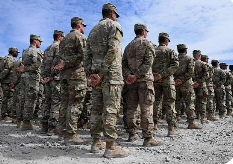
Nearly 100 US service members have been injured over the last two weeks of escalating strikes on Iran, the Pentagon has said.
This is even as Tehran launched a wave of reprisals to the tenth consecutive night of attacks.
President Donald Trump vowed to take care of the Houthi rebels if the Iran-backed militant group follows through on its threatened blockade of Saudi ports.
“If something like that happens, we take care of it,” Trump told reporters during a White House meeting with Lebanese President Joseph Aoun.
“You know, we’ve done that with the Houthis before, and we haven’t heard from them in a while since we did what we did originally,” he added.
Iran’s Revolutionary Guards Corp said yesterday they had targeted US military sites including air defence systems and a radar installation in Bahrain and Kuwait, while a tanker in the strait of Hormuz reported being struck by an unknown projectile, forcing its crew to abandon the vessel and board a lifeboat.
Kuwait, Bahrain and Jordan all said they had activated defences to repel the attacks, but the scale of US injuries at facilities across the region over recent week is likely to bring greater scrutiny to Iran’s reprisal attacks.
Pentagon spokesperson, Sean Parnell, said the vast majority of those injured only experienced “minor concussions” and 96 percent had since returned to work. Parnell was responding to a New York Times report that the Pentagon has withheld information about troop injuries from Iranian strikes. He denied that the Pentagon was hiding data about injuries.
In the last week three US soldiers have been killed in action in Jordan and Iraq.
The 10 consecutive nights of US airstrikes haven’t compelled Tehran to loosen its grip on the strait of Hormuz, through which about a fifth of all crude oil and natural gas traded once passed in peacetime.
Efforts to rein in the costs that the disruption is having on global trade and oil prices were complicated further on Monday, after Yemen’s Iranian-backed Houthis announced they were imposing a maritime embargo against Saudi Arabia.
There were few details on how the embargo might work, but a Houthi official, quoted by The Guardian, said that the Bab al-Mandeb strait at the southern end of the Red Sea through which about 12 percent of the world’s trade usually passes, would be closed to the Saudis in response to the kingdom’s “unjust blockade on Yemenis for over 10 years”.
The Houthis have demonstrated their ability to disrupt shipping in the past by targeting vessels over the Israel-Hamas war in Gaza.
Saudi Arabia’s military said it would keep the waterway open, but the threat will put further pressure on the country’s oil exports, as it has increased shipping from Red Sea ports sue to the closure of the strait of Hormuz.
Even as the US and Iran inch closer to all-out war again, Iran’s interior minister travelled to Pakistan, a key mediator in the conflict, for talks. However, it remained unclear just what new deal could be reached, after the interim deal signed last month that was meant to end the fighting crumbled.
The post M-East war: Almost 100 US troops injured in recent weeks — Pentagon appeared first on Vanguard News.

 Mwananchi
 Daily Post
 Watchdog Uganda
 Vanguard Nigeria
 Complete Sports
 Punch Nigeria
 Channels TV