

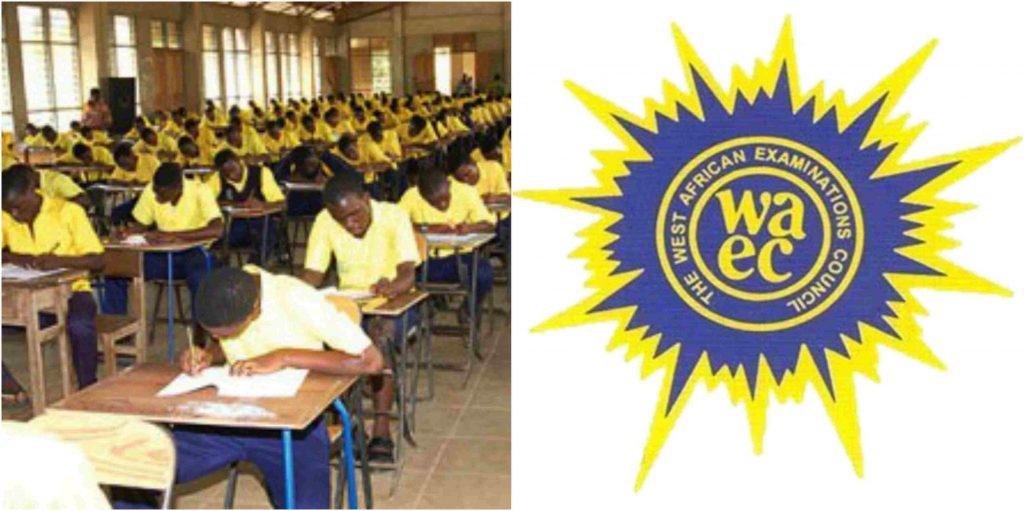
It is hard to say which of the two major issues in the news last week is most troubling for the average Nigerian. Is it the federal government’s announcement-and subsequent reversal-of an 82 per cent increase in WAEC and NECO registration fees, from N27,500 to N50,000 per candidate beginning in 2027? Or is it the court-ordered forfeiture of properties allegedly worth N212 billion linked to former Attorney-General of the Federation Abubakar Malami?
While the two events appear unrelated, they are, in fact, not only directly connected: they both reveal the moral failure of governance in this country. One case reveals the inhumanity in a government decision that would have affected nearly two million secondary school students at a time when millions of parents are struggling to put food on the table or even take transport to and from work daily. The other raises the truly sad question of how a single public official allegedly acquired properties worth N212 billion while in “public service.” In this sense, they are both different expressions of the same moral poverty and insensitivity in our governance.
Consider, first, the federal government’s announcement of a N22,500 increase in each of WAEC and NECO registration fees per candidate. It is true that the federal government has withdrawn this policy because of the heavy criticism it generated within days. Yet the insensitivity inherent in the policy announcement cannot be ignored merely because it was reversed. Policy announcements are more than mere expressions of the government’s intentions; they are indications that the government has already done its homework on the policies announced and is now ready for implementation. So how did the whole idea survive the policymaking process in the first place? Was there any adequate assessment of how the policy would impact poor households at this time? Was there any debate or discussion of the policy at the cabinet level before it was passed? Were parents, teachers, school proprietors, and other stakeholders in the education sector consulted? What did the government’s economists say about how many pupils would be forced to drop out of school altogether if the policy were to be implemented? The character of a government is defined more by the bad policies that it announces but never sees the light of day.
The slightest engagement with even a small sample of Nigerians and other stakeholders would easily have made it clear to the government that the whole idea would compound the hardships millions of Nigerians are currently facing. Therefore, the policy fits into a recurring pattern in which President Bola Ahmed Tinubu’s government announces policies without taking into account the political and economic sensitivity of what they are doing before going public. The government has repeatedly demonstrated this tendency in previous policies like subsidy removal, clemency for Maryam Sanda, the Niger Republic sanctions, student loans, and so on. The moral burden of the policy is even more important, and it is not diminished by the reversal. Last year, some 1,973,253 candidates registered for WAEC, at N27,500 each, while 1,367,210 students registered for NECO at N27,000 each. This means that, combined, Nigerian parents coughed out over N91 billion (N91,179,127,500) to WAEC and NECO to receive more or less the same service. In ten years on current trends, both exam bodies would rake in about a trillion naira for conducting qualifying examinations for our kids. For me, that is morally unjustifiable.
Yet it is on top of these billions that the two bodies want an increase of 82 per cent. Yes, it is true that conducting examinations for such a large number of students annually can be expensive. But when just two public institutions rake in nearly a hundred billion naira annually from parents for the conduct of examinations alone, we must ask the serious question of whether conducting exams is a national service or a revenue generating business. The issue, therefore, is larger than the fee increase itself, regardless of any merits for it. I did not know that WAEC already costs as much as N27,500 per candidate, and now I think even that amount is too high. Perhaps the Ministry of Education doesn’t fully understand the social role of the school leaving examination conducted by WAEC and NECO. These exams represent the rite of passage into formal adulthood and citizenship, the gateway into the formal economy and higher education, and the ultimate distributor of life chances. Few events shape a Nigerian child’s future more profoundly than WAEC. We all know this in our own lives. Something so fundamental to every generation in terms of citizenship, opportunity, and national development cannot simply be left to the ability of parents to pay. The state must bear most responsibility for it.
In other words, policy reversal is not enough. The government must resolve the deeply moral question inherent in WAEC and NECO fees even as they are. If the state imposes high costs on families for qualifying exams, then many parents would feel justified to try all means, fair or foul, to have their children pass, with serious implications for examination malpractice, corruption, and the building of a merit based society. This issue goes beyond naira and kobo. And then there is the small matter of managing public finances in Nigeria. Last year, WAEC raked in over N54 billion (N54,264,457,500), and NECO nearly N37 billion (N36,914,670,000), for the same examinations alone. Given our experience with public finances, it is a fair question to ask exactly how much of all these monies goes into the conduct of examinations proper, and how much goes elsewhere. Nigerians need the National Assembly to conduct a public hearing on how WAEC and NECO fees are managed annually, policy withdrawal notwithstanding. Nigerians must know the inner workings of these bodies.
Now consider Malami’s alleged billions. We must be clear that the former Attorney General remains innocent until all legal processes have been exhausted. Yet the sum of N212 billion (about US$154 million) is huge, and there is absolutely no role in Nigerian government for which anyone could earn that kind of money legitimately in eight years. The Ministry of Justice, in particular, is not a revenue generating agency, nor does it award mega contracts. Its principal job is to safeguard the rule of law and the public interest. One wonders, then, how such extraordinary personal accumulation could have happened, if the allegations are proven. Moreover, the amount in question is in physical properties, which must have valid ownership. A physical property cannot own itself, and no court can rule Mr X’s legitimate properties forfeited in a case involving Mr Y. Therefore, if the properties do in fact belong to Malami, we must raise the question of how he acquired them. If they don’t belong to him, then we must ask who owns them and how they were acquired. These questions also go beyond criminal justice to encompass public ethics and the moral foundation of both the state and society.
The state cannot, in good conscience, be asking ordinary citizens to cough out more money to educate their children while at the same time opportunities exist for public officials to personally extract properties to the equivalent value of N212 billion. And this argument goes beyond Malami as an individual public official. The government cannot, again in good conscience, be actively pursuing a case of personal enrichment against one official and at the same time turn a blind eye to the opportunities that exist for hundreds of other officials to do the same without any sanctions. After all, were Malami still in office or friends with the ruling party, we probably would not have heard much about his alleged accumulation.
Finally, there is the question of what justice should look like for the ordinary Nigerian in all of this. The monetary value of the allegations against Malami amounts to about four years of WAEC fees for the two million students that registered last year. Therefore, if proven true, I suggest the recoveries should be used to fund WAEC and NECO registrations for children from poor households over the next several years. In fact, I suggest that henceforth all proceeds from asset recoveries should go directly into subsidizing WAEC and NECO registration fees for the foreseeable future. That is what both justice and good policy look like.
Suleiman, a public affairs analyst, writes from Abuja
The post Malami’s billions for WAEC fees, by Suleiman A. Suleiman appeared first on Vanguard News.