

Ugandan commentator Andrew Mwenda has accused state health institutions of undermining the government’s own investment in Dei BioPharma by continuing to import drugs from India and China instead of buying from the Ugandan manufacturer.
Mr Mwenda made the comments during a visit to the company’s plant in Matugga on Friday, weeks after President Yoweri Museveni publicly criticised him for attacking the firm’s founder, Dr Matthias Magoola, without ever visiting the site.
“If the government cannot provide a domestic market and act as the primary buyer for these products, the investment strategy falls short,” Mr Mwenda told reporters and company officials gathered at the plant.
He named the Ministry of Health, the Uganda Cancer Institute and the National Medical Stores as bodies he said should be sourcing medicines locally rather than abroad, and said their continued reliance on foreign suppliers risked making nonsense of the public money already spent on the factory.
“I advise the leadership of these medical institutions to visit this plant and ensure that the national budget allocates funds to purchase these locally manufactured drugs,” he said.
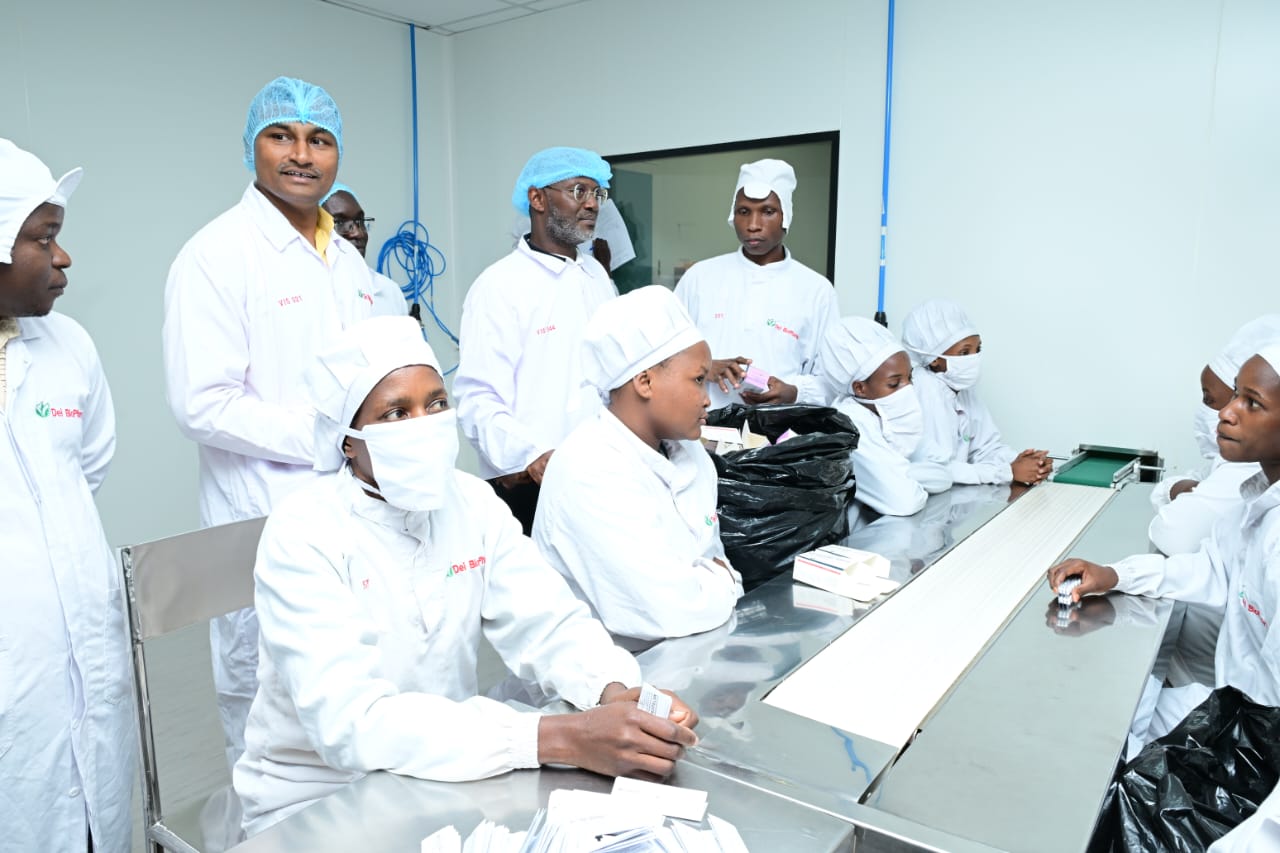
The journalist argued that without guaranteed government purchasing, taxpayers risked funding a factory whose own state was not buying its output. He put Dei BioPharma’s annual revenue potential as high as $50bn, and argued that even a fraction of that would justify the public investment many times over.
“The company has the potential to generate annual revenues of $50 billion because the drugs being developed here are designed to surpass what competing international firms offer,” he said. “If we support him and he successfully produces even a single drug that earns Uganda an annual revenue of $20 billion, or even if it only captures 20 percent of what the major American companies earn — which would be $10 billion — that completely justifies the initiative. Against those kinds of returns, a $400 million government investment is highly practical.”
The procurement complaint was one part of a longer and more personal reckoning. Mr Mwenda used the visit to apologise directly to Dr Magoola, retracting earlier comments in which he had described the scientist as a conman without ever speaking to him.
“I want to apologize for mischaracterizing you,” he told Dr Magoola. “I apologize for making a judgment about you without even talking to you. I apologize for making accusations against your work without visiting your plant. I ask for your forgiveness.”
He said his earlier scepticism may have reflected what he called “epistemic violence” — a tendency among Africans to doubt their own people’s achievements. “I questioned whether my initial skepticism was a symptom of a colonized mindset that struggles to accept that a black man can start a company destined to become worth billions of dollars,” he said, adding that he intended to explain his change of position to President Museveni in person next week.
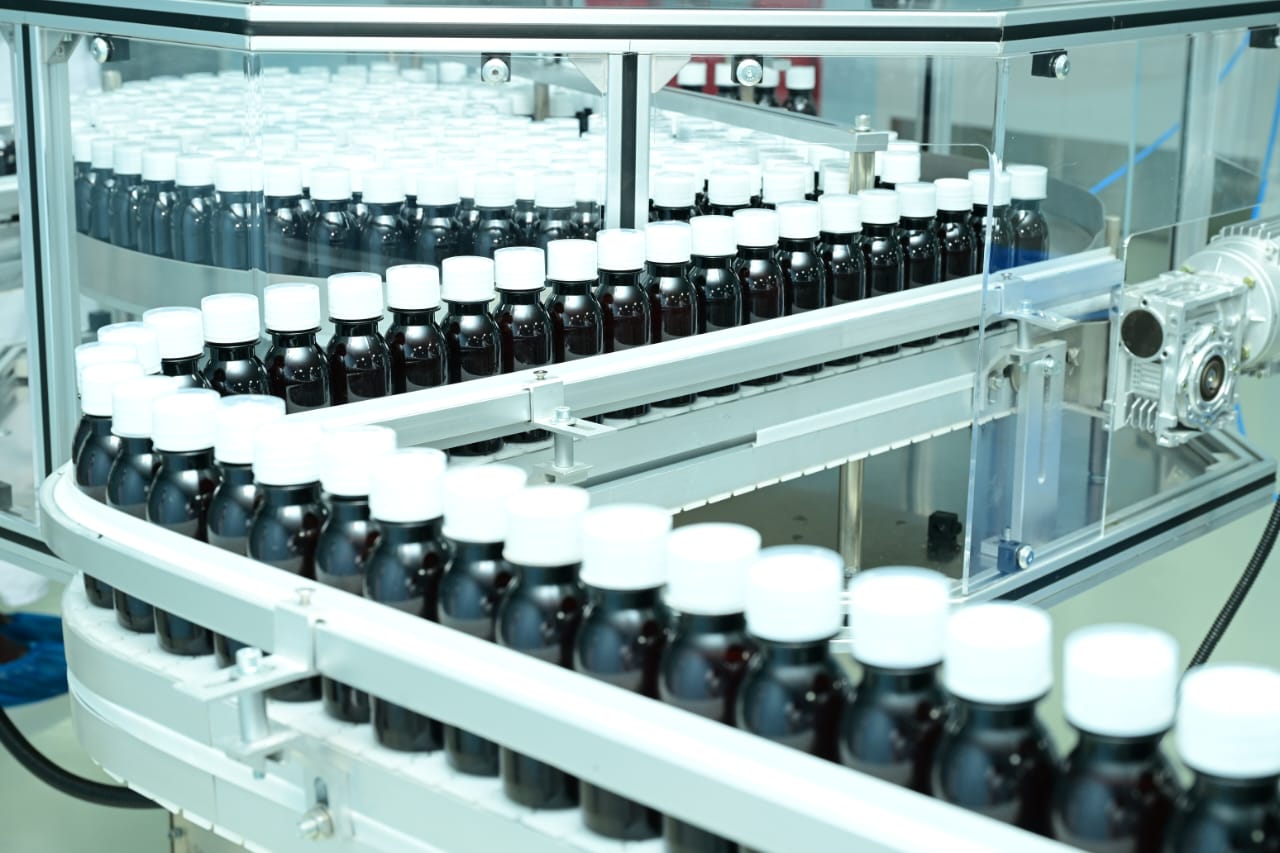
Dr Magoola used the visit to set out the scale of his ambitions for the company. He told guests it holds more than 100 patents covering biologic medicines, including therapeutic proteins, monoclonal antibodies, cytokines and advanced vaccines, categories of medicine he said are not currently manufactured anywhere else in Africa.
“For the first time, we are ensuring that Uganda becomes the first African country to manufacture these biological drugs,” he said, adding that roughly 80% of the world’s population cannot currently afford biologic medicines, a market he believes the company can serve.
He said the firm expected to create more than 40,000 direct jobs at the Matugga site, with a further $10bn investment planned for a second facility in Kamuli in partnership with American investors, which he said could generate an additional 50,000 jobs within a decade. He pointed to existing global sales of comparable drugs — the cancer treatment pembrolizumab, which earns close to $40bn a year, and the diabetes and weight-loss drugs Ozempic, Mounjaro and Zepbound, whose combined sales are nearing $100bn annually — as evidence that the underlying market for the company’s products already exists.
“The risk of failure is minimal once the infrastructure is fully operational because the demand is already there,” Dr Magoola said.
He also credited President Museveni with persuading him, years ago, not to sell the company’s early research to American pharmaceutical firms that approached him while he was recovering from malaria. “He told me never to sell it, warning that doing so would betray the African cause,” Dr Magoola said.
Dr Patrick Wakida, chairman of the company’s board of governors, told the visiting party that the government holds a 9.4% stake in Dei BioPharma, with the remainder owned by Dr Magoola and private shareholders. He said the company could eventually contribute as much as $500bn to an economy currently worth about $67bn, and that the 40,000 jobs already cited would likely double once casual and supplier-side employment is counted.
“You are creating an economy within an economy,” Mr Wakida said. “You are going to create people who pay taxes, people who contribute to NSSF, and suppliers who, in supplying this company, build an economy for themselves. That’s how economies are created.”
Mr Wakida acknowledged the project had moved more slowly than planned. “Capitalising an investment of this nature is sometimes a challenge,” he said, adding that Cabinet had approved roughly $300m in additional funding this financial year, though he said he could not confirm exactly how much had been disbursed.
Public records show the government has put in the equivalent of around 723.4 billion Ugandan shillings since 2020, with a further 1.6 trillion shillings approved more recently to complete the Matugga and Kamuli facilities. Uganda’s Auditor General flagged the absence of a formal valuation of the company by the Chief Government Valuer at the time the state took its stake, along with missing share certificates, prompting scrutiny from MPs that has continued since.
Mr Wakida said the company now intended to invite members of parliament and journalists’ associations to tour the site for themselves. “If you are doubting, come here and see for yourselves,” he said.
Mr Mwenda’s criticism of state procurement practices comes despite his broader change of position on the company. He had previously argued that government money was being wasted on Dei BioPharma and similar projects, going so far as to describe Dr Magoola and herbalist David Ssenfuka as “conmen and witch doctors.” He withdrew those remarks in late May after President Museveni challenged him in a public letter to visit the factories himself before passing judgment.
“Why do you not interview these ‘conmen’ such as Magoola, Senfuka, etc.?” Mr Museveni wrote at the time. “They are here in Uganda. They are where you can reach them and even the assets they have put on the ground. Visit Magoola’s factories in Matugga and Kamuli.”
The post Mwenda slams Health Ministry’s Red tape over local drug procurement appeared first on Watchdog Uganda.