

By Chioma Obinna
The Director-General of the National Agency for Food and Drug Administration and Control (NAFDAC), Prof. Mojisola Adeyeye, on Monday sounded the alarm over the growing dangers of unsafe food in Nigeria, warning that millions of lives remain at risk from preventable foodborne illnesses.
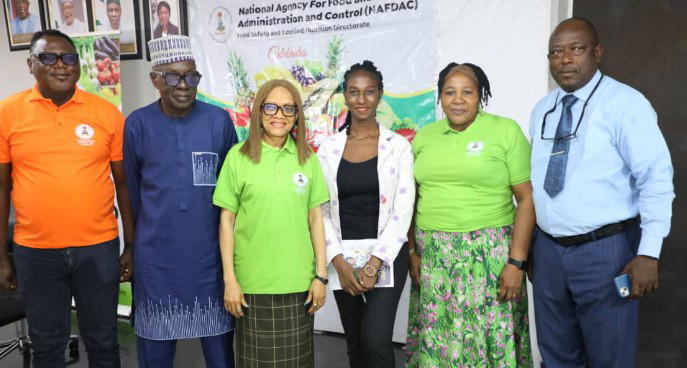
Speaking at the agency’s 2026 World Food Safety Day celebration in Lagos, Adeyeye called for urgent and sustained action to strengthen food safety systems across the country, declaring that access to safe and wholesome food must be treated as a fundamental human right.
Represented by the Director of Food Safety and Applied Nutrition, Mrs. Eva Edwards, the NAFDAC boss said Nigeria must move beyond merely acknowledging the burden of food contamination to implementing practical solutions that guarantee food safety “from farm to fork.”
“Today, we renew our commitment to building a Nigeria where every person, in every part of the country, has access to safe and wholesome food,” she said.
Adeyeye stressed that food safety remains one of the most pressing but often neglected public health issues globally, noting that foodborne illnesses are linked to over 200 diseases, many of which are preventable through proper regulation, monitoring, and public awareness.
She warned that unsafe food not only threatens health but also weakens livelihoods, disrupts education, damages national economies, and contributes to food waste and export rejections.
“The theme for this year, “From Burden to Solutions – Safe Food Everywhere”, is a wake-up call. Unsafe food continues to exact a heavy toll through illnesses, economic losses, and even deaths. But these challenges are not beyond solutions,” she said.
The NAFDAC DG said food safety risks cut across every stage of the food supply chain, from farming and harvesting to processing, transportation, storage, retailing, and final consumption, making collective responsibility critical.
“Everyone has a role to play in ensuring food is safe. It cannot be left to regulators alone. Farmers, manufacturers, transporters, vendors, and consumers all have responsibilities,” she added.
She outlined critical safety measures including adherence to Good Agricultural Practices (GAP), Good Hygiene Practices (GHP), Good Manufacturing Practices (GMP), Hazard Analysis and Critical Control Points (HACCP), and wider public education on the World Health Organization’s five keys to safer food.
Adeyeye said NAFDAC is intensifying efforts to strengthen regulatory systems, laboratory testing, surveillance, industry compliance, and consumer education as food supply chains become increasingly complex.
She emphasized that the agency’s role as Nigeria’s competent authority on food safety is to ensure that products in the market meet both local and international standards.
“Achieving safe food everywhere requires more than regulation. It requires strong partnerships, innovation, education, and a culture of food safety,” she said.
The NAFDAC boss also urged Nigerians to remain vigilant by avoiding products without proper labelling, NAFDAC registration numbers, or traceable sources.
“Consumer awareness is an important line of defence. People must be cautious about what they buy and consume because food safety starts with informed choices,” she said.
The World Food Safety Day, established by the United Nations in 2018 and first observed in 2019, aims to raise awareness and drive action toward preventing, detecting, and managing foodborne risks worldwide.
The post NAFDAC raises alarm over unsafe food, pushes nationwide safety reforms appeared first on Vanguard News.

 Punch Nigeria
 Vanguard Nigeria
 Premium TImes