

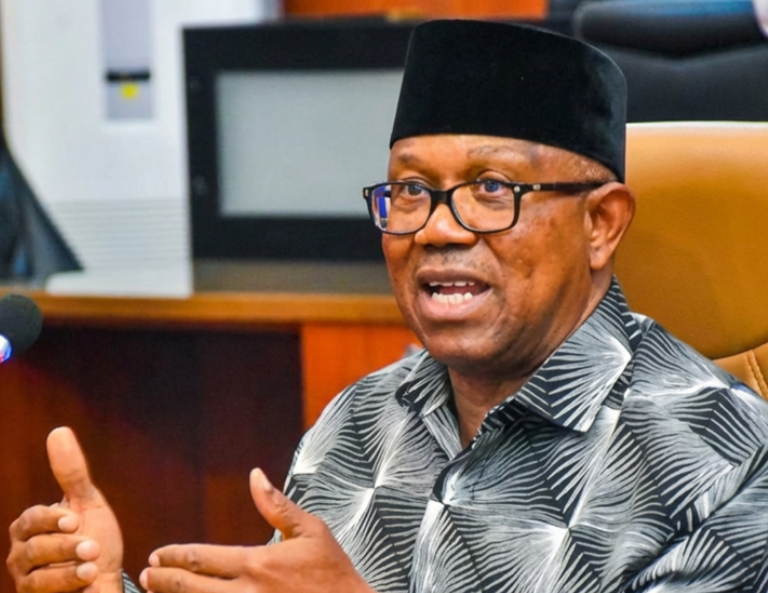
***Says there is no correlation between promises made by APC and current reality.
*** Laments that Nigeria worst place to live; past leaders failed
*** Urges Nigerians not to despair; they will address Nigeria’s woes.
By Henry Umoru, Abuja
The presidential candidate of the Nigeria Democratic Congress (NDC), ahead of the 2027 elections, Peter Obi has told Nigerians that when voted in as the president of the country, he would confront insecurity and create conditions that would enable Nigerians displaced by violence to return safely and with dignity to their communities.
Obi has taken a swipe at the present government, saying there is no correlation between the promises made by the All Progressives Congress (APC)-led administration and the realities that Nigerians are at the moment confronted with.
In a national broadcast to mark Nigeria’s 66th Independence Anniversary on Thursday in Abuja, the former Anambra State governor noted that insecurity, poverty, unemployment, hunger and weaknesses across critical sectors continued to undermine the country’s development. Africans and Diaspora said no Nigerian should be forced to live in an Internally Displaced Persons (IDP) camp because of the failure of the government to provide security, lamenting that the country continues to grapple with worsening poverty, insecurity, hunger and unemployment.
The NDC presidential candidate said his position was informed partly by a recent visit to Sokoto State, where he disclosed that he and his running mate, Senator Rabiu Kwankwaso, held consultations with residents on insecurity, poverty, out-of-school children, youth unemployment, drug abuse and other challenges.
According to him, the delegation also visited an IDP camp at Ramin Kura in Sokoto metropolis, where he encountered what he described as deeply troubling conditions, reiterating that thousands of women and children displaced from their communities were living in difficult conditions, with many of the children lacking access to education and mothers and children having limited access to basic healthcare.
Obi said the situation at Ramin Kura was not an isolated experience but reflected the hardship confronting communities in different parts of the country, even as he argued that Nigeria’s major challenge was not a lack of natural or human resources but the failure to convert those resources into human development, productivity, security and shared prosperity.
He said, “What we saw in Ramin Kura is not an isolated story. It reflects the suffering experienced in different forms across many parts of Nigeria.
“No Nigerian should be forced to live in an IDP camp because his or her government has failed to provide security. My administration will work to ensure that Nigerians displaced by insecurity can begin to return safely and with dignity to their communities.
“These are Nigerians who should be living in their communities, going to school, farming their land, conducting their businesses and contributing to the economy. Instead, they live as displaced persons in their own country.”
Obi, who accused the current administration of failing to confront the nation’s challenges with the urgency they deserve, argued that political leaders have failed to meet the expectations of citizens, just as he expressed optimism that Nigeria could still overcome its challenges through purposeful leadership and accountable governance.
Obi, who advised that the occasion of independence should not only be a time for celebration but also a moment for honest reflection on the state of the nation and the direction it is heading, also said that it should serve as an opportunity for Nigerians to reflect on the country’s journey, assess its current condition and determine the direction it should take. He said that despite Nigeria’s enormous human and natural resources, the country has continued to experience a steady decline in critical areas of national development, raising concerns about leadership and governance.
“On this sixty-sixth Independence Anniversary, let us look back with gratitude, look around us with honesty, and look forward with courage,” he said.
According to him, Nigeria currently has one of the largest populations of people living in poverty in the world, with over 140 million citizens facing severe economic hardship. He also lamented the growing number of out-of-school children, estimated at over 18 million, describing it as a major threat to the country’s future.
Obi, who highlighted the worsening security situation, saying terrorism, banditry, kidnapping and violent crimes continue to claim lives across the country, recalled the recent death of 37 young Nigerians, describing it as another painful reminder of the insecurity that has become a recurring feature of national life.
According to him, if elected president, his administration would focus on restoring security, rebuilding the economy, creating jobs, expanding educational opportunities and strengthening healthcare delivery, just as he promised to move the country from a consumption-driven economy to a productive economy that would be anchored on agriculture, manufacturing, enterprise development and human capital investment.
The NDC presidential candidate, who vowed to ensure that internally displaced persons return safely to their communities through improved security measures and effective governance, also promised to lead by example, saying he would spend his holidays within Nigeria to better understand the challenges facing citizens across different states of the federation.
Obi, who urged Nigerians to reject bad governance and demand accountability from leaders, said the country’s future depends on leadership that sees public office as a sacred trust and citizens who refuse to accept failure as their destiny.
“As we mark this Independence Anniversary, let us look back with gratitude, look around with honesty and look forward with courage. The Nigeria we desire will be built through accountable leadership and citizens who demand results,” he said.
Obi maintained that a new Nigeria remains possible, expressing confidence that with competent and transparent leadership, the country can achieve security, prosperity and inclusive development for future generations.
Obi said, “We will confront insecurity decisively so that our farmers can return to their farms, our children can return to school, businesses can operate freely, and families can live without fear.
Obi also painted a grim picture of the country’s current socioeconomic situation, citing what he described as a population of more than 140 million Nigerians living in poverty and severe hardship, more than 18 million out-of-school children and more than 35 million young Nigerians affected by unemployment and underemployment. Africans & Diaspora.
Speaking on hunger and food insecurity, the 2023 presidential candidate of the Labour Party, LP, warned that more than 40 million Nigerians could face extreme hunger by the end of 2026 if urgent steps are not taken, listing high infant and maternal mortality rates, widespread youth unemployment and underemployment, rising drug abuse among young people and low life expectancy as additional indicators of national decline.
Obi, who noted that Nigeria’s average life expectancy of about 54 years remains significantly below the global average, while drug abuse prevalence among the youth has reached alarming levels, said, “This reality demands serious, sober and honest reflection. Our greatest problem is not a lack of resources but the failure to convert our enormous resources into human development, productivity, security and shared prosperity.”
Obi, who further cited insecurity, terrorism, banditry and kidnapping, food insecurity, infant and maternal mortality, drug abuse and low life expectancy among the challenges confronting the country, said Nigeria must move from what he described as a consumption-driven economy to a productive economy capable of creating jobs, expanding opportunities, supporting agriculture and manufacturing and investing in human capital.
“We will move from a consumption-driven economy to a productive economy, one that creates jobs, expands opportunities, supports agriculture and manufacturing, invests in human capital, and makes Nigeria a country where young people can build meaningful lives,” he said.
He said his administration, if elected, would prioritise education, healthcare, security and productive enterprise, describing them as the foundations of a functioning nation, just as he also promised to make governance measurable, accountable and centred on the welfare and productivity of Nigerians, saying citizens would begin to see tangible changes within the first year of his administration.
“As President of Nigeria, I will make governance measurable, accountable and centred on the welfare and productivity of our people. Within the first year, Nigerians will begin to see the tangible impact of purposeful and effective leadership,” he said.
Obi, who pledged to lead by example, saying he would spend his holidays within Nigeria rather than outside the country if elected president, said, “My holidays will be spent in Zamfara State, Borno State, Kwara State, Ebonyi State, Edo State, Ekiti State and other Nigerian States.”
“I want to continue to see Nigeria. I want to know Nigeria. I want to spend time with Nigerians, listen to them, understand their challenges and celebrate their resilience.”
Obi said his administration would seek to build a Nigeria that was secure, united and productive, where public resources were deployed for the public good and citizens had access to education, healthcare, security and economic opportunities. Africans & Diaspora, adding that building the Nigeria citizens’ desire would require more than prayers and promises, stressing the need for leadership that treats public office as a trust and citizens who demand accountability.
“It is time to build the new and productive Nigeria that is possible,” he said.
The post Nigeria@66: Obi vows to end insecurity, return displaced Nigerians if elected appeared first on Vanguard News.