

By Clifford Ndujihe, Henry Umoru, Henry Ojelu, John Alechenu, Luminous Jannamike & Ike Uchechukwu
LAGOS — Twenty-four hours after the Senate took the historic step of passing the Constitution Alteration (State Police) Bill, 2026, a thick cloud of anxiety, skepticism, and high-octane debate has enveloped the nation’s political landscape.
Read Also: Senate passes State Police Bill
While pro-democracy advocates and state executives are rolling out the drums to celebrate the imminent decentralisation of Nigeria’s obsolete security apparatus, a cross-section of heavy-hitting stakeholders, including retired security chiefs, lawyers, and opposition political parties, have raised alarm over deep structural vulnerabilities.
Top on the list of worries are imminent funding crises, potential operational corruption, and the terrifying prospect of state governors weaponising the new forces as personal tools of political terror ahead of the 2027 general elections.
The Senate passed the Bill on Wednesday after the House of Representatives had done the same on June 11. If ratified by 24 State Houses of Assembly, states will be empowered to establish, fund and recruit personnel for their own police services under national minimum standards prescribed by the National Assembly. It will officially terminate the age-old monopoly of the Nigeria Police Force, replacing it with a dual architecture: the Federal Police Service and individual State Police Services.
Looming salary crisis, corruption trap
Dropping a wet blanket on the euphoria, a retired Commissioner of Police, Balarabe Sule, warned that the noble security goals of the bill could crash on the hard rocks of financial insolvency across many states of the Federation.
Sule pointed out that many states currently struggle to pay the national minimum wage, arguing that creating under-funded, poorly-equipped armed units is a direct recipe for catastrophic institutional corruption.
“I can very well tell you that many states will not have the resources to equip and pay remuneration for those to be employed to function effectively,” Sule told reporters in Calabar, Cross River State.
“In addition, there will be no uniformity in the operations of the personnel across the federation. You don’t expect an officer, who is not well paid and equipped to perform optimally. This is where corruption will arise. Definitely, when you don’t pay them well and as at when due, they will be exposed to corruption.”
Sule said that state police will also be prone to abuse by state governors.
“Again, I also fear that state police will be subject to abuse by governors, who pay them irrespective of the checks and balances. You don’t expect an officer who is not well paid and equipped to perform optimally. This is where corruption will arise. Definitely, when you don’t pay them well and as at when due, they will be exposed to corruption and abuse by governors who pay them, irrespective of the checks and balances.”
While noting that its creation will lead to reduction in crime and criminality, he expressed doubts about the country’s readiness for it.
He further said that, apart from the issue of funding, creation of state police will also be prone to corruption, abuse, clash of interest, and lack of uniformity.
According to him, the states of the federation have their own peculiar economic and resource challenges and many states would not have the resources to equip and pay remuneration for those to be employed to function effectively.
Thugs in police uniform
The political class is equally jittery. The New Nigeria Peoples Party, NNPP, and the Conference of United Political Parties, CUPP, expressed grave concerns regarding the timing of the legislation, coming just ahead of the next general election cycle.
CUPP, criticised the Federal Government over passage of the Bill, describing it as a hasty reform amid the administration’s failure to strengthen the Nigeria Police Force, NPF.
Acting National Chairman of CUPP, Chief Peter Ameh, in a chat with Vanguard in Abuja noted that Nigeria continues to grapple with severe insecurity, including banditry, kidnapping, insurgency, farmer-herder clashes, communal violence, and urban crime. He added that the Nigeria Police Force, NPF, has been critically overstretched and under-resourced.
Ameh said: “Despite repeated promises by the Tinubu administration to massively recruit and adequately fund the police, including announcements of recruiting tens of thousands of officers and enhancing the Police Trust Fund, these commitments have not been fulfilled to the required scale or with the urgency needed.”
The coalition argued that shortfalls have left the federal police ill-equipped to tackle rising threats, underscoring the limitations of relying solely on a centralised force controlled from Abuja.
Acknowledging that state-based forces recruited locally and familiar with terrain, languages, and specific threats can deliver more effective community-oriented policing, CUPP warned that the reform was not a panacea, and cautioned that poorly implemented state police could be vulnerable to abuse.
“We caution that poorly implemented State Police could be vulnerable to abuse, including political weaponisation, election interference, or suppression of opposition,” the CUPP said.
CUPP urged the National Assembly to establish minimum national standards, provide training support, and create sustainable funding mechanisms to assist less-resourced states, “while finally delivering on long-standing promises to adequately recruit, equip, and fund the national police.”
The NNPP National Secretary, Dipo Olayoku, while conceding that federal policing has proven incapable of addressing sophisticated modern crimes, warned against the hasty deployment of state forces without a clinical filtering mechanism.
“Efforts must be put in place to ensure it is not abused by state governors. The 2027 general elections are just around the corner, we must ensure governors don’t pack their political thugs into the State Police, thereby using uniforms to harass opponents.”
In the same vein, the Peoples Redemption Party, PRP, fired a direct salvo at the presidency, claiming the administration lacks the moral capital to midwive such a sensitive, far-reaching institutional shift.
The National Chairman of the PRP, Dr. Hakeem Baba-Ahmed, stated flatly: “This administration lacks the moral assets and the trust of Nigerians to undertake a major shift in the policing structure of the country. The All Progressives Congress, APC, administration has failed to manage our existing security structure. Its plan to engineer the emergence of State Police is suspicious.”
“The PRP is deeply concerned about plans by President Tinubu’s administration to procure State Police through constitutional amendment at a time when its credibility and competence are at an unprecedented low level in our democratic history.
“Going by precedent and record, this administration will almost certainly secure what is needed to amend the constitution and actualise its desire to establish State Police.
“While Nigeria needs major review and overhaul of its security, and law and order institutions to address national security and create an environment that should raise citizens’ confidence and faith in leaders and critical institutions, this administration lacks the moral assets and the trust of Nigerians to undertake a major shift in the policing structure of the country,” Baba-Ahmed said.
PRP further faulted the ruling APC, administration’s handling of security, saying its proposal for state police should be rejected.
Efforts must be put in place to avoid abuse — NDC
The Nigeria Democratic Congress, NDC, described the move as a welcome development but warned that efforts must be put in place to ensure that the process is not abused.
Speaking with Vanguard yesterday, the National Publicity Secretary of the NDC, Osa Director said: “Nigeria should embrace true federalism. Therefore, anything that will promote accountability, inclusivity and true federalism is a welcome development by us, provided that it is not subject to abuse.”
Iron-clad legislative safeguards
To prevent the decentralisation from degenerating into regional tyranny, prominent figures are demanding robust, foolproof statutory firewalls before the forces become operational.
Senator Ayodele Arise, who represented Ekiti North (2007-2011), called on the National Assembly to quickly input tighter checks and balances. He suggested that the appointment of a state Commissioner of Police must involve a state police commission sending three names to the governor, subject to rigorous legislative screening and ratification by the state House of Assembly.
“Yes, many of the objections are legitimate concerns. It is our responsibility to ensure that we put a few checks and balances here and there that will curtail the excessiveness of any leader or governor to use the Police against the people,” he said.
Adding a fresh legal perspective, Dr. Monday Ubani, SAN, posited that the entire state police experiment is doomed to fail unless the foundational local government system is completely overhauled and granted financial autonomy.
“The mere transfer of policing powers from the Federal Government to state governments does not automatically translate into effective grassroots security. The local government is constitutionally designed to be closest to the people. Without strong institutions and grassroots structures, the country risks merely decentralising existing security problems rather than solving them.
“The passage of the State Police Bill represents a major milestone in Nigeria’s quest to create a more responsive, efficient and community-oriented security framework,” he said.
According to him, the growing wave of insecurity across the country, including terrorism, banditry, kidnapping, communal violence, farmer-herder clashes and armed robbery, has exposed the limitations of Nigeria’s centralised policing system.
“Critics have consistently warned that State Police could be transformed into instruments of political intimidation, electoral manipulation, suppression of dissent and harassment of opposition figures.
“The true measure of the reform will not lie in the text of the law alone but in the strength of the institutions established to enforce it,” he stated.
He argued that recruitment, promotion, discipline and operational control of state police formations must be insulated from partisan political influence, while oversight bodies must remain independent and effective.
Ubani identified the weakness of local government administration as the greatest challenge facing the proposed state policing structure, noting that security is most effective when rooted in communities through intelligence gathering, crime prevention and conflict resolution mechanisms.
Turning point for true federalism
Despite the intense crossfire, a wave of powerful support swept through the polity yesterday, with many describing the National Assembly’s decision as the most courageous and consequential legislative milestone since Nigeria’s return to civil rule in 1999.
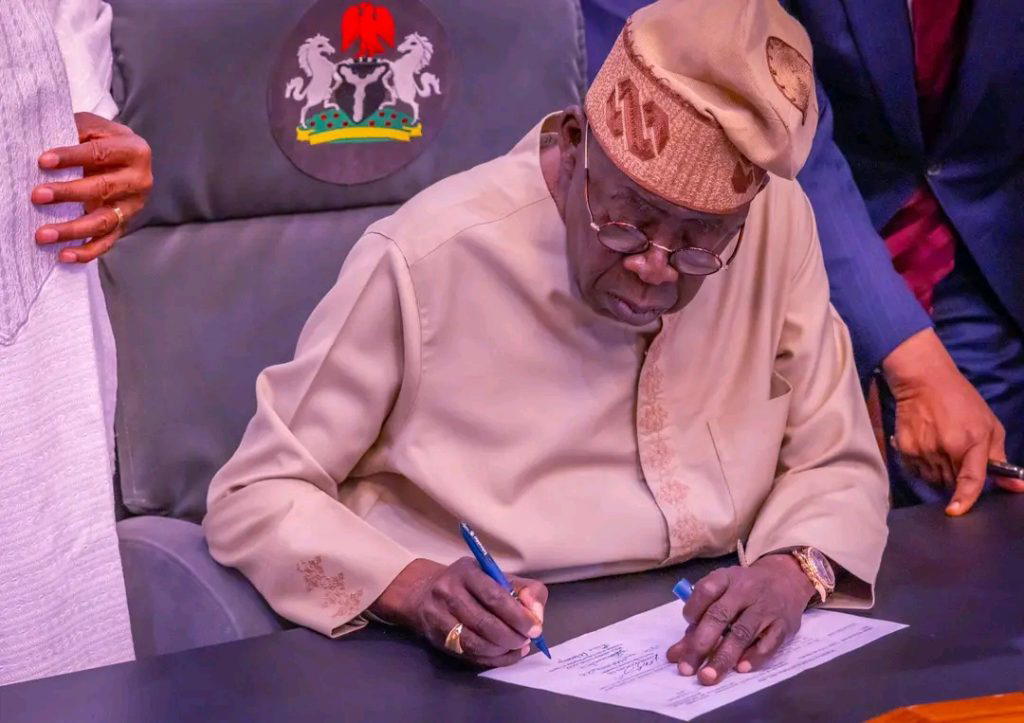
Governor Babajide Sanwo-Olu of Lagos State, described the Senate’s approval of the bill’s 26 clauses as “epochal,” noting that President Tinubu has championed this vision since his days as governor of Lagos between 1999 and 2007.
“Today is a great day for our country and a moment to celebrate the triumph of genuine democratic and developmental ideas over parochial sentiments,” Sanwo-Olu remarked, urging the 36 State Houses of Assembly to pass the bill without delay.
Sanwo-Olu said the proposed State Police structure would significantly boost efforts to combat terrorism, banditry, kidnapping and other criminal activities threatening national development and stability.
He commended the president’s vision, resilience and unwavering dedication to reforms aimed at deepening federalism and improving governance outcomes across the federation.
The governor also praised the Senate for what he described as a historic decision and urged State Houses of Assembly to expedite consideration and passage of the bill.
“The Senate has made history with this bold step. I urge the state Assemblies to follow suit and ensure this important constitutional amendment becomes a reality,” he said.
Labour Party backs state police
Also, Labour Party, LP, speaking through its National Publicity Secretary, Ken Asogwa, backed the National Assembly, pointing out that maintaining a centralised policing system for a diverse population of 225 million people was a form of self-delusion.
“We feel very elated that the Bill was passed. For us, it was the most consequential piece of legislation passed by the National Assembly since 1999, if not 1979, The truth is that Nigeria has come of age not to centralise its policing system anymore,” Asogwa told Vanguard.
“We cannot continue to deceive ourselves that the current system which we inherited from the colonial era hasn’t failed us. We believe that with the right institutional guardrails, the possibility of executive excesses at the state level will be diminished.
“The truth is that Nigeria has come of age not to centralise its policing system anymore. We have a population of about 225 million people. The policing system we have is obsolete. We cannot continue to deceive ourselves that the current system which we inherited from the colonial era has failed us, especially in the light of current global challenges which have also found expression in our society.
“We understand the fears being expressed in certain quarters about the possibility of state governors abusing it just like they’ve done with the State Electoral Commissions. We believe that with the right institutional guardrails the possibility of abuse will be diminished,” he said.
Similarly, the Inter-Party Advisory Council, IPAC, in Lagos, led by Mrs. Temilola Akinade, who is also Lagos State Chairman of the National Rescue Movement, NRM; and former federal lawmaker, Mr. Oghene Egoh, praised the National Assembly for their political will, noting that the move will significantly close enforcement gaps, bring policing closer to the grassroots, and dramatically improve local intelligence gathering against banditry and kidnapping.
It’s a historic milestone – Olisa Metuh
On his part, Director, Mobilization & Enlightenment, Renewed Hope Ambassadors, Chief Olisa Metuh, described the move as a historic milestone in Nigeria’s security reform and hailed President Tinubu for the action.
He said the establishment of state police offers a practical solution to many of the security concerns facing our country. Its benefits include: “Improved community policing through better knowledge of local languages, culture, and terrain; enhanced intelligence gathering and information sharing between security agencies and local communities; faster response to security threats and emergencies; more effective combat against kidnapping, banditry, armed robbery, terrorism, cultism, and other violent crimes; and greater protection for rural communities and vulnerable populations.
Others are job creation through the recruitment and training of qualified personnel; strengthening of Nigeria’s federal structure by giving states a greater role in securing lives and property; reduction of the operational burden currently borne by federal security agencies; increased accountability and accessibility of law enforcement institutions; and creation of a more secure environment that will encourage investment and economic growth.
While celebrating this milestone, he called on state governors across the federation to work closely with President Tinubu and the Federal Government to ensure the successful implementation of this reform because “if properly implemented, state police will significantly enhance internal security, strengthen grassroots policing, and contribute to a safer and more prosperous Nigeria.”
Rising kidnapping cases pose a major security challenge across Nigeria, so experts are emphasizing community vigilance as a critical defense. Active neighborhood watches, prompt reporting of suspicious activities, and collaboration with security agencies are essential for preventing crimes. Community leaders must work to strengthen local networks, and residents must avoid sharing sensitive personal information. — Onyinye Uko, Media Manager
Amid rising kidnapping concerns, security agents must emphasize public awareness and personal safety. Individuals should avoid isolated routes, stay alert, and maintain regular communication. Public awareness campaigns can significantly reduce risks by educating citizens on criminal tactics. Parents must also teach children safety habits, because informed, vigilant citizens help reduce opportunities for criminal activitie — Mayowa O. Anifowoshe, Clearing/ Freight forwarding agent
Technology is increasingly recognised as an essential ally for improving public safety and reducing kidnappings in Nigeria. Digital tools like mobile tracking apps, emergency alert systems, surveillance cameras, and location sharing enhance personal security. Additionally, dedicated communication platforms allow residents to share timely updates. Integrating technology with community engagement strengthens efforts against kidnapping. —Commander Mercy O., Student
Stronger community-police partnership is vital in addressing kidnapping in Nigeria. Trust and cooperation improve intelligence-gathering and emergency response capabilities. Community leaders must establish structured reporting channels, while residents should share timely information. Neighborhood associations must organise security awareness programs as mutual transparency and consistent engagement will significantly improve security outcomes. —Chikamma Esther, Student
Security experts link economic hardship and unemployment directly to Nigeria’s rising security challenges. While not the sole cause, financial pressures allow criminal groups to recruit vulnerable youth easily. Sustainable solutions require combining law enforcement with job creation, vocational training, and youth empowerment. Coordinated efforts from government and private sectors are vital to tackling these root causes. — Camillus C. Amaechi, Fashion designer
As security concerns grow, citizens must adopt practical measures to reduce kidnapping risks. People must avoid night travel, varying daily routines, and maintaining high situational awareness. Residents should inform family of their movements, while businesses ought to update security protocols. Ultimately, individual preparedness and community cooperation remain essential elements for preventing criminal activities across the country. — Amarachi Sarah, Fashion designer
The post ‘Our worries on state police’ – Parties, other stakeholders appeared first on Vanguard News.

 Punch Nigeria
 Daily Post
 Premium TImes
 This Day
 Vanguard Nigeria