

TRENDING
I mentored Azikel refinery boss Eruani from ‘small boy’ to big businessman — Patience Jonathan • Vanguard Visit: Rising Costs Force Airlines to Dip Into Reserves, Shareholders’ Funds — UNA says • N177bn road project: Birnin Gwari Chairman applauds Tinubu, Uba Sani, seeks more devt • UTME Top Scorer Credits Prep50 For Success • Osun election: Peter Obi warns against violence, urges respect for legitimate results • Women, children face higher risk of abuse from jungle justice – FIDA • Police nab suspected kidnapper attempting to purchase N1.6m AK-47 rifle • Somo muhimu China ikiteka soko la biashara Tanzania • Osun election: Expel Fadahunsi immediately – SDP’s Adebayo tells APC • DRC Ebola outbreak becomes second-largest on record – WHO • Gumi, Jingir, MC Oluomo, Fadahunsi can say what Nnamdi Kanu can’t in Nigeria — Rufai Oseni • Mo Bimpe & Lateef Adedimeji Stepped Out in Stunning Burgundy Looks for Their Triplets’ Thanksgiving • Maelfu wajitokeza kupiga kura Zambia, dosari chache zatajwa • VIDEO: Gridlock in Lagos as trailers, cars collide in dual accidents • Beyond the hashtag: How ESG could give Nigeria’s youth real influence • Obi demands Fadahunsi’s retraction on Osun, warns against threats ahead of guber poll • INEC adds SDP candidate to Osun governorship ballot • Unitrust Insurance celebrates 40 years of trust, resilience, innovation • Geregu responds to concerns regarding bond repayment default • Police rescue 10-year-old boy stuffed in sack, two suspects arrested • I mentored Azikel refinery boss Eruani from ‘small boy’ to big businessman — Patience Jonathan • Vanguard Visit: Rising Costs Force Airlines to Dip Into Reserves, Shareholders’ Funds — UNA says • N177bn road project: Birnin Gwari Chairman applauds Tinubu, Uba Sani, seeks more devt • UTME Top Scorer Credits Prep50 For Success • Osun election: Peter Obi warns against violence, urges respect for legitimate results • Women, children face higher risk of abuse from jungle justice – FIDA • Police nab suspected kidnapper attempting to purchase N1.6m AK-47 rifle • Somo muhimu China ikiteka soko la biashara Tanzania • Osun election: Expel Fadahunsi immediately – SDP’s Adebayo tells APC • DRC Ebola outbreak becomes second-largest on record – WHO • Gumi, Jingir, MC Oluomo, Fadahunsi can say what Nnamdi Kanu can’t in Nigeria — Rufai Oseni • Mo Bimpe & Lateef Adedimeji Stepped Out in Stunning Burgundy Looks for Their Triplets’ Thanksgiving • Maelfu wajitokeza kupiga kura Zambia, dosari chache zatajwa • VIDEO: Gridlock in Lagos as trailers, cars collide in dual accidents • Beyond the hashtag: How ESG could give Nigeria’s youth real influence • Obi demands Fadahunsi’s retraction on Osun, warns against threats ahead of guber poll • INEC adds SDP candidate to Osun governorship ballot • Unitrust Insurance celebrates 40 years of trust, resilience, innovation • Geregu responds to concerns regarding bond repayment default • Police rescue 10-year-old boy stuffed in sack, two suspects arrested
Petrol consumption falls by 600,000 litres/day
Back to Home

Petrol consumption falls by 600,000 litres/day

Vanguard Nigeria about 3 hours 3 mins read
Dangote Refinery has reduced the gantry price of petrol, to N1,250 per litre from N1,275 per litre, representing a two per cent decrease.

By Ediri Ejoh

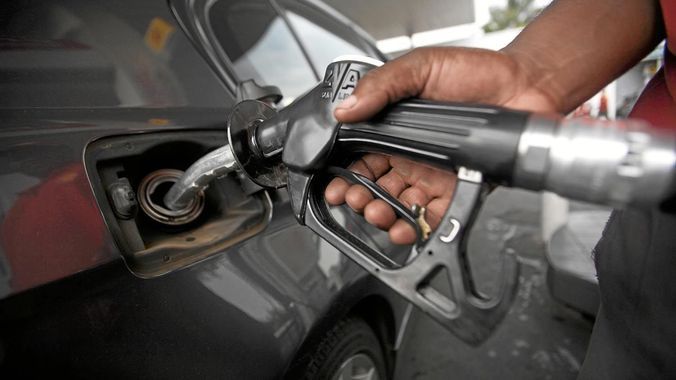
Nigeria’s daily consumption of Premium Motor Spirit (PMS), otherwise known as petrol, fell by 1.27 per cent to 47.4 million litres per day (ML/D) year-on-year (YoY) in June 2026, from 48 million litres per day recorded in the corresponding period of 2025.

This represents a decline of about 600,000 litres per day over the one-year period.

The development reflects the residual impact of the downstream deregulation which recorded about 550 percent increase in petrol price from June 2023 to date.

Breakdown of the data contained in the monthly Fact Sheets released by the Nigerian Midstream and Downstream Petroleum Regulatory Authority (NMDPRA) showed that average daily PMS consumption between June 2025 and June 2026 stood at about 50 million litres.

Checks by Vanguard revealed that December 2025 recorded the highest PMS consumption during the period, at about 63.7 million litres per day, while September 2025 recorded the lowest, at 43.8 million litres per day.

The NMDPRA also reported that the average daily receipts of key petroleum products included 50.6 million litres of PMS, 16.2 million litres of Automotive Gas Oil (AGO), otherwise known as diesel, 2.5 million litres of Aviation Turbine Kerosene (ATK), and 5.1 kilotonnes (KT) of Liquefied Petroleum Gas (LPG), otherwise known as cooking gas.

A breakdown of the regulator’s monthly consumption figures showed a constant fluctuation month-on-month.

Average daily PMS consumption stood at 60.2 million litres in January 2026 before dropping to 56.9 million litres in February.

Demand declined further to 47.3 million litres in March, recovered to 51.1 million litres in April, fell to 46.3 million litres in May and rose marginally to 47.4 million litres in June.

Meanwhile, an analysis of NMDPRA supply data showed that local refineries supplied an estimated 6.609 billion litres of PMS during the first six months of 2026, representing 77.9 per cent of the 8.482 billion litres supplied to the domestic market during the period.

Imported petrol accounted for the remaining 1.873 billion litres, representing 22.1 per cent of total supply.

Domestic refineries supplied an average of 40.1 million litres per day in January, 29.4 million litres in February, 34.2 million litres in March, 40.7 million litres in April, 41.5 million litres in May and 32.5 million litres in June.

Imports, on the other hand, contributed 24.8 million litres per day in January, 3.0 million litres in February, 5.9 million litres in March, 3.7 million litres in April, 5.9 million litres in May and 18.1 million litres in June.

The post Petrol consumption falls by 600,000 litres/day appeared first on Vanguard News.

This article was sourced from an external publication.

Share this article
OneClick Africa Logo

Africa's premier digital hub for impactful news, entertainment, and business insights.

© 2026 OneClick Africa. All rights reserved.