

By Henry Umoru, Assistant Politics Editor
IN the last couple of weeks, one of the major issues that has continued to appear on the front burner of national discourse is the controversy surrounding the Presidential Foreign Intervention Promotion Council, PFIPC.
Read Also: Oyo students, teachers rescue: How security agents weakened terrorists
The unfolding PFIPC scandal, revolving around its self-acclaimed Director-General, Prince Adeniyi Adeyemi Matthew, has rapidly snowballed into a major scandal for the government. It throws up damaging allegations of forgery, massive budget padding, and claims of high-level administrative complicity within the corridors of power.
Genesis of a ‘ghost agency’
For months, Prince Adeyemi successfully operated the agency, posing as its legitimate head. In a daring but shocking move, he secured high-profile office space within the Federal Secretariat in Abuja. From this unauthorized base, he hosted foreign ambassadors and international partners, cementing the illusion of a full-fledged government parastatal.
Outrage
Public outrage, however, erupted when it was discovered that this “fictitious” entity had been quietly sneaked into the 2026 Appropriation Act, walking away with a staggering allocation exceeding N1.3 billion.
Saturday Vanguard’s scrutiny of pages 50 and 51 of the passed 2026 budget revealed that the disputed Presidential Economic Advisory Council/Presidential Foreign Intervention Promotion Council was captured under Budget Code: 0111062001. A total of N1,302,978,784 was allocated to it, out of which N1,002,978,784 was set aside for recurrent expenditure and N300,000,000 for capital expenditure.
A further breakdown of the council’s controversial budget line items include:
Personnel Salaries: N573,260,187
Allowances and Social Contributions: N229,718,596
Logistics for World Investment Summit 2026: N182,500,000
Strategic Negotiation for Investment Professionals: N11,000,000
Negotiation and Leadership Training: N10,000,000
How law was bypassed
Authoritative legislative sources revealed to Saturday Vanguard that the budget proposals for the PFIPC never underwent the mandatory defense process. The management of the agency never appeared before the Senate Committee on Establishment and Public Service Matters, which is chaired by Senator Cyril Oluwole Fasuyi (APC, Ekiti North).
By parliamentary tradition and the provisions of Page 99 of the Senate Standing Orders 2023 (as Amended), the Committee on Establishment is saddled with the constitutional jurisdiction to verify annual budget estimates of government agencies under its purview.
When the President presents the Appropriation Bill, it passes through the first and second readings before being referred to the Appropriations Committees of both chambers. Sub-committees then invite Ministers and heads of parastatals to defend their financial “envelopes” sent by the Ministry of Budget and National Planning. During this open scrutiny, past performance and capital releases are rigorously evaluated before a clean bill is sent to the plenary for a third reading and final passage.
In the case of the PFIPC, sources allege the budget was given an accelerated, “hand-shake” approval and inserted into the national budget without checks—leaving questions begging for answers as to who sneaked the figures in. Nigerians are now demanding that the Senator Fasuyi-led Committee clear the air on whether the agency was ever invited, if they honoured it, and why sanctions were not meted out if they failed to appear.
Storm in Red Chamber
It was against this backdrop of fiscal anomalies that the matter arrived at the front burner of the Senate during plenary.
However, the Upper Chamber swiftly rejected a strong bid to launch a comprehensive legislative investigation into the operations and allocations to the purported council.
The move for a holistic, independent probe was initiated by Senator Suleiman Kawu (APC, Kano South), who raised a point of order citing Order 9 and Rule 9(c) of the Senate Standing Orders.
Presenting his motion, titled: ‘Urgent Need to safeguard the Integrity of the Senate and the Federal Government,” Kawu asked the Red Chamber to investigate how an agency described by the Presidency as non-existent secured over N1.3 billion.
”The public space has been inundated with allegations, controversies, and counter-accusations,” Kawu argued. “While senior officials of the Presidency have publicly disowned the PFIPC, describing it as a ‘fake, fictitious, and unauthorized’ entity, disturbing revelations show it penetrated our financial and budgetary processes.”
Kawu warned that the inclusion of an unauthorized entity severely erodes public confidence in the National Assembly’s oversight and appropriation powers, subjecting the Federal Government to avoidable international ridicule regarding fiscal governance.
In his prayers, he urged the Senate to mandate its Committees on Ethics, Code of Conduct & Public Petitions, and Appropriations to conduct a sweeping inquiry to determine who facilitated the slotting in of the N1.3bn, whether any funds have been released, and who the signatories to the agency’s bank accounts are.
The Shield
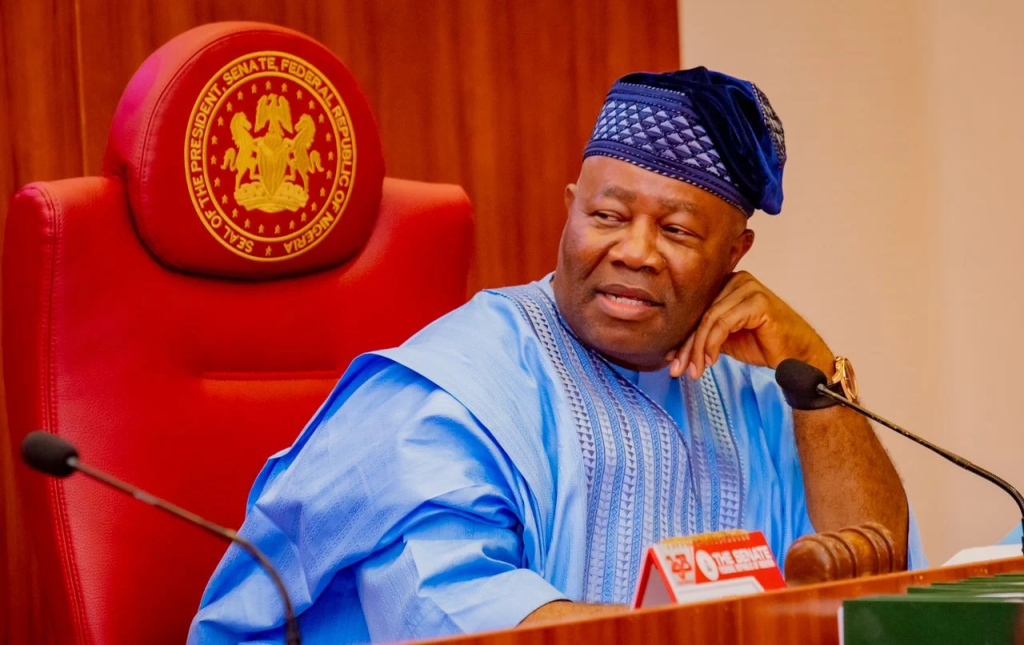
The bid to unmask the faces behind the budget padding was, however, stepped down following intervention from the leadership. The Deputy President of the Senate, Senator Barau Jibrin (APC, Kano North), who presided over the plenary, ruled that the Red Chamber should steer clear of a fresh inquiry, opting instead to await the outcome of an executive investigation.
Barau reminded lawmakers that President Bola Tinubu had already directed the Independent Corrupt Practices and Other Related Offences Commission, ICPC, to probe the scam.
“The Presidency has taken up this matter by directing the ICPC to investigate fully how this came to be. And I think the ICPC has started,” Barau stated, cutting short further debate. “I believe what we need to do at this stage is to have the report of the ICPC, and then we can act on that report.”
‘History will judge us’
Spurned by the leadership’s decision to drop the motion, a defiant Senator Kawu later addressed National Assembly correspondents, insisting he had discharged his constitutional duties to the electorate.
Clarifying that his grievance was not about the creation of the council but the integrity of the budget process, Kawu maintained that the National Assembly has a separate, inalienable duty to investigate its own processes alongside the Executive’s anti-graft inquiry.
“We are constitutionally empowered to consider and approve the national budget. Therefore, we must determine who facilitated the inclusion of that agency’s budget. If the proposal came from the Executive, that is one issue; if it originated from the National Assembly, Nigerians deserve to know who was responsible,” the lawmaker asserted.
With billions of taxpayers’ money hanging on an undefended budget line for a disowned agency, Kawu struck a somber note on transparency: “We need to know whether there were any releases, to which account it was paid, and who the signatories are. We are all Nigerians. History will judge whether we discharged our constitutional responsibilities in accordance with the law.”
As the executive and legislative maneuvers continue over the PFIPC mess, Nigerians wait anxiously as events unfold.
Vanguard News
The post PFIPC Scandal: How Senate blocked N1.3bn budget probe; ‘history ‘ll judge us’ – Kawu appeared first on Vanguard News.

 Punch Nigeria
 Daily Post
 This Day
 Vanguard Nigeria
 All Africa
 Channels TV
 Modern Ghana
 Bella Naija
 The Standard Kenyan
 InformationNG