

Experts: Preserve reforms while aggressively mitigating social and economic costs
By Nnamdi Ojiego
The issue of fuel subsidy has returned to the front burner and is raging fiercely barely three months to the general elections.
The presidential and National Assembly Elections hold on January 16, 2027 while governorship and state assembly polls hold two weeks later.
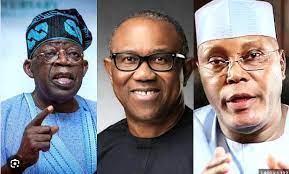
Former Vice President Atiku Abubakar, who is the presidential candidate of the African Democratic Congress, ADC, reopened the issue when he announced about one month ago that he would restore petrol subsidy, forcing critics to accuse him of making political capital out of the issue.
President Bola Ahmed Tinubu had ended the subsidy regime on May 29, 2023, moments after being sworn into office.
In the run up to his assumption of office, the corrupt subsidy regime had gulped humongous sums of public funds estimated at hundreds of billions of Naira while the preceding administration had toyed with the removal without actually being able to carry it out because of the fear of the backlash.
But Tinubu, based on his campaign promise, simply ended the regime after his inauguration by announcing: “Subsidy is gone”.
Petrol price immediately spiked from about N145 to about N800 per litre with the multiplier effect felt in virtually every sector of the economy.
Hardship for the common man set in as the increase in petrol price fed into transport, food, production and household costs.
The economy has subsequently battled inflation for more than three years of the Tinubu administration, a situation further exacerbated by the Middle East war which hiked crude prices.
Petrol currently sells at about N1, 500 while diesel price is far higher.
Poor electricity supply has not helped matters as many homes and businesses have resorted to petrol and diesel powered generations to operate.
Cost of doing business and running has gone up by several percentages.
Expectedly, associates of the president top the list of the critics of the Atiku move to restore fuel subsidy if he wins the next presidential election as they try to outdo one another in puncturing his prescription.
Special Adviser to Tinubu on Media and Public Communication, Sunday Dare, identified what he described as an ‘arithmetic flaw’ in the former vice president’s plan.
Dare described the proposal as an “economic safari”, arguing that selling crude oil to local refineries at preferential prices could create fiscal, market and smuggling challenges.
According to him, Atiku’s proposal to supply crude to domestic refiners below market value would reduce the revenue available to the three tiers of government.
“Who pays the bill? Selling federation crude below market price creates an immediate fiscal hole in the Federation Account, directly slashing allocations to federal, state, and local governments for schools, hospitals, and security,” he said.
He also warned that preferential crude pricing could distort competition in the downstream petroleum sector.
Dare stressed that such an arrangement could “risk creating artificial monopolies, destabilising smaller indigenous modular refiners” and conflict with the deregulatory provisions of the Petroleum Industry Act.
For his part, Special Adviser to the President on Information and Strategy, Bayo Onanuga, said Atiku, confused, was playing politics.
Onanuga said the ADC presidential candidate’s position had changed or been explained differently three times within a week, beginning with a statement by his spokesperson, Paul Ibe, that the former vice-president would restore petrol subsidy if elected and later phase it out.
He said another aide, Phrank Shaibu, subsequently described Ibe’s position as an “unauthorised and misleading characterisation” of Atiku’s stance, arguing that the subsidy would instead remain until domestic refining increased, supply stabilised and market competition deepened.
According to Onanuga, Atiku later intervened and reaffirmed that his position had not changed, saying he would restore what he described as a targeted subsidy.
He quoted Atiku as saying, “I will restore targeted subsidy and put purchasing power back in the hands of Nigerians.”
Onanuga questioned the different explanations, asking why one aide would describe the subsidy as temporary and subject to a phase-out while another disowned that position before Atiku himself reaffirmed the original proposal.
He said, “This is not merely a matter of semantics. It is a serious policy contradiction.”
The presidential aide also challenged Atiku to explain how his proposed targeted subsidy would work, including its cost, beneficiaries, funding mechanism and conditions for its eventual removal.
“We therefore urge Atiku to stop shifting positions and explain precisely what he means by ‘targeted subsidy’: how much will it cost, who will benefit, how will beneficiaries be identified, how will it be funded, and what objective economic conditions will determine its eventual termination?” he said.
He also rejected what he described as an oversimplification of the relationship between petrol prices and the cost of living, arguing that food inflation was influenced by several other factors, including insecurity, exchange rates, logistics, storage, flooding and agricultural input costs.
He further questioned Atiku’s proposal to link subsidy to the price of crude oil, noting that refining crude produces several other petroleum products apart from petrol.
Onanuga cited diesel, aviation fuel and kerosene among the products derived from crude oil, and asked whether Atiku’s proposed subsidy would extend to those products as well.
He specifically recalled that diesel was deregulated in 2004 under the administration in which Atiku served as Vice-President, while kerosene and aviation fuel were deregulated at different times.
Onanuga, in a separate statement, warned against any attempt to return Nigeria to the petrol subsidy regime, saying the policy could undermine the Nigerian National Petroleum Company Limited.
The presidential aide highlighted what he described as NNPC’s financial and operational performance in 2025.
Onanuga said NNPC’s earnings before interest, taxes, depreciation and amortisation rose by 22 per cent to N18tn, while earnings per share increased by 32 per cent to N35.9.
He also said the company’s operating cash flow grew by 16 per cent to N12.8tn, return on equity improved by 200 basis points to 16 per cent, while its declared dividend increased by 35 per cent to N5.8tn.
Onanuga said, “Atiku’s subsidy programme will certainly kill this company, which could be our own Aramco.”
“Our country has no business taking 100 steps back. Forward ever!”
The Secretary to the Federal Government (SGF), Mr George Akume, also joined the fray, ruling out a return to the petrol subsidy regime, insisting that the reforms of the Tinubu administration were necessary to save Nigeria from imminent collapse.
Akume’s Special Adviser on Media and Publicity, Yomi Odunuga, in a statement, said the SGF categorically declared: “We will not return to the ruinous petroleum subsidy regime of the past”.
He said the administration took hard decisions from the day it assumed office.
“This administration took office in 2023 and immediately took bold decisions needed to save the nation from imminent collapse”, the SGF stated.
“Such decisions include the removal of the petrol subsidy, unification of the foreign-exchange market, tax and other fiscal reforms, etc.
“These were difficult decisions, but necessary to rebuild stability and we have started enjoying the results”.
Citing the World Bank, Akume said Nigeria’s real Gross Domestic Product (GDP) grew by 4.2 per cent in the first half of 2026, up from 3.9 per cent a year earlier.
“The task before us now is to ensure that growth translates into jobs and higher incomes for all Nigerians,” he said.
The SGF said the shift to gas was cutting fuel costs.
He disclosed that over 120,000 vehicles have been converted to Compressed Natural Gas, CNG, with more than 400 conversion centres and 90 fuelling stations nationwide.
“This shift is cutting fuel costs for motorists and commuters. CNG buses now carry millions of passengers at fares far below those of petrol buses,” he said.
Mr Peter Obi, Mr Seyi Makinde, Mr Donald Duke and Mr Adewole Adebayo, all presidential candidates of different political parties, jostling to battle Tinubu in the 2027 polls, among others, have since joined the conversation.
Obi, presidential candidate of the Nigeria Democratic Congress, NDC, initially maintained that subsidy removal was necessary but criticised the management of the proceeds.
More recently, he said an NDC administration would reinstate subsidy after tackling corruption.
His running mate, Rabiu Kwankwaso, has also said an Obi-led administration would introduce its own form of subsidy, with greater investment in domestic refining.
Makinde, incumbent governor of Oyo State and presidential candidate of the Allied Peoples’ Movement, APM, argued that the debate should move beyond a simple choice between retaining and removing subsidy.
He wants Nigerians to benefit more directly from locally produced crude through a different petroleum pricing framework.
Adebayo, SDP presidential candidate, promised to bring petrol prices down to N200 per litre through domestic refining and a mechanism using revenue from other petroleum products to support the price regime.
Also, Duke, presidential candidate of the Peoples Redemption Party, PRP, has gone further, questioning the very basis of describing Nigeria’s petroleum pricing arrangement as subsidy.
He has argued that petrol could sell for about N200 per litre if the country’s crude and other energy resources were properly managed.
The development has left Tinubu as the only presidential candidate of a major political party (All Progressives Congress) retaining the removal of fuel subsidy the way it is.
The latest twist came as public servants, citing worsening economic hardship and the rising cost of petrol, began a three-day warning strike on Friday after demanding that the Federal Government, FG, reduce the pump price to N500 per litre, approve a wage award and begin negotiations for a new national minimum wage.
Meanwhile, the response of the Tinubu administration thus far is to resist the pressure to restore fuel subsidy, offering instead palliatives.
As the 66th anniversary of Nigeria’s independence approached on Thursday, October 1, the president announced plans to cut transport fares across the country with the deployment of more CNG vehicles on the roads across the country.
The roll out of vehicles running on CNG, a cheaper alternative to petrol, is one of the measures the administration had proposed in 2023 to ameliorate the spike in petrol prices.
But the measure has not been widely accepted by the vast majority of Nigerians despite government promise to subsidise the CNG while critics say the roll out has been inadequate.
Tinubu, in his announcement said the deployment of the CNG vehicles to cut transport fares would be carried out in conjunction with state governments.
Reports late last week said less than half of the 36 states of the federation had actually seen some level of reduction in transport fares, thus raising doubts about the feasibility of the plans.
In August, the Minister of Finance and Coordinating Minister of the Economy, Taiwo Oyedele, said subsidy removal had mobilised N15.8 trillion for the Federation between June 2023 and December 2025.
The government also acknowledged that the “subsidy savings” was not deployed to funding infrastructural projects contrary to the initial promise.
Instead the money was shared among the three tiers of government.
And whereas the Federal Government spent its own on debt servicing and salary payment, state and local governments spent the bulk of theirs on salary payment.
But the question of what Nigerians have received in return remains contentious. The International Monetary Fund, IMF, said in its 2026 Article IV report that estimated savings from fuel subsidy removal did not appear to have accrued to the FG budget in 2025, while noting challenges in tracking public finances.
That gap between the government’s claim of fiscal gains and the public’s experience of higher living costs has become fertile ground for the renewed political contest.
Against the backdrop of these competing positions, economists, business leaders and civil society advocates interviewed by Sunday Vanguard agreed on one point: the old subsidy regime had serious problems. Their disagreement is largely over what should replace it, how the burden should be shared and whether the gains from its removal have been properly deployed.
‘Reform economically correct’
For the President of the Lagos Chamber of Commerce and Industry, LCCI, Leye Kupoluyi, the decision to remove subsidy was economically justified, although its social protection measures fell short.
“The LCCI views the decision as economically correct and overdue,” Kupoluyi said, arguing that the macroeconomic data now supported the reform.
According to him, subsidy removal and foreign exchange reforms generated N15.8 trillion for the Federation between June 2023 and December 2025, while the official-parallel exchange rate premium fell from more than 60 per cent to below five per cent.
He also cited a fall in the number of states unable to pay salaries from 27 in May 2023 to zero, and said inflation had eased to 15.39 per cent in August 2026 from 23.14 per cent a year earlier.
But Kupoluyi said the improvement in some macroeconomic indicators should not obscure the hardship experienced by households.
“The verdict is a sound reform with inadequate shock absorbers,” he said arguing that the latest increase in petrol prices should also be distinguished from the original effect of subsidy removal. “Today’s price spike, however, is largely imported rather than a delayed effect of the 2023 reform”.
According to him, before the escalation of the Middle East conflict, crude traded below $69 per barrel and petrol sold for about N830 per litre in parts of Nigeria. The current pump price of around N1,400, he said, reflects the international crude oil shock.
The LCCI president said the government’s response after subsidy removal had produced some important interventions, including the increase in the minimum wage and the CNG programme, but the measures had not matched the scale of the shock.
“The minimum wage rose from N30,000 to N70,000, yet at today’s pump prices it buys about 50 litres, against roughly 162 litres in May 2023,” he said while noting that the CNG programme had reached about 100,000 vehicles by mid-2025, against a target of one million by 2027.
For Kupoluyi, the central issue going into 2027 should therefore be whether a candidate’s proposal can withstand scrutiny on cost, funding and implementation.
“Nigerians should apply four tests to every proposal. The first is cost: what it costs and who pays. The second is mechanism: exactly how the pump price falls. The third is governance: how do we block leakages. The fourth is macroeconomic effect: what it does to the naira, inflation and debt.”
‘Old subsidy problem’
Dr Muda Yusuf, Chief Executive Officer of the Centre for the Promotion of Private Enterprise, CPPE, similarly argued against a return to the old subsidy model.
He said the previous arrangement was more than a fuel-pricing issue because it affected public finances, foreign exchange and investment.
“The old regime was therefore not merely a subsidy problem; it was a major fiscal, foreign-exchange and resource-allocation problem,” Yusuf said.
He added that subsidy removal had also improved the commercial environment for domestic refining by allowing refiners to operate in a more market-oriented environment.
“A competitive domestic refining industry has benefits beyond petrol,” he said, pointing to opportunities in diesel, aviation fuel, petrochemicals, fertiliser, plastics, logistics and other areas.
But Yusuf cautioned that higher government revenue alone could not justify the reform.
“Citizens must see tangible benefits through improved public transportation, electricity, healthcare, education, food security, infrastructure and social protection.”
He also urged policymakers to distinguish between the initial price shock caused by subsidy removal and the more recent international energy-price shock.
“It would therefore be incorrect to attribute the entirety of the latest petrol-price increase to subsidy removal,” he said.
“These are two distinct issues: one is a domestic structural reform involving the transition to market-based pricing; the other is an external commodity-price shock.”
‘Cost of bringing subsidy back’
Yusuf warned that restoring a universal petrol subsidy would create a new fiscal burden.
Using a benchmark consumption of 50 million litres per day and an indicative subsidy of N1,050 per litre, he estimated the potential exposure at N52.5 billion daily, N1.575 trillion monthly and about N19.16 trillion annually.
“An annual subsidy bill approaching N20 trillion would impose an enormous opportunity cost.
It would compete with spending on infrastructure, education, healthcare, security, agriculture and social protection, while potentially widening the fiscal deficit and increasing borrowing and debt-service pressures.
“The appropriate policy direction is to preserve the downstream petroleum reforms while aggressively mitigating their social and economic costs,” Yusuf said.
‘Untargeted subsidy’
Financial and social analyst, Blessing Iloh, took a harder line against restoration of the old system.
“The Nigerian government must resist returning to untargeted fuel subsidies while aggressively scaling transparent social transfers, domestic refining, and cheaper energy alternatives like CNG,” Iloh said.
She argued that subsidy had consumed resources that could otherwise have gone into health, education and infrastructure.
“The government should redirect saved funds into targeted social safety nets, mass transit infrastructure, and domestic production incentives instead of blanket fuel subsidies,” she said.
But she also criticised the government’s handling of the reform, arguing that the problem went beyond knowing what policies to implement.
“Government already knows what to do. The problem is corruption,” she said while also questioning the timing and nature of labour’s industrial action, urging workers to negotiate rather than leave ordinary Nigerians to bear the consequences of a strike.
‘Removal was shock therapy’
Civil society groups, however, are more critical of the way the reform was implemented.
Abiodun Baiyewu, Executive Director of Global Rights, described the policy as “economic shock therapy”.
“Removing the petrol subsidy was economic shock therapy, plain and simple. It wiped out an unsustainable fiscal leak, but it pushed the full burden onto everyday Nigerians who are now drowning in transport and food inflation.”
Baiyewu said the measures introduced to cushion the effect had failed to match the scale of the hardship. “The promised safety nets simply haven’t delivered: CNG infrastructure isn’t ready, the minimum wage hike was swallowed by inflation before it arrived, and palliatives reached a fraction of those suffering. The savings protected government balance sheets, not vulnerable families.”
For her, the solution is neither a return to the old subsidy arrangement nor continued exposure of households to uncontrolled fuel-price shocks. “The real solution is ensuring that we develop and subsidize public transportation and agricultural transport, not luxury private cars,” she said.
Baiyewu also called for greater transparency in the petroleum sector. “We need to push for greater transparency, ensuring the publication of quarterly, open-ledger audits showing every drop of fuel refined and every naira spent,” she said.
‘Implementation problem’
Okechukwu Nwanguma, Executive Director of the Rule of Law and Accountability Advocacy Centre, RULAAC, also drew a distinction between the decision to remove subsidy and the manner in which it was implemented.
“The problem with the removal of fuel subsidy was not simply the decision itself, but the manner of implementation and the inadequate measures taken to protect ordinary Nigerians from the immediate consequences,” Nwanguma said.
He said the rise in petrol and transportation costs had placed considerable pressure on households, while CNG, wage increases and palliatives had not been sufficient to offset the impact.
“There is also a serious question of transparency. Government says subsidy removal mobilised about N15.8 trillion for the Federation between June 2023 and December 2025. Yet the IMF reported that the estimated savings did not clearly accrue to the federal budget in 2025 and that challenges remain in tracking them.”
Nwanguma said Nigerians should therefore ask a simple question: “How much was saved, where did it go, and what measurable benefits did citizens receive?”
He argued that subsidy itself should not be treated as automatically good or bad.
“Subsidy is not inherently good or bad. A poorly designed universal petrol subsidy can consume enormous public resources while disproportionately benefiting people who consume more fuel. But targeted government support for transportation, energy and vulnerable households can serve a legitimate social purpose.”
‘Regressive model’
Security governance expert, Prof. Al Chukwuma Okoli, also supported the view that a universal, open-ended subsidy was difficult to sustain.
He said the 2023 decision was based on the need to end a system that had become vulnerable to corruption and abuse.
He, however, said the consequences had exposed weaknesses in the government’s response.
“The various measures designed to cushion the shock associated with the subsidy removal have either been too inadequate or too slow to ameliorate the rising cost-of-living pressures,” Okoli said.
He added that the savings attributed to the reform had not appeared to Nigerians to have been transparently accounted for or judiciously used.
Okoli said the 2027 debate should therefore be judged less by whether a candidate says “subsidy” or “no subsidy” and more by the safeguards attached to the proposal.
“Nigerians should seek to assess the contestants not nominally on the basis of subsidy-removal ‘retention’ versus ‘restoration’ but on the yardstick of fiscal guarantees, anti-corruption safeguards, and concrete cushioning frameworks they are proposing,” he said.
Question facing 2027 contenders
The competing views leave the subsidy debate at a point where neither side can easily dismiss the other’s central argument.
Experts say the case for retaining the reform rests largely on the fiscal burden, leakages, smuggling, foreign exchange pressures and the need to create a viable market for domestic refining.
They further opined that the case for changing or partially reversing it rests on the social cost of exposing households and businesses to international oil-price movements in an economy where public transport, electricity and social protection remain inadequate.
According to Kupoluyi, candidates should therefore be required to provide details rather than slogans.
“Any promise without a price target, volume, crude and FX assumptions, funding source and sunset clause is an aspiration, not a policy,” he said.
Nwanguma similarly urged voters to demand figures.
“How much would a proposed subsidy cost annually? What petrol price is being promised and on what crude-oil price and exchange-rate assumptions? How will it be financed? What expenditure will be sacrificed? Who actually receives the benefit?”
The post SUBSIDY SHOWDOWN: Tinubu resists pressure, steps up palliatives – Atiku, Obi, Makinde, Adebayo, workers, others insist on restoration appeared first on Vanguard News.