

Fuel subsidy is the main debate in the country today. This is over three years after President Bola Tinunu’s declaration that “subsidy is gone”
It was the main debate in the country twenty six years ago leading to President Olusegun Obasanjo’s estalishment of the Petroleum Products Pricing Regulatory Agency, PPPRA.
The basic arguement of Labour, the main group that opposed fuel price increases, was that fuel cannot be priced as if Nigeria were not an oil producing country.
It posited that the economics of production including the fact that Nigeria is an oil producing country and, nearness to the market, dictate that fuel must be cheaper than the price paid in non-oil producing countries.
Labour further argued that the Import Parity Pricing mechanism employed by the Obasanjo administration suffers from two primary variables over which the country may have no control; the price of crude oil at the international market and, the endless devaluation of the Naira based on World Bank and International Monetary Fund dictates.
When these debates in the 1999 post-military era spilled into the streets, general strikes followed. The first was in 2000 when government reached a compromise with the populace by reducing the price increase of N20 to N26 by N4. So, N22 became the new price.
Another price increase and resultant strike two years later, did not result in a price deduction.
When a third price increase occured in 2003 and the populace engaged in a third general strike across the country, the Obasanjo administration decided to settle issues by sending security forces into the streets to shoot the populace into submission. Many were injured by gunshot wounds including school children in uniform. At least sixteen persons were shot dead by armed policemen. One of those shot and injured in Abuja was a Directorate of State Services, DSS operative who had appealed to the police to stop shooting.
In Lagos, I had the unforgetable experience of having to negotiate on phone with then Lagos State Police Commissioner, Young Arabamen to stop his men shooting in the Tejuosho area where we were pinned down by continous gun fire. Later, I had to get permission from him to take the corpse
of a youngman, Tunde Andoyi to the Teaching hospital, Idi Araba. He had been shot dead during the police siege.
When another protest against so called fuel subsidy removal broke out in 2004, President Obasanjo in a nationwide broadcast claimed Labour and her allies were engaged in an attempted coup. It is an offence which carries the death penalty.
Fuel subsidy was the main debate in 2007 with President Umar Yar’ Adua lowering fuel prices and promising to revive the four refineries in the country. Unfortunately, Yar’Adua, so far, the most principled Head of State in our history, could not do this before passing on.
Fuel subsidy, was the central debate in 2011-12 during which manipulated Town Hall discussions were held on live television. On December 19, 2011, President Goodluck Jonathan held negotiations with the Labour Movement. At the meeting, then Finance Minister and Co-ordinating Minister of the Economy, Ngozi Okonjo-Iweala produced statistics and slides that showed the landing cost of a litre of fuel was N147.
We challenged her statistics and asked her what a litre of locally refined fuel was. She did not know. But we knew as the costing had been painstakingly worked out based on irrefutable statistics by US-based petroleum expert, Professor Izilien Agbon. It showed that a litre of locally refined fuel at that time was N40!
When President Jonathan asked Okonjo- Iweala to respond to our submission she could not, rather, she engaged in tantrums claiming we were calling her a liar.
A visibly embarrased President Jonathan adjourned the meeting to January 2012 during which labour was to make its full submission.
That meeting never took place as Jonathan on New Year Day, January 1, 2012, announced higher fuel prices. The resultant protests, the most massive in Nigerian history, shutdown the country for nine days.
In the now, eleven – year life span of the ruling APC administrations of Buhari and Tinubu, fuel prices have gone up from the N65 per litre of the Jonathan era to about N1,400.
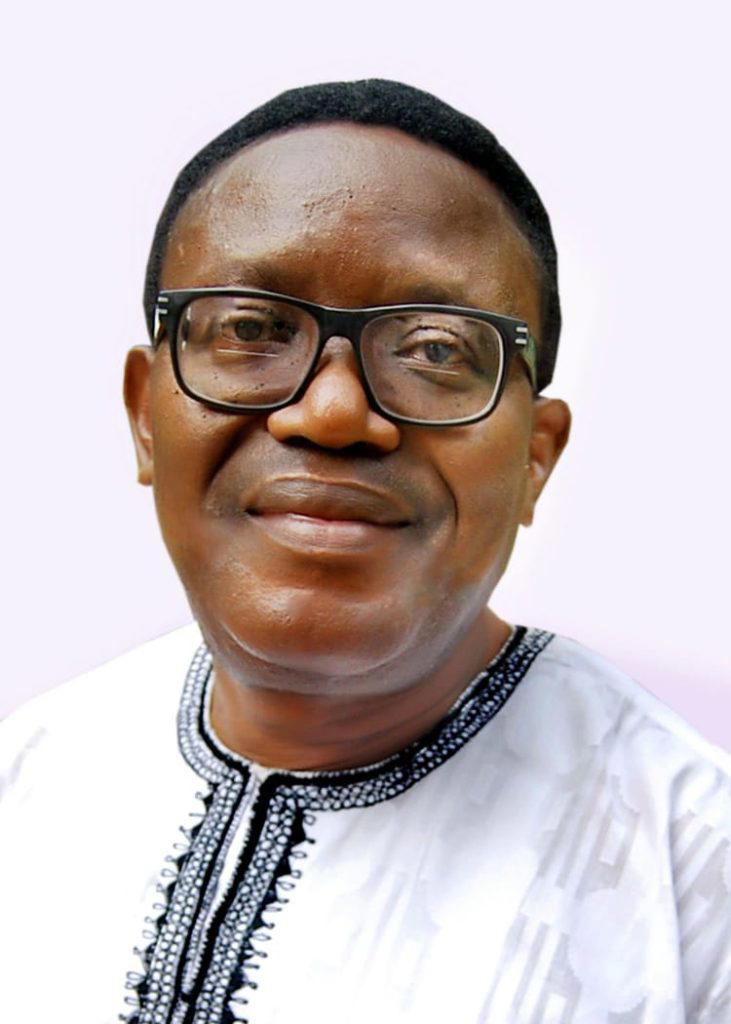
As the current debates on fuel subsidy resurfaced with the various Presidential candidates taking varied positions, Professor Agbon, armed with statistics, on Saturday, September 27, 2026 emerged once again to put matters straight.
The Agbon statistics showed that despite the very high cost of producing a barrel of crude oil in Nigeria which ranges from $31 to $48 compared to the global average of $12 per barrel, and, exchange rate of N1333/$1, the PMS pump price in Nigeria, should be between N435 – N687 per litre. This is in contrast to the N1,400 per litre Nigerians are being charged.
He explained that the ‘subsidy’ is mere paper work built into the fuel costing system by assuming that Nigeria is not an oil producing country and and that all components including international pricing for crude, freight and insurance, are calculated in dollars.
He said although Dangote refines locally, its pricing method is based on import parity which sometimes leads to its imported PMS being cheaper than that sold locally: “For instance, on March 23, 2026, the refinery’s ex depot petrol price stood at N1,275 per litre, compared with an estimated import parity spot price of N1,122 per litre, creating a price differential in favor of imports.”
Professor Agbon submited that the public refineries are not functional because of corruption.
Agbon revealed that despite announcing the end of fuel subsidy on May 29, 2023, the Tinubu government continued to pay fuel subsidy.
The petroleum expert with conscience submitted that: “The poor will benefit when the fuel price is low and only suffer when the fuel price is high.” He added that market forces are mythical: “in the real world, PMS import parity prices are sticky downwards. PMS rise quickly, like a ‘rocket’, when import prices rise, but fall slowly, like a ‘feather’, when import prices fall.”
Higher prices of PMS he said, do not lead to significantly lower demands: “Large changes in PMS prices lead to very small changes in PMS demand. There are very few alternatives to road transport in the movement of goods and persons. Walking is not a viable economic option.”
Addressing Labour’s demands for higher Minimum Wage in the face of rising inflation partly triggered by rising fuel prices, Agbon argued that what is needed is a living wage as: “Presently, a full 50-litre tank costs roughly ₦63,250 to ₦70,000. The monthly minimum wage of a worker of N70,000 can only buy 50 litres of petrol. An average worker labors for 3.2 hours to afford one litre of PMS.”
The debate on fuel subsidy is unlikely to abate soon so long as the focus is on importation, import parity and privatization rather than local refining and the utilization of the 450,000 bpd reserved for local consumption.
As Professor Agbon
submitted, the issue is not the arguments employed, but the that the prices of petroleum products in the country must be drastically reduced.
The post The fuel subsidy debate of the deaf, by Owei Lakemfa appeared first on Vanguard News.