

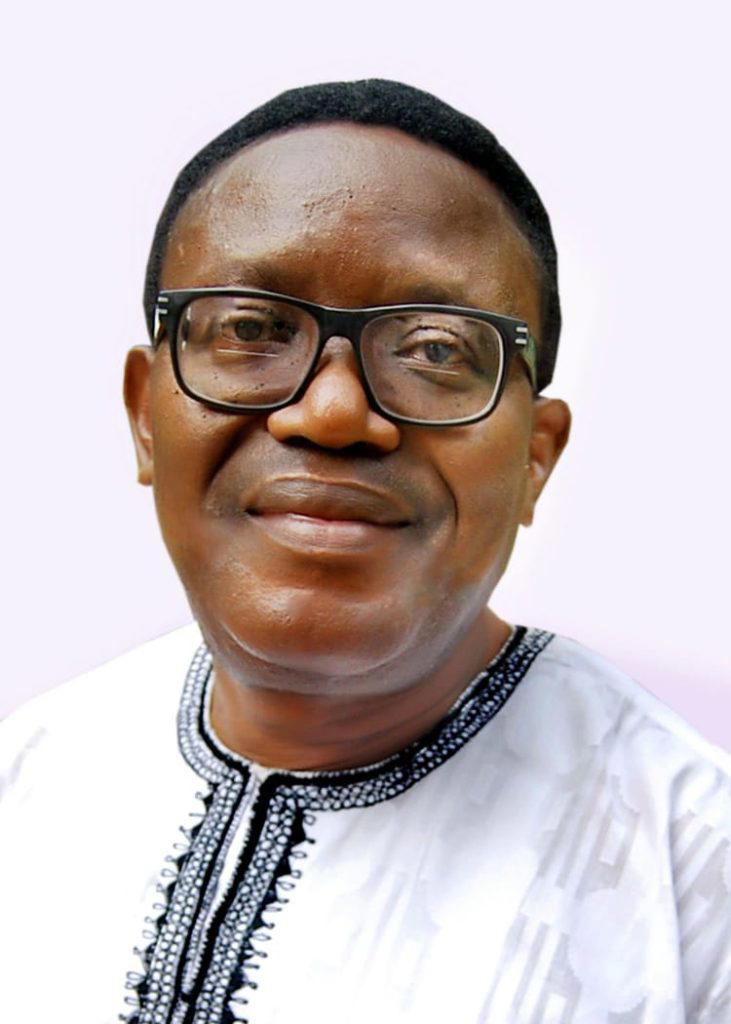
There are not a few who see Ogbeni Rauf Adesoji Aregbesola, former Minister of Interior and onetime Osun State Governor, as an enigma. A politician that would not shy away from a fight he considers necessary, even if it appears unwinnable. A man who would yield no ground unless confronted with a superior argument. A puzzle that needs to be unknotted.
On September 3, 2026, I was part of an audience in Abuja that attended the launch of the book Ogbeni: The Osun Renaissance Years, which tried to explain the leadership model of a man who rejects all titles except Mr. (Ogbeni, in Yoruba) and argues that “Excellency” should be a grading of work done in service and not a title awarded to anybody in high public office.
But the book, written by Olakunle Abimbola, a prolific journalist, turned out not really to be a political one. Rather, as the organisers explained, it is a leadership manual for emergent leaders interested in people-centred, inclusive and developmental politics. Drawing from his years as governor, it seeks to chronicle the practical solutions to the societal challenges Ogbeni confronted in delivering development to the citizenry, even in the face of severe resource limitations.
Ogbeni was to explain his understanding of the book: “In our country, a term in office rarely ends with a report card. It ends, far more often, with a song of praise, or a defence dressed up as an achievement. This book stands apart from both, offering verifiable facts rather than an anthem or an alibi, set down as a manual for leadership and for leadership training. It is about presenting a manifesto and a programme to the electorate, and keeping faith with both, long after the applause has ended. It is about marshalling resources to meet objectives with discipline.”
Cuban Ambassador Miriam Morales Palmero said: “To speak of Aregbe, as we affectionately call him, is to speak of a dear friend of Cuba. It is to speak of someone who has transformed the friendship between our peoples into something far deeper than an institutional or diplomatic relationship. It is to speak of affection, loyalty, solidarity and commitment.”
The book, she posited, “represents the true spirit that leads a person to care not only about himself, but also about his people. To think first of those who need the most. To understand that governing does not simply mean administering, but rather assuming a moral responsibility towards society.”
Represented by Deputy Ambassador Ana Flavia Nuevo, the ambassador recalled that Ogbeni created “opportunities for Nigerian young people to travel to Cuba and pursue higher education, particularly in the field of Medicine and other specialities.” She added: “His story reminds us that true leadership is not measured solely by the positions a person holds. It is measured by the lives one is able to transform. By the doors one is able to open. By the opportunities one is able to create. By the hope one leaves planted among one’s people.”
Dr. Denja Abdullahi, former President of the Associataion of Nigerian Authors (ANA) and author of Death and the King’s Grey Hair, said the association was drawn to Ogbeni when he was governor because: “Anywhere we see progressive politics, we always identify with it. We saw him governing with purpose… He was one governor pushing the idea of indigenization.”
Abimbola Daniyan, an engineer and part of the Ogbeni administration in Osun, talked about the programmes executed in the state as creating a value chain. He said, for instance, the need to mass-produce school uniforms under the education programme led to revolutionising tailoring in the state as the professionals were grouped and their skills sharpened. He said that the Osun experience emphasized that there must be a nexus between leadership and those being led. He regretted that leadership in the country has become transactional.
Ambassador Albert Gbolahan Omotayo, former Ambassador to Mozambique with concurrent accreditation to Mauritius and Madagascar, said he was attracted to the Ogbeni leadership in Osun because of its indigenization policies. He recalled: “I started primary school in 1950 and our uniform was Aso Oke.” He argued that even if persons have disagreements with a leader, the individual should be separated from his achievements. He urged Ogbeni not to be discouraged by the actions of his successor.
Former Edo State Governor and Professor of Law, Oserheimen Osunbor, said the gathering was to mark the good programmes of Ogbeni as Governor of Osun State and that the book will serve as a template for good leadership. He urged leaders to write; otherwise, others will write their stories in the way that suits them.
Mallam Bolaji Abdullahi, the National Publicity Secretary of the African Democratic Congress (ADC), described Ogbeni as one of the finest human rights advocates in the country, adding that no matter how rigidly the former governor holds to a position: “If you give him a superior idea, he concedes.” He said Ogbeni still needs to write his own story.
In his response titled “GRACIAS,” the Spanish word for “Thank You,” Ogbeni said: “Essentially, this book is a case study of what good leadership can produce, measured in outcomes people can still point to, rather than slogans. As we say in Africa, envy of honey never robs it of its natural sweetness. Although this book is a leadership handbook, it is also history, and those afraid of their own past are unfit to lead a people toward their future. Such leaders leave behind little worth inheriting.”
He argued that: “Leadership is serious business. It is earned through service, rather than seized through plunder and abandoned in flight. It is built on example, on accountability, and on the discipline to keep building after the cameras leave.”
He said the same spirit of service his team exhibited in Osun “must now turn toward the future of our country and our continent. The future is bright, though brightness must be earned rather than assumed, and we must work for it with the same discipline this book describes. Every forest begins with a single seed. Tonight, we have planted one more.”
The author, Abimbola, said Ogbeni’s promise to produce 2,000 jobs in the first one hundred days of his administration was greeted with skepticism, but he delivered in 98 days.
He described the Opon Imo tablet programme, which delivered digital learning tools on the laps of high school students, as a groundbreaking revolution. He also talked about the Agba Osun Programme for the elderly and the Task Force which took care of the mentally challenged throughout the state.
The book was like reporting Ogbeni to history. But the people of Osun State, whom he served for eight years, are in the best position to mark the script.
The post The Ogbeni years: Reporting a politician to history, by Owei Lakemfa appeared first on Vanguard News.