

*NPA, Apapa LG bicker over situation
By Efe Onodjae
The stench is stomach-churning, sickenning, even.
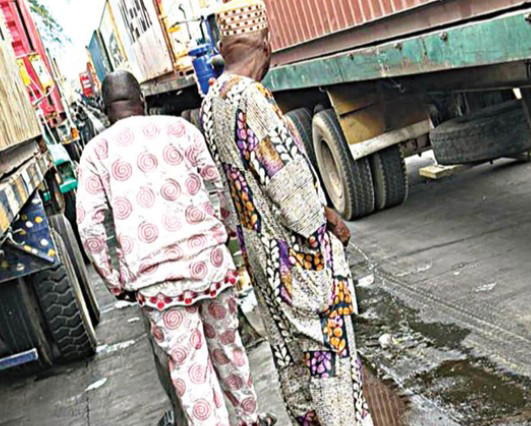
The sight, ugly! Just visualize a middle-aged individual, male, crouched behind the culvert dividing an eight-lane highway, answering nature’s call.
In bathroom terminology, doing Number One (urination) openly on the highway is bad enough.
Doing Number Two, appetites in the full glare of passersby, while hiding beside the long queue of tankers and articulated vehicles heading to Nigeria’s ports is worse.
Welcome to Nigeria’s ports corridor.
And it is a shame.
Alarm
Truck drivers and residents along the Nigerian Ports Authority (NPA) corridor have raised concerns over increasing cases of open defecation, indiscriminate waste disposal, and poor sanitation along the port access roads.
The situation has triggered a blame game between NPA officials and the Apapa Local Government Area (LGA), raising concerns among stakeholders in the maritime industry.
Blamegame
While the NPA maintains that its jurisdiction is limited to activities inside the port, placing responsibility for surrounding roads on local authorities, Apapa LGA argues that it receives no revenue from port operations, making it difficult to maintain the corridor.
In separate interviews with Vanguard, stakeholders stressed that despite the revenue generated from truck operations that sustain port activities, the NPA has failed to ensure a clean environment.
We don’t generate revenue from Apapa Port— Apapa LG
During a visit to the Apapa Local Government Secretariat, a senior official, who spoke anonymously, explained that the corridor falls under federal jurisdiction, limiting the municipality’s authority.
He said: “When we go there, they say it’s a port, a federal government entity, and that the local government cannot intervene. This area they call Port Corridor, do you expect us, the local government, to start fighting? Let me tell you from experience: the truck drivers and trailers are kept there at night. During the day, our street sweepers, elderly women we employ, go there. Even when they haven’t bought food with the saxophone they use for takeaways, people defecate and try to cover it up. If our sweepers arrive early, they will see someone else’s feces again.”
He continued: “Our local government faces many challenges. No revenue comes from the port, not a kobo. Companies operating in the port do not pay our rates and levies. It’s clearly federal territory. The NPA and the port authority will tell you that the local government cannot generate revenue from there. That’s our major challenge.
We’ve never abandoned our responsibilities. Here is our refuse truck, ready to evacuate waste. But how can we remove trailers to clear the road? The trucks are at a standstill, and it affects us terribly. We are at the receiving end of this problem.
You can’t entirely blame the drivers, they are human too. They want to do the right thing. We have tried our best. If the trucks move now, I can show you our environmental officer; you’ll see they are ready to work. Our refuse teams handle waste from those who dump irresponsibly. That’s the situation: the local government faces many challenges and receives no revenue from the port. That is our major hurdle.”
NPA generates N5 billion monthly from trucks — COMTUA
The National President of the Council of Maritime Transport Unions and Associations (COMTUA), Yinka Aroyewun, revealed that the NPA generates an estimated N5 billion monthly from truck operations.
He said: “Just from the call-up process for movements into the port, per truck, the NPA generates an average of N100,000 per trip, covering both official and pro payments, with an average of 50,000 trips per month. Therefore, the total revenue generated from truck drivers alone is N5 billion per month.”
Systemic failure blamed for Apapa open defecation — Rildwan
Chairman of the Truckers Alliance, Bello Rildwan, blamed the NPA for failing to maintain constant sanitation along the corridor and prevent trucks from remaining stationary on the road.
He explained: “NPA should ensure constant sanitization. But they only do it annually. If trucks aren’t stationary on the road, drivers won’t defecate there. All hands need to be on deck – road marshals, NPA staff, Nigeria Police, and LASTMA. They put up roadblocks and manage traffic, but the ETO system is supposed to regulate truck influx. It should release only the number of trucks required inside the port, but that’s not happening.
Drivers should not be on the road defecating. Cleaning up is the NPA’s responsibility.
Some untoward acts in the Apapa port have caused systemic dysfunction. It’s a systemic failure, and the ripple effects are what we see.”
Rildwan added that providing restrooms for drivers is simple: “In well-managed environments, restrooms exist because drivers already endure harsh conditions. By the time a driver reaches the port, they’ve spent 12 hours inside a dilapidated truck. Providing restrooms is feasible, and CSR initiatives could cover this. Some parking lots around Apapa already provide restrooms, allowing drivers to rest and start fresh the next day.”
Trucks keep the port running — AMATO
Secretary-General of the Association of Maritime Truck Owners (AMATO), Mohammed Sani Bala said trucks are the lifeblood of the port: “Without trucks, the port cannot operate. NPA may deny responsibility for facilities around the port, but trucks make the port relevant. They should provide mobile toilets and waste bins via CSR initiatives. NPA benefits the most, earning up to N5 billion monthly from port operations. By this logic, they should lead in sanitation efforts. Our port access road deserves international standards; environmental infractions should not occur there.”
NPA places responsibility on local government
Spokesperson and General Manager of the Corporate and Strategic Communications Division at NPA, Ikechukwu Onyemekara, said, “Responsibilities outside the port fall under local government jurisdiction, not the federal port administration. It’s not our purview. Local leadership should manage their responsibilities. A federal corridor brings in revenue, including the port and the environment. Everyone has a role to play.”
During a visit to Apapa Port, Vanguard correspondent witnessed open defecation and elderly individuals urinating near truck queues, with drivers wearing nose masks to shield themselves from the stench.
The post Truck drivers, residents lament filth, open defecation along Nigeria’s ports corridor appeared first on Vanguard News.

 Channels TV
 Vanguard Nigeria
 Daily Post
 Punch Nigeria
 Complete Sports
 This Day
 Premium TImes
 Bella Naija
 The Leadership
 Modern Ghana
 Horn Observer