

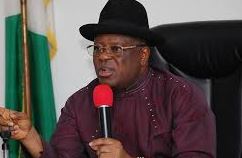
The Minister of Works, Senator David Umahi, has directed Federal Controllers of Works across the 36 states and the Federal Capital Territory to intensify supervision of federal road and bridge projects and strengthen engagement with stakeholders.
Umahi also charged the controllers to improve communication with the public to ensure that Nigerians are adequately informed about ongoing and completed infrastructure projects in their respective states.
The minister gave the directive on Tuesday, August 12, 2026, during a strategic interaction with the Federal Controllers of Works at the ministry’s headquarters.
According to a statement issued by the Ministry of Information and National Orientation on its official X platform, Umahi said the responsibilities of the controllers extended beyond routine administrative duties, as they represented the ministry at the sub-national level.
He urged them to take greater ownership of projects under their jurisdiction, promptly identify and address challenges and establish stronger working relationships with state governments, contractors, traditional institutions, community groups, other stakeholders and the media.
Umahi stressed that effective communication must complement project delivery, saying road users and citizens should have access to clear and accurate information about projects, including their locations, scope, implementation status and expected benefits.
He also directed the controllers to remain physically present at project sites, identify construction challenges early and ensure that contractors complied with approved specifications, quality standards and contractual obligations.
“Go hard on the contractors. Go straight to the site, not sit in the office. The sites need your extra attention to ensure quality and timely delivery,” he said.
The minister urged the controllers to be proactive in resolving technical and construction-related challenges within the provisions of existing contracts.
He said legitimate provisions in the Bill of Quantities (BOQ) and contingencies should be properly understood and applied in accordance with contractual conditions where adjustments were necessary to facilitate efficient project delivery.
Umahi, however, warned against abusing such provisions to create unnecessary work or additional expenditure for contractors.
He said any adjustment must be technically justified, properly documented and approved, with the primary objective of ensuring value for money and improved project outcomes.
The minister also emphasised the need for timely decision-making, warning that delays in addressing legitimate project challenges could increase costs, extend construction periods and worsen difficulties faced by road users.
He promised continued capacity building for ministry personnel, particularly technical officers involved in project monitoring and evaluation.
According to him, officers requiring additional training would be given opportunities to improve their technical and professional competencies and remain abreast of international construction practices, contract administration and project management procedures.
Umahi urged the controllers to develop practical knowledge through regular visits to construction sites, saying technical supervision should not be limited to office-based assessments.
He also directed them to strengthen public awareness of federal infrastructure projects through comprehensive communication plans across the states and the FCT.
Such measures, he said, should include strategically located project information signs, media engagements, documentaries, radio and television jingles, project tours and community-level communication.
He warned the controllers against compromising professional standards or overlooking deficiencies in project execution, stressing that effective supervision required diligence, courage and commitment to public interest.
The minister further called for stronger collaboration among Federal Controllers, Zonal Directors and Coordinating Directors to improve communication and speed up decision-making on project-related issues.
He assured the controllers that the ministry would continue to focus on removing avoidable obstacles to project delivery and urged them to approach their duties with a sense of ownership and accountability.
Umahi said the interests of road users and host communities should remain at the centre of the ministry’s activities, noting that the ultimate measure of infrastructure delivery was its impact on mobility, economic activities and citizens’ quality of life.
“When you put the people first, you are putting God first,” he said.
He urged the controllers to work closely with ministry management, contractors, consultants, state governments, communities and other stakeholders to ensure that road and bridge projects were delivered according to approved standards and deadlines.
In his remarks, the Permanent Secretary, Federal Ministry of Works, Rafiu Adeladan, commended Umahi for his commitment to improving infrastructure delivery and his efforts to drive the ministry’s mandate.
Adeladan also urged the Federal Controllers to remain dedicated to their responsibilities and support the ministry’s efforts towards improved project supervision, stakeholder engagement, public communication and delivery of quality infrastructure.
Umahi said Zonal Directors and other key directors would hold a follow-up meeting to address operational details and implementation modalities.
The meeting, attended by the six Zonal and Highways Coordinating Directors, also featured an interactive session on project supervision and delivery, community engagement and communication strategies.
The post Umahi tasks federal controllers on stronger road project supervision appeared first on Vanguard News.