

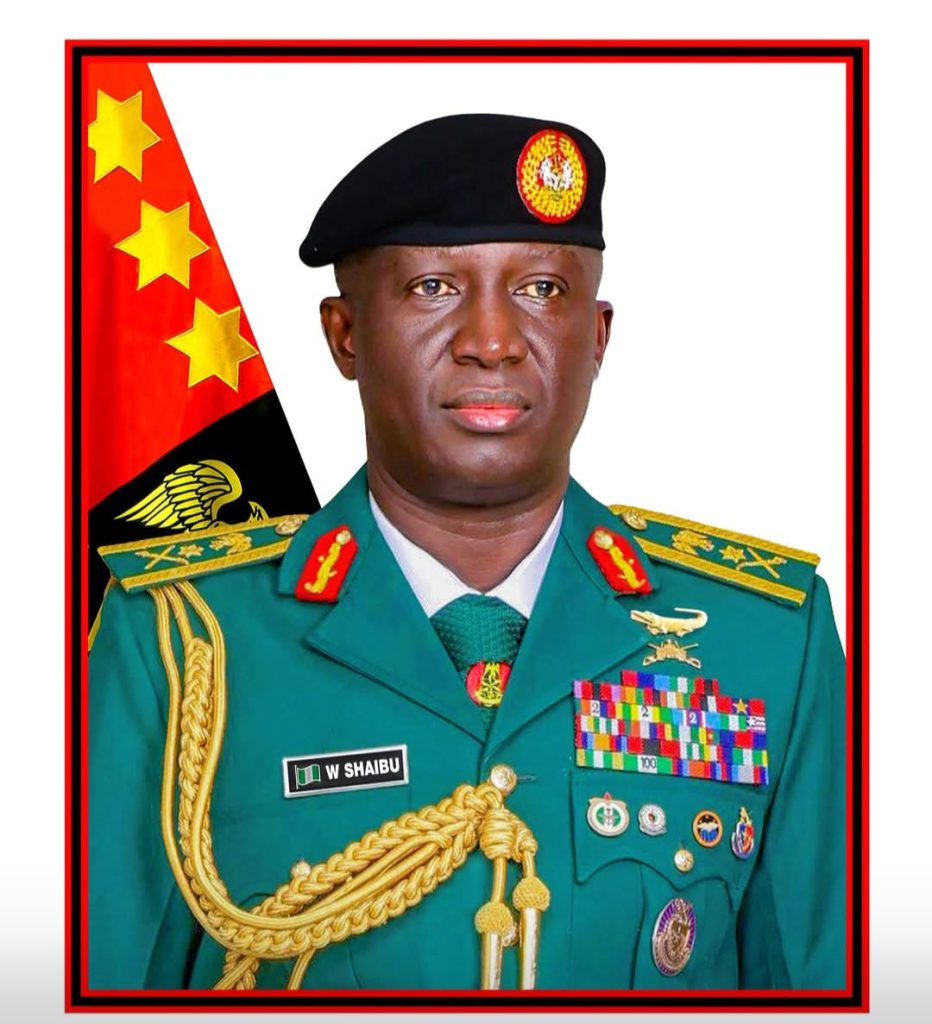
On the sidelines of the 163rd Nigerian Army Day Celebration (NADCEL) 2026 in Port Harcourt, Rivers State, over the weekend, the Chief of Army Staff (COAS), Lieutenant General Waidi Shaibu, engaged senior media executives, including Vanguard Deputy Crime Editor, Evelyn Usman, in an interactive session during which he outlined the Nigerian Army’s ongoing efforts to combat terrorism, insurgency, banditry, kidnapping and other security threats. The Army Chief highlighted the force’s operational achievements across the country’s various theatres of operation, advances in force modernisation, manpower expansion, intelligence-led operations, troops’ welfare, indigenous defence production and civil-military cooperation, while reaffirming the Army’s commitment to safeguarding Nigeria’s sovereignty and territorial integrity. He also spoke on the adoption of both kinetic and non-kinetic strategies, enhanced collaboration with sister security agencies and international partners, and community-based initiatives aimed at strengthening intelligence gathering and sustaining the fight against insecurity.
Excerpts:
How would you assess the Nigerian Army’s performance under your leadership?
I would say the Nigerian Army has made significant progress under the strategic direction of President Bola Ahmed Tinubu, Commander-in-Chief of the Armed Forces. Through his policy guidance, strong political will and sustained support, the President has provided the resources and enabling environment required for the Army to succeed both operationally and administratively.
Since I assumed office as Chief of Army Staff, the Nigerian Army has demonstrated renewed vigour, resilience and professionalism in addressing the nation’s security challenges. Working in close collaboration with sister security agencies and strategic international partners, including the United States, we have neutralised several high-value terrorist and criminal leaders, dismantled numerous criminal networks, and disrupted their operational capabilities through sustained intelligence-led operations.
These efforts have improved security and stability across the country’s various geopolitical zones, creating a more conducive environment for socio-economic activities to flourish. While significant challenges remain, I believe the Nigerian Army has made measurable progress in enhancing national security and fulfilling its constitutional mandate.
Our achievements are driven by a clearly defined command philosophy focused on transforming the Nigerian Army into a more professional, adaptable, combat-ready and resilient force capable of operating effectively within a joint and multi-agency environment. This philosophy is anchored on key pillars that continue to guide our operations, institutional reforms and personnel development, ensuring that the Army remains prepared to respond decisively to both current and emerging security threats.
What has been the driving force behind the Nigerian Army’s recent operational successes?
Our recent operational successes are driven by a clearly defined Command Philosophy aimed at transforming the Nigerian Army into a professional, adaptable, combat-ready and resilient force capable of effectively responding to Nigeria’s evolving security challenges.
The first pillar is professional excellence. We are committed to building a highly professional officer corps by instilling the highest standards of leadership, discipline and ethics at every level, particularly among younger officers. We also recognise that sound administration and personnel welfare are essential to maintaining a motivated and effective fighting force.
The second pillar is operational readiness. We have prioritised the acquisition of modern combat enablers while investing heavily in training because the effectiveness of any military platform ultimately depends on the competence of the personnel operating it. Our troops are therefore continually trained to maximise the capabilities of modern weapons systems and emerging technologies.
Another critical pillar is strategic cooperation. We have strengthened collaboration with sister security agencies, relevant government institutions, local communities and international partners. These partnerships have enhanced intelligence sharing, operational coordination and mission effectiveness, enabling us to deliver more decisive outcomes.
Leadership is equally fundamental to our success. From the Chief of Army Staff to Theatre Commanders, General Officers Commanding, formation and unit commanders, we promote leadership by example, accountability and operational excellence. This has enabled commanders at every level to respond swiftly and effectively to emerging threats.
We also place a premium on civil-military cooperation, recognising that public support is a critical force multiplier. Through sustained community engagement and quick-impact projects such as the renovation of schools and the provision of essential amenities, we have strengthened trust between the Army and local communities. This has encouraged greater cooperation and improved the quality of actionable intelligence available to our troops.
Finally, we have invested in leadership succession and institutional development. Senior officers earmarked for command appointments undergo structured mentoring and leadership development to ensure continuity, strengthen institutional capacity and sustain operational effectiveness.
Together, these pillars: professionalism, operational readiness, strategic partnerships, exemplary leadership, strong civil-military relations and deliberate leadership development have provided the foundation for the Nigerian Army’s recent operational successes across the various theatres of operation.
How has logistics and equipment modernisation improved Army operations?
Effective logistics is the backbone of successful military operations, and we have made significant investments to strengthen the Nigerian Army’s operational capability.
With the support of the Federal Government, we have inducted a wide range of modern combat enablers, including Mine-Resistant Ambush Protected (MRAP) vehicles, Armoured Personnel Carriers (APCs), helicopters, surveillance systems, reconnaissance drones and armed Unmanned Aerial Vehicles (UAVs) with precision strike capabilities.
These platforms have significantly enhanced our mobility, force protection, intelligence, surveillance, reconnaissance and precision strike capabilities, enabling us to respond faster and more effectively to emerging threats across the country.
However, acquiring modern equipment is only one aspect of capability development. We have also invested heavily in human capacity by training our personnel both locally and abroad to operate, maintain and maximise these sophisticated platforms. This ensures that our troops possess the technical competence required to exploit the full potential of these systems in combat.
We have equally modernised our aviation capability by expanding pilot training and developing a sustainable pool of highly skilled aviation personnel. This has significantly improved the Army’s operational reach, rapid deployment capability and support to troops on the ground.
In addition, we have strategically deployed armed and surveillance UAVs across the various theatres of operation to enhance intelligence gathering, target acquisition and precision strike missions. Combined with improved maintenance culture and continuous personnel development, these investments have strengthened our operational readiness, shortened response times and substantially increased the effectiveness of our operations nationwide.
What role does indigenous capacity and local defence production play in your strategy?
Indigenous defence production is a strategic priority for the Nigerian Army because it is fundamental to achieving self-reliance, operational sustainability and national security. We are committed to reducing dependence on foreign procurement by supporting and patronising locally developed military equipment and technologies.
The Defence Industries Corporation of Nigeria (DICON) has made significant progress in strengthening Nigeria’s indigenous defence manufacturing capability, and the Nigerian Army remains one of its strongest partners. We procure locally produced equipment, deploy it in operational theatres, evaluate its performance under combat conditions and provide feedback to improve future production.
A good example is the locally produced Vanguard (Vangusher) armoured combat vehicles, several of which have already been inducted into service and deployed in support of ongoing operations. These platforms have demonstrated the growing capacity of our indigenous defence industry to meet operational requirements.
Beyond DICON, the Nigerian Army Corps of Engineers has continued to expand its manufacturing and reverse-engineering capabilities. By producing critical spare parts and refurbishing previously unserviceable equipment, we have extended the service life of key operational platforms while reducing maintenance costs and reliance on foreign suppliers.
We also continue to support other indigenous defence manufacturers, including the Special Vehicles Plant and other local defence industries, as part of our broader strategy to strengthen Nigeria’s defence industrial base.
Ultimately, investing in local defence production goes beyond meeting the Army’s operational needs. It promotes technology transfer, develops local technical expertise, creates employment opportunities, stimulates economic growth and enhances Nigeria’s long-term strategic autonomy. That is why indigenous capacity development will remain a key pillar of our transformation agenda.
How is the Nigerian Army enhancing manpower to meet current security challenges in the country?
Enhancing manpower has been one of our key priorities since I assumed office. Following a comprehensive review of the Nigerian Army’s manpower requirements against the country’s evolving security challenges, I recommended an expansion of our force strength. I am pleased that His Excellency, President Bola Ahmed Tinubu, Commander-in-Chief of the Armed Forces, approved a significant increase in recruitment as part of the Federal Government’s efforts to strengthen national security.
To support this expansion, we increased the number of Depot Nigerian Army training institutions from one to three, significantly boosting our capacity to train recruits without compromising professional standards.
Recently, we successfully graduated the first set of recruits from the newly established Depot Nigerian Army, Amasiri, in Afikpo North Local Government Area of Ebonyi State. Another set of recruits trained at the new depot in Ogbomoso is also due to pass out shortly. These are in addition to the large number of recruits graduating regularly from the pioneer Depot Nigerian Army in Zaria.
The simultaneous operation of these three depots has substantially increased our manpower generation capacity, enabling us to produce the personnel required to sustain ongoing operations across the country’s various theatres.
However, increasing numbers alone is not enough. Our focus is equally on quality. We have reviewed our training curriculum to reflect the realities of modern warfare, with greater emphasis on marksmanship, counter-insurgency and counter-terrorism operations, fieldcraft, leadership and physical fitness. Newly trained soldiers also undergo advanced infantry and theatre-specific acclimatisation training before deployment, ensuring they are fully prepared for the operational environments in which they will serve.
I must also express our profound appreciation to the President and Commander-in-Chief for his unwavering support, particularly in accelerating infrastructure development at the newly established Depot Nigerian Army, Amasiri. His support has significantly strengthened our training architecture and enhanced the Army’s overall operational readiness.
You always highlight troops’ welfare as a top priority in your command philosophy. What concrete steps have you taken in this regard?
Troops’ welfare remains a cornerstone of my command philosophy and is firmly anchored on our “Soldier First” approach. We recognise that a well-motivated soldier is the foundation of an effective fighting force. Accordingly, we have prioritised initiatives that improve the welfare of our personnel and their families.
One of our major focus areas has been accommodation. We have embarked on extensive barracks construction, renovation and infrastructure upgrade projects across the six geopolitical zones to improve living conditions for officers, soldiers and their families. These projects are ongoing in locations including Plateau, Lagos, Lokoja, Gusau, Benin, Ibadan, Kano, Kaduna, Enugu, Port Harcourt, Sokoto, Niger, Abuja and Maiduguri. The Bola Ahmed Tinubu Barracks Phase II in Abuja, for example, is at an advanced stage and will significantly reduce the accommodation deficit upon completion.
We have also made remarkable progress under the Affordable Housing Ownership Option for All Soldiers (AHOOAS). The pilot phase in Idu, Abuja, has delivered over 400 housing units, all currently occupied by serving personnel and their families. Encouraged by this success, we are expanding the scheme to Ibadan, Benin, Jos, Gombe and Akwa Ibom to provide affordable home ownership opportunities for serving and retired personnel, particularly those wounded in action.
Beyond housing, we have strengthened healthcare services, expanded educational support for soldiers’ children and improved insurance coverage. Under the Group Life Assurance Scheme, we cleared outstanding claims to ensure that the families of fallen heroes receive their benefits without unnecessary delays. Similarly, through our Education Sponsorship Scheme, more than 15,000 children of deceased personnel have received educational support across all levels as of May 2026.
We have also enhanced medical care and rehabilitation for wounded personnel, while recent improvements in salaries and allowances have further boosted morale and welfare.
These initiatives reflect our unwavering commitment to the welfare of our personnel. We firmly believe that every soldier is a valuable national asset, and by investing in their well-being, we are building a more professional, motivated and combat-ready Nigerian Army capable of effectively discharging its constitutional responsibilities.
Can you highlight key operational achievements recorded across the country?
The Nigerian Army has recorded significant operational gains across all six geopolitical zones. Through sustained offensive operations, thousands of terrorists and other criminal elements have been neutralised, while many others have surrendered. We have also arrested numerous suspects, rescued thousands of kidnapped victims and recovered large quantities of arms, ammunition and other warlike stores, thereby degrading the operational capabilities of criminal and terrorist groups.
These operations have improved security on major highways, facilitated the return of many displaced communities to their ancestral homes and restored public confidence in several previously troubled areas. Our successes reflect improved intelligence, enhanced joint operations, effective leadership and the unwavering commitment of our officers and soldiers to safeguarding the nation’s territorial integrity.
How effective have operations been across the different theatres of operation?
Our operations across the various theatres have been highly effective, with measurable gains recorded nationwide. These achievements are the result of the strategic direction of the Commander-in-Chief, the dedication of our officers and soldiers, improved intelligence, enhanced inter-agency collaboration, and the integration of both kinetic and non-kinetic approaches.
In the North East, Operation HADIN KAI has continued to record significant successes. Through sustained offensive operations, enhanced force projection and the deployment of modern combat enablers, including Armoured Mobile Strike Groups, Special Forces and armed Unmanned Combat Aerial Vehicles, we have significantly degraded terrorist capabilities. During the period under review, troops neutralised 1,993 terrorists, arrested 2,645 suspects, rescued 1,778 civilians, and recovered large quantities of arms and ammunition, including 676 AK-47 rifles. These efforts have improved security and enabled displaced communities to gradually return to locations such as Mallam Fatori, Kukawa and Ngoshe.
In the North West, Operation FANSAN YAMMA has substantially disrupted the activities of bandits and terrorists through sustained intelligence-led operations. Troops neutralised 1,717 bandits, arrested 2,660 suspects, rescued 4,052 civilians, and recovered more than 527 AK-47 rifles and over 156,000 rounds of ammunition, significantly reducing the operational capability of criminal groups.
In the North Central, operations under ENDURING PEACE, WHIRL STROKE and SAHEL SANITY have strengthened security through improved surveillance, enhanced troop deployment and coordinated operations. Security along critical routes, particularly the Abuja-Kaduna corridor, has improved considerably. Within the review period, troops neutralised 576 criminals, arrested 8,837 suspects, rescued 2,225 civilians, and recovered substantial quantities of weapons and ammunition.
In the South East, Operation UDO KA has made notable progress in dismantling criminal networks and restoring stability. Targeted operations have cleared major criminal enclaves, including the Orsu Forest and Okigwe axis. During the period, troops neutralised 219 criminals, arrested 1,494 suspects, and recovered large caches of arms, ammunition and improvised explosive devices, contributing to improved security and the restoration of socio-economic activities.
In the South West, sustained patrols and intelligence-driven operations have effectively countered kidnapping, armed robbery and pipeline vandalism. Troops neutralised 13 criminals, arrested 1,720 suspects, rescued 131 victims, and recovered arms and ammunition. Strong collaboration with other security agencies has further enhanced regional security.
Similarly, in the South South, joint operations have significantly curtailed militancy, crude oil theft and other criminal activities threatening critical national infrastructure. During the period, troops neutralised 134 criminals, arrested 3,896 suspects, rescued 341 civilians, and recovered substantial quantities of arms and ammunition.
Overall, the Nigerian Army has maintained sustained operational pressure across all theatres through intelligence-led operations, improved mobility, modern combat capabilities and closer collaboration with other security agencies. These efforts have weakened terrorist and criminal networks, enhanced public confidence, improved the security of critical infrastructure and created a safer environment for socio-economic development.
While we acknowledge that security threats continue to evolve, the Nigerian Army remains steadfast in consolidating these gains and sustaining offensive operations until lasting peace and stability are achieved across the country.
What role does civil-military cooperation play in your operations?
Civil-military cooperation is a critical component of our operational strategy because lasting security cannot be achieved through kinetic operations alone. It requires the trust, cooperation and support of the people.
We place great emphasis on community engagement because effective intelligence-led operations depend on timely and credible information. While technology such as surveillance drones and other intelligence assets is important, reliable human intelligence from local communities remains indispensable.
To strengthen this partnership, we have implemented various community engagement and intervention programmes, including quick-impact projects that directly improve the lives of the people. Experience has shown that communities are more willing to support security efforts and share useful information when they see the military as a genuine partner in development and security.
We also conduct public enlightenment and outreach programmes, particularly for young people, to promote understanding, build trust and encourage civic responsibility. This human-centred approach has improved information flow, enhanced intelligence gathering and enabled commanders to conduct more precise operations against criminal elements.
At the same time, we remain committed to minimising civilian casualties and ensuring that our operations are carefully planned and executed. Our objective is to isolate and neutralise criminal elements while allowing law-abiding citizens to go about their daily activities without fear.
Ultimately, strong civil-military cooperation has become a force multiplier that contributes significantly to the effectiveness and sustainability of our operations across all theatres.
What is your message to Nigerians as the Army marks NADCEL 2026?
My message to Nigerians is one of assurance and collective responsibility. The Nigerian Army remains fully committed to defending the sovereignty and territorial integrity of our nation and to confronting all threats to peace and stability.
We will continue to transform into a more professional, modern and combat-ready force capable of responding effectively to emerging security challenges. However, security is a shared responsibility. We therefore urge all Nigerians to continue supporting the Armed Forces through cooperation, unity, vigilance and the provision of credible information.
I also want to reassure Nigerians that our officers and soldiers remain steadfast in the discharge of their constitutional duties. They work tirelessly, often under very difficult conditions, and many have paid the supreme sacrifice in service to the nation. We honour their courage, dedication and patriotism.
As we mark NADCEL 2026, I call on all Nigerians to continue to support, trust and pray for the Nigerian Army. Together, we can build a peaceful, secure and prosperous Nigeria.
The post ‘We’re building a professional, combat-ready Army’ — COAS appeared first on Vanguard News.

 Mwananchi
 Punch Nigeria
 Daily Post
 Business Day
 This Day
 Vanguard Nigeria