

By Enitan Abdultawab
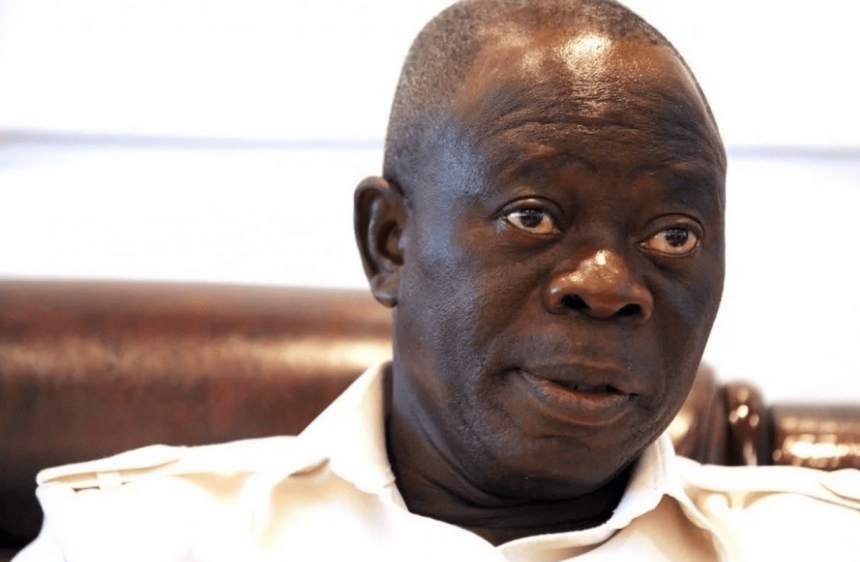
Senator Adams Oshiomhole has challenged former Anambra State Governor Peter Obi to explain how he accumulated $156 million in savings during his tenure, questioning how the funds were obtained when the Federal Government paid states’ allocations in naira.
Oshiomhole, who represents Edo North in the Senate and is a former governor of Edo State, raised the questions during an interview with Symfoni TV published on Thursday.
The former All Progressives Congress national chairman said he and Obi were members of the National Economic Council, chaired by the vice president, when governors sought to receive their federal allocations in dollars because of differences between official and market exchange rates.
According to him, the Federal Government rejected the proposal, insisting that the naira was Nigeria’s recognised currency.
“So all the allocations we receive are in naira. So I asked Obi, where did you get dollars to save? Did you receive naira from Abuja and go to bid for dollars to save for Anambra State?” Oshiomhole said.
He insisted that the claim was untrue, adding that Anambra State Governor Chukwuma Soludo had attempted to explain the financial issues surrounding Obi’s record.
Oshiomhole described Soludo as an authority on financial matters, citing his background as an economist and his tenure as governor of the Central Bank of Nigeria.
“If you know Soludo, I think you should accept that when it comes to financial questions, Soludo is the authority,” he said.
The senator also challenged Obi’s claim that he did not borrow money while serving as governor, arguing that facilities obtained from the World Bank could constitute loans even when repayment was deferred.
Oshiomhole said he also accessed World Bank facilities while serving as Edo governor, including funding instruments known as budget support.
“They are loans. But he then went on to say that these are not loans you pay immediately. Because you are not paying it immediately, it’s not a loan?” he queried.
“It’s in the books. And a future government will necessarily pay it anyway.”
He argued that repayment moratoriums could allow an outgoing administration to leave office before its loans became due, leaving a successor government to meet the obligations.
“Your tenure will have ended before the day you become mature for repayment,” Oshiomhole said, adding that this was what he believed Soludo had sought to explain about Obi’s financial record.
The senator also disputed Obi’s account of an event organised by the Director General of the Debt Management Office (DMO) to recognise the former governor for allegedly not applying for loan approvals.
Oshiomhole described the claim as “another lie”, although he did not provide further details in the excerpt of the interview to substantiate the allegation.
Obi, who governed Anambra State from 2006 to 2014, has maintained that he did not leave the state burdened with debts.
He reiterated his position during a recent interview on Arise Television while responding to allegations that his administration left outstanding loans and liabilities.
However, Anambra State Commissioner for Information and Value Reorientation, Law Mefor, had previously claimed that Obi left $123.77 million in debt at the end of his tenure.
The latest comments have renewed debate over Obi’s financial record, particularly the distinction between accumulated savings, foreign currency holdings and outstanding loan obligations.
Oshiomhole’s claims and questions come amid continued political exchanges over the management of public funds and the financial legacy of past administrations.
The post ‘Where did you get dollars to save?’ Oshiomhole questions Obi over $150m claim appeared first on Vanguard News.