

By Steve Oko
Established in 1932 as a sanctuary for the sick and abandoned leprosy patients, the Uzuakoli Leprosy Colony once stood as a beacon of hope for people afflicted with leprosy. For decades, it offered treatment, dignity, and a second chance at life to Tuberculosis and leprosy patients drawn from across the old Eastern Region including parts of the present -day South-South zone plus the entire states in the South East geopolitical zone.
Today, that hope lies in ruins.
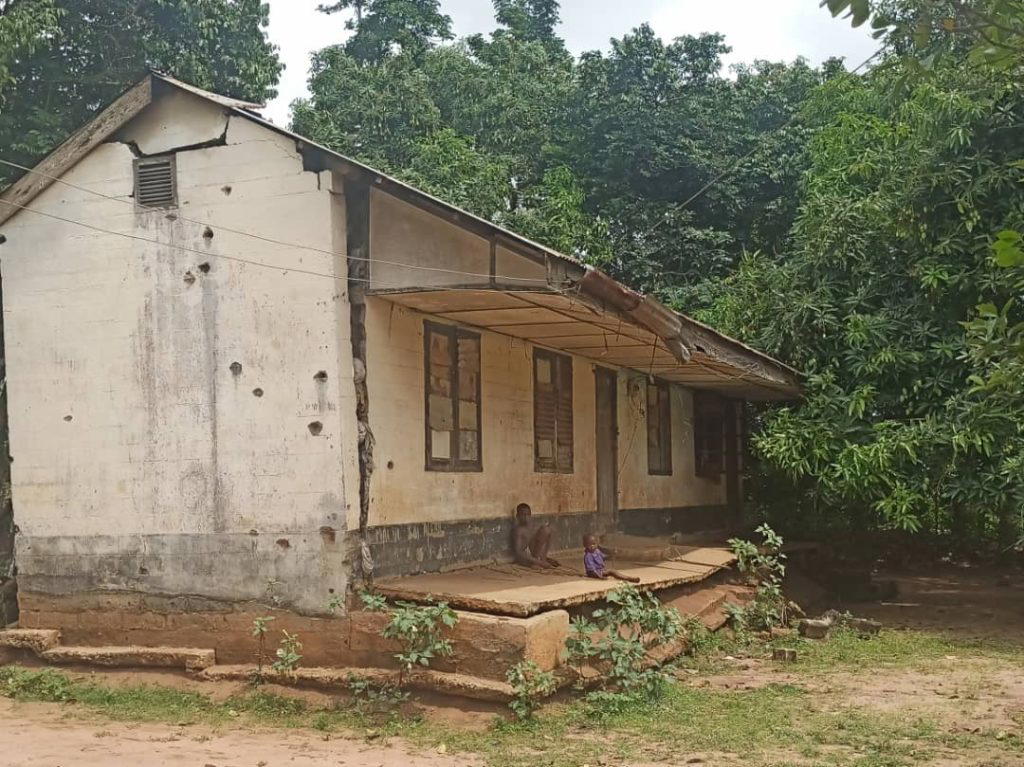
What used to be a refuge for the rejected has deteriorated into a haunting portrait of neglect. Crumbling buildings, collapsed wards, and broken infrastructure now define a place that once symbolized healing and compassion. The colonial-era hospital structures which once served as referral centre, have all but given way to decay, their roofs caving in, walls dangerously cracked, and corridors overtaken by silence and cries of insects.
Even the once-revered Chapel of Hope, where legendary gospel musician Harcourt White once sang, now stands roofless and abandoned—reduced to a relic beside two lonely graves. For the inmates—many of whom have been medically treated but remain socially exiled—the colony has become both refuge and prison.
Leprosy, cause and transmission mode
According to experts, leprosy is a bacterial infection that affects the skin, peripheral nerves, eyes and respiratory tract. It can cause patches of pale or discoloured skin, loss of sensation (numbness) and permanent disabilities. Leprosy is not directly hereditary or genetic, but some people may have a genetic predisposition to the disease. Early diagnosis and treatment can prevent severe disabilities and deformities.
Dr Godswill Ogbonnaya, a Community Medicine Physician at the Federal Medical Centre, Umuahia (FMC), said transmission occurs through droplets from the nose and mouth of an untreated infected person, adding that infection requires prolonged, close, and repeated contact with a patient.
A life of rejection and survival
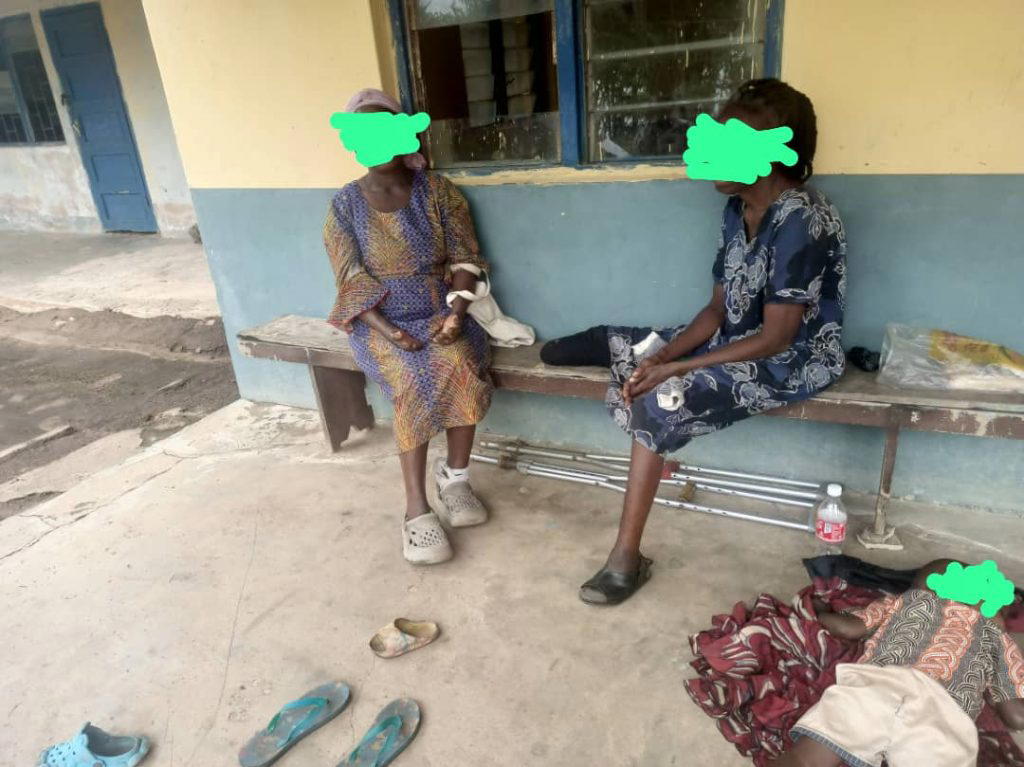
Behind the dilapidated walls at Uzuakoli leprosy colony live about 30 inmates and scores of their children and grandchildren —forgotten citizens battling not just the scars of the disease, but the deeper wounds of stigma and abandonment. Many cannot return home. Some were deserted by spouses. Others were rejected by their communities long after being declared free of the disease. However, in the face of such rejection, they have built a fragile community among themselves—finding love, marrying, raising children, and even welcoming grandchildren within the confines of the colony.
Yet, their resilience contrasts sharply with the harshness of their reality.
Their homes—barely habitable—resemble detention facilities or holding centres more than shelters for human beings. Leaky roofs drip through the night. Walls with frightening cracks, while darkness engulfs the settlement at sunset due to lack of electricity. Despite all these, life still goes on.
Healed but not accepted by society
The Administrative Secretary of the colony, Pastor Akindele Victor Olusegun, painted a grim picture of abandonment and appealed for urgent intervention.
“After treatment, they are healed. The only thing you see is deformity,” he said. “But society refuses to accept them. That is why many remain here.”
According to him, patients undergo treatment—often for about a year—supported in the past by the German Leprosy and TB Relief Association, which provided free drugs for leprosy and tuberculosis. However, support dwindled after foreign partners withdrew, reportedly due to the false belief that leprosy had been eradicated in Nigeria.
“Once discharged, they are on their own,” he explained. The Methodist Church provides accommodation as a humanitarian service, but feeding and survival depend largely on charity and support from the Welfare Department of the church.
Children of uncertainty
Perhaps most heartbreaking is the fate of the children born into the colony—innocent victims of circumstance.
With no functional public school nearby, many are forced into costly private education their parents can barely afford. The nearest public secondary school requires daily transport expenses many families simply cannot sustain. Abia State currently runs free education from primary to Junior secondary school but the colony is in an isolated environment. Free transport for students from the colony could make the difference. “These children deserve a future. Government should place them on scholarships”, Pastor Olusegun said.
Living in darkness and want
Basic amenities are either broken or nonexistent. The colony’s transformer has long collapsed, leaving residents in perpetual darkness. Access to clean water is a daily struggle, with inmates trekking long distances to fetch water because a borehole donated to them by a philanthropist cannot be powered by the small generator available.
Collapsing homes for the inmates
Healthcare needs persist too. Though cured, many inmates still require routine medication and treatment for lingering wounds—expenses they struggle to meet.
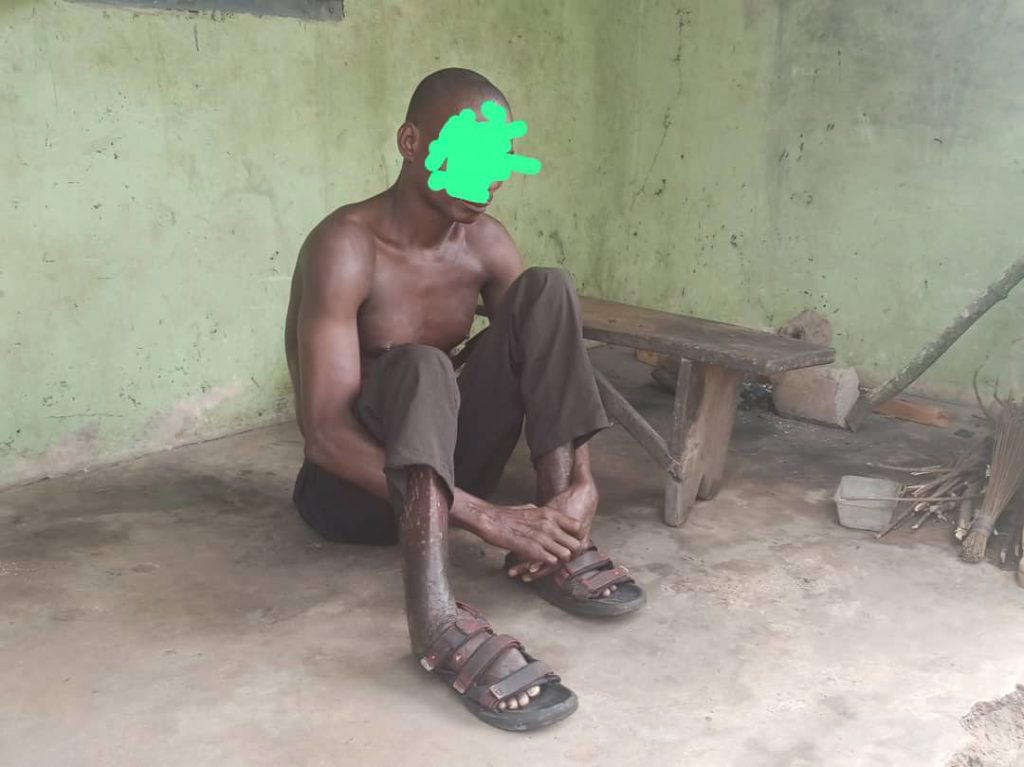
“They go to farm just to survive. Imagine people without fingers, without toes, some with artificial limbs, still going to farm”, Pastor Olusegun queried.
Factories gone silent
Once, the colony thrived with activity.
It housed functional workshops—factories that produced artificial limbs and wheelchairs, providing both livelihood and dignity to inmates. Today, those facilities are abandoned and in ruins.
“Our greatest need is to revive these factories. We also need a skills acquisition centre so they can learn trades instead of relying solely on farming”, Olusegun said.
A cry for help
Beyond infrastructure, the needs of the inmates are urgent and human: food, shelter, dignity. The cleric called for government intervention—monthly stipends for inmates, solar power installation, improved access roads, and the rebuilding of critical structures, especially the Chapel of Hope.
“We are not asking for luxury,” he said quietly. “We are asking for a chance to live as human beings.”
Corroborating the Secretary’s account, the Director of the Centre, Very Rev. Nnaemeka Ajike, said the Uzuakoli Leprosy Colony was jointly established by the Methodist Church Nigeria and foreign partners to provide care and rehabilitation for persons afflicted with leprosy at a time they were heavily stigmatised and socially excluded.
According to him, victims were once treated as outcasts and denied basic human dignity, necessitating the creation of a dedicated settlement where they could receive treatment and live with some measure of acceptance.
However, he lamented that the partnership with foreign donors collapsed following what he described as “misinformation” that leprosy had been eradicated in Nigeria. This, he said, led to the withdrawal of support and the gradual decline of the facility.
“There is no partnership anymore. Our foreign partners withdrew long before I came. We have written over 30 letters to Germany, the Netherlands and others, inviting them to come and verify the situation, but there has been no response,” he regretted.
Ajike insisted that leprosy remains prevalent, citing an estimated 2,000 cases in Abia State alone. Dr Ogbonna, however differed with the Colony Director on the statistics about leprosy patients in Abia, saying there are fewer than 25 cases in the state. “It’s not true that there are 2000 cases of leprosy in Abia”, the physician said.
Experts say that although leprosy has not been totally eradicated, Nigeria has achieved the World Health Organisation (WHO), leprosy elimination target of a prevalence below 1 case per 10,000 population
Meanwhile, the Rev. Ajike recounted recent cases of patients abandoned by their families and forced to seek refuge at the colony.
“Early April, one man came here with only the clothes on him after being chased away by his community. His wife left with the children. We had to beg other inmates to clothe him. Just days ago, two more cases from same parents arrived under similar circumstances,” he added.
The Rev. Ajike decried the stigmatisation of people cured of leprosy and called for a societal change of attitude towards them. “Once they return home, they are rejected. Nobody wants to associate with them,” he said.
Ajike further disclosed that repeated appeals to government authorities for intervention on the sorry state of things at the Colony have yielded no results. He described the colony’s hospital as dilapidated, with no electricity supply and inadequate medical infrastructure.
“We have written to the government and even visited Government House, but nothing has come out of it. At night, the place is in total darkness,” he lamented.
“The inmates survive on occasional donations. As we speak, they have just two bags of rice and one and half bags of beans to share,” he noted.
Beyond welfare challenges, Rev. Ajike also stressed the need to revive moribund vocational facilities within the colony, including artificial limb, wheelchair, bakery, water and printing factories, which previously provided skills and livelihoods for inmates. “We don’t need handouts; we need empowerment,” he emphasised.
On social life within the colony, he said inmates who desire to, are encouraged to marry among themselves, but regretted that some families impose financial conditions before granting consent, thereby frustrating such unions.
“In one case, a family demanded N200,000 before approving a marriage. These are people who can barely feed themselves. It is inhuman,” he retorted.
The missionary called on families to show compassion and support rather than exploit vulnerable individuals.
Ajike also acknowledged the burden on the Methodist Church, which largely sustains the facility despite limited resources. “It is not easy on the church. Whatever support comes is based on reports we send. But this is not just a church responsibility; these are members of our society,” he said.
He urged wealthy individuals and stakeholders to intervene, stressing that reliance on foreign aid is neither sustainable nor sufficient.
“Our people should come and make an impact. These inmates are our brothers and sisters. Supporting them is a collective responsibility. We went to solicit aid from one of the prominent personalities in Abia but his PA dribbled us at his gate. Such attitude is not fair’, he added.
Inmates recount ordeals
Conducting our Correspondent round the colony, Pastor Olusegun pointed at one of the inmates who was already heading to the farm, despite her condition. The Pastor’s voice carried a mix of admiration and pain.
“That woman has one artificial leg and no fingers, yet she is going to farm,” he said quietly. “Most of them are like that. They have no choice. Hunger pushes them to the farm because we don’t have enough food here.”
For many inmates, farming is no longer a choice — it is survival. Mrs Chinwe (not full name) 41, sat with visible pain etched across her face, fresh wounds lining her knee. Originally from Ibeku in Umuahia North, she has spent the last 15 years in the colony — not by choice, but by rejection.
Diagnosed with leprosy in 2008, Chinwe said her return home after treatment was blocked by her own community.
“Our traditional ruler told my father to chase me away so I would not ‘infect’ others,” she recalled. “I had nowhere else to go. So, I had to come back here “.
She stayed back and however, found love in the same place she was abandoned. Her husband, also an inmate from Mbano in Imo State, shares her struggles. Together, they are raising five children inside the colony.
But survival comes at a cost.
“I farm because that’s the only way we can eat,” she said, pointing to her injured knee. “I kneel to work because one of my legs was amputated. That’s how I got this wound.” Her plea is simple but urgent: a chance to live with dignity.
“We need skills, not just farming. Government can build a skills acquisition centre for us. If we must farm, then give us fertiliser and support. Even this artificial leg I’m using is worn out.”
She paused, then added quietly:
“Please don’t forget us. We vote during elections. We are still part of this society.”
Her story is not isolated.
At 54, Mary (not complete name), has known life in the colony for nearly three decades. Widowed and now a grandmother, she balances farming with selling second-hand clothes just to stay afloat.
“I came here in 1996. My husband died after amputation,” she said. “Now I take care of my grandchildren. Farming is hard, but I have no option.” If given even a small capital, Mary says she would gladly leave the farm behind.
“I can trade and survive. I just need help.”
For 62-year-old Victoria, the story is the same — years of quiet endurance. Married within the colony, she has raised five children under conditions she describes as “pure struggle.” Her husband from Rivers State is also a fellow inmate.
“My husband has gone to the bush to fetch firewood to sell,” she said. “We live on charity. We need help.”
Among them are also younger, and more recent victims — reminders that leprosy is far from gone. Those who live on the wrong assumption of total eradication of the infectious disease are certainly on a risky voyage.
One of the young inmates, a university graduate who requested anonymity, once worked in a microfinance bank in Rivers State. Today, he tills the soil alongside others as a means of survival at the colony.
“I didn’t know what was wrong with me,” he said. “Hospitals couldn’t diagnose it. I went to herbalists. One told me to hang my legs over fire , that smokes from it would cure me. In one of the days, my feet peeled off. And I was rushed to another herbalist at Ngwa. It was there I was diagnosed with leprosy and referred to this centre.”
Eventually treated, he now lives in the colony, hoping to rebuild his life.
“I found my wife here. We are planning to settle. She was here looking after her late mother when I proposed to her. Very soon we will consummate our marriage. I’m planning to return to the city after our marriage and if I get a teaching job, I will leave farming.”
However, not everyone sees a way out.
Another inmate from Nunya, in Isuikwuato, has lived in the colony since 1989. Though treated, he still battles recurring wounds. His wife, also afflicted, left and is now in another leprosy centre in Enugu State.
“I just want to go home and build a small house,” he said. “I need help to start again.”
But for others like Mr Innocent from Mbano in Imo State, returning home is no longer an option.
“Stigma is too much,” he said, clutching his shovel on his way to the farm. “This is my home now. All we ask is for government to make life easier and affordable for us here.”
New cases continue to arrive
Mr Uwadiegwu, 41, came from Alayi in Bende, just three months ago. His condition has already deteriorated severely, with doctors recommending amputation. His wife has left with their children.
“I have nothing left,” he agonised weakly. “I just need help. He said he was eeking a living from sand excavation before he was eventually diagnosed with leprosy after years of treating other wrongly suspected ailments.
Another newcomer, Nnamdi, 52, from Orlu in Imo State, spent three years moving from one herbalist to another, treating what he thought was an ordinary leg ulcer commonly known as ‘achaele’ in Igbo parlance. By the time he discovered it was leprosy, the damage was severe — and so was the rejection.
Fresh inmate from Orlu in Imo State
“People avoided me. Even in village meetings, no one would sit near me,” he said. “My wife also left with the children.”
It was a chance encounter with a passenger he carried as a commercial motorcyclist that changed his story.
“The passenger saw my wound and told me the truth. He told me that the wound on my leg was leprosy not ‘achaele’. That’s how I came here.”
Across the colony, the stories are hauntingly similar — rejection, pain, and voices of resilient folks longing for dignity and new hope. Behind every scar is a human being — not just battling a disease, but fighting to be seen, accepted, and given a chance to live again.
We intend to convert colony into infectious disease hospital – Abia govt
Responding, Abia State Commissioner for Health, Prof. Ogbonnaya Enoch, acknowledged receiving complaints about the deteriorating condition of the Uzuakoli Leprosy Colony, assuring that government is not unmindful of the situation.
According to him, the Ministry had already conducted independent assessments of the facility even before formal complaints were lodged.
“Upon receiving the reports — in fact, even before then — I led a team on a fact-finding visit to the colony. I have personally been there twice. What we saw reflected years of neglect and the unfortunate state of the facility,” he said.
Following the visits, the Commissioner disclosed that proposals had been submitted to the state government to reposition the centre into a modern infectious disease hospital.
“The plan is to transform the facility into an infectious disease hospital. However, this will be implemented in phases”, he said.
He noted that similar projects are already underway in other parts of the state, including an infectious disease unit at Amachara Specialist Hospital and another proposed facility in Aba.
“We are currently handling multiple healthcare projects across the state. The one at Uzuakoli will come up subsequently after ongoing projects in Amachara and Aba are completed,” he added.
Prof. Enoch emphasised that the government remains committed to improving healthcare infrastructure, arguing that the present backlog is a result of years of accumulated neglect.
“It is not a case of abandonment. The state is doing a lot in the health sector. If previous administrations had made similar interventions, the burden would not be this overwhelming,” he said.
The Commissioner assured that the Uzuakoli facility remains part of the government’s long-term healthcare development plan.
Forgotten but not broken
Despite all odds, in the face of abandonment, the inmates of Uzuakoli leprosy colony have chosen resilience over despair. They have built families where society offered rejection. They have found a community where the world turned its back. But resilience alone cannot rebuild collapsing infrastructure at the Colony or fill empty stomachs. Without urgent intervention, the Uzuakoli Leprosy Colony risks fading completely—not just as a place, but as a symbol of a society that once cared, and now looks away.
The post Neglected and Isolated: The untold story of Uzuakoli leprosy colony inmates appeared first on Vanguard News.

 Punch Nigeria
 Vanguard Nigeria