

By Johnbosco Agbakwuru
THE Trade Union of Nigeria, TUC, on Thursday raised the alarm that the price of Premium Motor Spirit may climb to about N2,000 per litre if urgent measures are not taken to cushion the impact of rising global crude prices and the depreciating naira.
Consequently, TUC has called on the Federal Government to immediately deploy 60 percent of excess crude oil revenue above the 2026 budget benchmark to subsidise crude feedstock supplies to the Dangote Refinery and other modular refineries, a move it says will slash pump prices of petrol, diesel, and jet fuel within two weeks
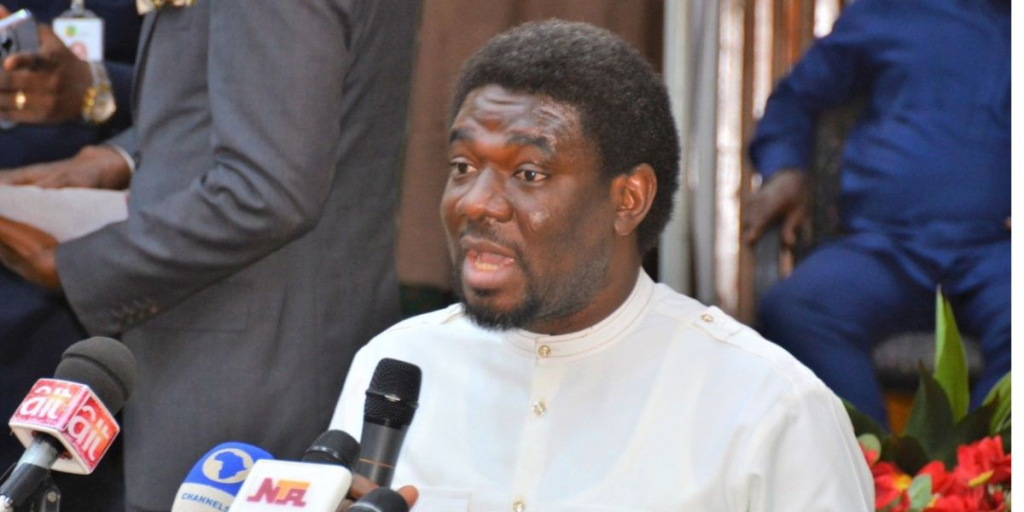
Briefing journalists in Abuja on the state of the nation as it affects workers, the TUC President, Comrade Festus Osifo, said Nigerians were already experiencing severe hardship as the cost of petrol continued to surge across the country.
He said: “Today, comrades, we are seeing that the cost of petrol is edging towards N2,000 per litre depending on the part of the country that you are. Nigerian workers are already passing through excruciating pain as we speak.”
Osifo added that the increase in petrol price was already triggering a ripple effect across the economy.
“The same way it is affecting transportation, it is also affecting manufacturing. The cost of diesel has also gone northward, meaning that the cost of production has increased. When production costs rise, the final price of goods on the shelves will also skyrocket,” he said.
Osifo warned that if the trend continues, the country’s declining inflation rate could reverse.
“If this continues unchecked, the inflation that we are currently celebrating as going downwards will reverse and start moving up again,” he stated.
Osifo outlined the proposal as an urgent intervention to cushion Nigerian workers from excruciating pain caused by petrol prices edging towards ₦2,000 per litre in some parts of the country
He explained that the 2026 Appropriation Act pegged the crude oil price benchmark at $64.85 per barrel, adding that with current international crude prices hovering around $100 per barrel due to the ongoing Middle East conflict and the blockade of the Strait of Hormuz, the government is earning an excess of approximately $35.15 per barrel.
“Take at least 60 percent of that excess fund—about $20 per barrel—and use it to subsidise the crude that is being supplied to Dangote Refineries and all modular refineries that predominantly produce AGO (diesel),” Osifo stated.
The TUC boss argued that subsidising crude feedstock at the production level, rather than finished products, eliminates the risk of diversion and abuse that plagued the previous fuel subsidy regime
“When you subsidise crude, it doesn’t have the ability to be abused because you are subsidising production directly. I can assure you that in the next one to two weeks, the price of PMS, AGO, and jet fuel will go down immediately,” he declared.
Osifo noted that while the government’s plan to deploy more CNG buses is commendable, the lack of adequate CNG infrastructure along major highways renders it a long-term solution that does not address the immediate crisis facing workers who cannot find fuel or CNG stations along routes like Kaduna–Ibadan.
The TUC said it would dispatch a formal letter to the Office of the Secretary to the Government of the Federation (OSGF), addressed to President Bola Tinubu, urging immediate implementation before the next federation account distribution
On insecurity, Osifo condemned the deteriorating security situation, describing recent massacres as appalling and unacceptable.
He specifically referenced the recent attack in Angwa Rukuba, Plateau State, where tens of Nigerians were slaughtered while celebrating, marking yet another “death too many” in a cycle of violence that has persisted since 2010.
“It is really sad to see Nigerians being killed like chickens. It’s not becoming a norm that when people are killed, we release a statement, leave the situation, and the next day it continues,” Osifo lamented.
He called for the provision of modern warfare technology for the military to fight the insurgency.
While thanking the Chief of Defence Staff, service chiefs, the Inspector-General of Police, the National Security Advisor, and all officers and men of the Armed Forces, Police, and DSS for their sacrifices, the TUC charged the political class to provide state-of-the-art equipment and modern technology to confront terrorists decisively.
Osifo drew a sharp contrast with global standards, noting how the United States deployed nearly 100 jets to rescue a single colonel attacked in Iran, underscoring that Nigerian lives should matter equally.
“It is a country that is secure that you start thinking about development. If a country is not secure, it is not favourable to build roads, hospitals, or schools,” he said, urging the government to prioritise security funding above all else.
He said: “Today, comrades, we are seeing that the cost of petrol is edging towards N2,000 per litre depending on the part of the country that you are. Nigerian workers are already passing through excruciating pain as we speak.”
Osifo added that the increase in petrol price was already triggering a ripple effect across the economy.
“The same way it is affecting transportation, it is also affecting manufacturing. The cost of diesel has also gone northward, meaning that the cost of production has increased. When production costs rise, the final price of goods on the shelves will also skyrocket,” he said.
Osifo warned that if the trend continues, the country’s declining inflation rate could reverse.
“If this continues unchecked, the inflation that we are currently celebrating as going downwards will reverse and start moving up again,” he stated.
To address the situation, TUC urged the Federal Government to deploy part of the excess revenue generated from higher-than-benchmarked crude oil prices to subsidise crude supplied to local refineries.
Osifo noted that the 2024 budget benchmarked crude oil at $64.85 per barrel, meaning any price above that level generates excess revenue shared by the three tiers of government.
He said a portion of such excess funds should be channelled towards reducing feedstock costs for local refineries.
“If crude is selling for about $100 per barrel and the budget benchmark is $64.85, the difference should be partly used to subsidise crude supplied to local refineries. If government takes about 60 per cent of that difference to support production, we will see an immediate reduction in fuel prices,” he said.
According to him, such an approach would be more transparent than the former fuel subsidy regime.
“When you subsidise crude supply directly to refineries, it cannot be abused because you are subsidising production. It will immediately bring down the price of PMS, diesel and jet fuel, possibly within one or two weeks,” Osifo added.
The labour leader also blamed the high cost of petroleum products on the continued depreciation of the naira.
He argued that the exchange rate was a major determinant of domestic fuel prices. “If our naira today was below N1,000 to a dollar, Nigerians would be buying petrol for less than N1,000 per litre. The more the naira devalues, the more our purchasing power erodes,” he said.
Osifo insisted that the naira should ideally trade between N800 and N900 per dollar to ease inflationary pressure.
“Our naira does not have any business being more than N1,000 to the dollar. If it falls to around N900, we will see the impact immediately on petrol prices and the cost of goods and services,” he added.
The TUC president further criticised the slow pace of Compressed Natural Gas infrastructure development, warning that the current plan to deploy CNG buses may not deliver immediate relief.
“Today, the biggest challenge with CNG is infrastructure. If you are travelling from one city to another and your vehicle runs out of CNG, where will you refill? It is like driving an electric car without charging stations,” he said.
He urged the government to accelerate investment in CNG refuelling stations nationwide.
Refineries functional before shutdown.
Osifo also expressed concern over the country’s worsening security situation, describing the continued killings of Nigerians as unacceptable. He said the government must prioritise security before pursuing other development goals.
“It is really appalling to see Nigerians being killed like chickens. This is one death too many. A country must first be secure before it can begin to talk about development, roads, hospitals and schools,” he said.
While commending the efforts of the armed forces and other security agencies, he urged the government to provide them with modern equipment and technology to combat insurgency.
“A lot of our security personnel are in forests chasing terrorists and leaving their families behind so that Nigerians can sleep. We must provide them with the right tools and technology to defeat these terrorists once and for all,” Osifo stated.
The TUC urged the government to prioritise budgetary allocation for cutting-edge surveillance drones, intelligence-gathering tools, and modern combat equipment, noting that Nigerian troops are currently “fighting blind” due to equipment shortages.
“It is a country that is secure that you start thinking about development—how to build roads, hospitals, and schools. If a country is not secure, it is not favourable to do anything else,” he emphasised.
On workers’ welfare, Osifo said labour unions were pushing for measures to cushion the hardship facing Nigerians, including possible wage adjustments.
He noted that while the next national minimum wage review is scheduled for 2027, discussions were ongoing on possible earlier interventions.
“Anything that must be done to cushion the hardship Nigerians are passing through is welcome. We are already factoring these economic realities into collective bargaining agreements in the private sector,” he said.
On the government’s push for Compressed Natural Gas (CNG) buses as an alternative to petrol, Osifo acknowledged the long-term potential but criticised the slow deployment of CNG infrastructure. He questioned the practicality of CNG vehicles when filling stations are absent along major highways such as the Kaba–Ibadan corridor.
“You are driving an electric car, and there is no electricity to charge it. You park your car. The same way, you are driving petrol and all fuel stations are shut down. It becomes a challenge,” he observed
Osifo announced that the TUC would dispatch a formal letter to the Office of the Secretary to the Government of the Federation, addressed to President Bola Tinubu, to formally present the 60 percent excess revenue proposal and push for its immediate adoption.
“This is the way forward. We think government can implement this immediately. Nigerians are feeling the pain right in our pockets,” he concluded.
The post Petrol may reach N2,000/litre without urgent action, TUC warns appeared first on Vanguard News.