

By Emmanuel Elebeke
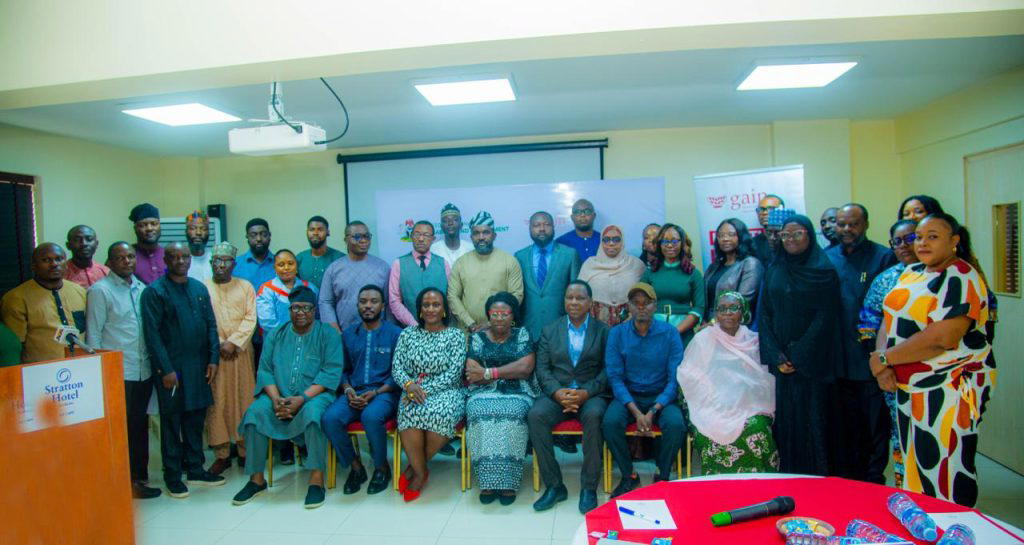
ABUJA — Government agencies, employers, workers’ organisations and development partners have reaffirmed their commitment to strengthening chemical safety and occupational health standards in Nigeria during a national consultation on a proposed International Labour Organization (ILO) instrument on chemical hazards in the workplace.
The consultation, convened by the Global Alliance for Improved Nutrition (GAIN) in collaboration with the Occupational Safety and Health Department of the Federal Ministry of Labour and Employment, brought together representatives of government, organised labour, employers and development partners to review existing national measures on chemical safety and contribute to the development of an international framework for managing workplace chemical hazards.
Speaking at the event, Mrs. Owie Florence Ogheneovo, Director of the Occupational Safety and Health Department, highlighted the Federal Government’s commitment to promoting safe, healthy and productive workplaces across all sectors of the economy.
She noted that chemical safety remains a critical component of occupational health and safety because of the risks chemical hazards pose to workers, public health and the environment.
According to her, the consultation provides an opportunity to assess existing laws, policies and workplace practices, identify gaps and strengthen Nigeria’s chemical safety framework in line with international labour standards and global best practices.
Representatives of organised labour called for stronger protections against chemical exposure in workplaces.
Speaking on behalf of the President of the Nigeria Labour Congress (NLC), Comrade Joe Ajaero, Comrade Ibrahim Walama described workplace safety as a fundamental right and advocated robust and enforceable standards on chemical hazards.
He noted that while progress has been made in addressing biological hazards, workers in factories, farms, construction sites and other workplaces continue to face risks associated with chemical exposure.
Walama stressed that economic growth should not come at the expense of workers’ health and wellbeing.
Similarly, the Trade Union Congress (TUC) of Nigeria, represented by Ibrahim Manpa, supported the adoption of a binding international convention complemented by practical recommendations and effective enforcement mechanisms.
The TUC maintained that workplace safety requires regular health surveillance, preventive measures and appropriate compliance mechanisms.
From the employers’ side, the Nigeria Employers’ Consultative Association (NECA), represented by Femi Paul on behalf of its Director-General and Chief Executive, Adewale-Smatt Oyerinde, expressed support for stronger worker protections while emphasising the need for practical and implementable standards.
NECA noted that healthy workers are essential to productivity, enterprise performance and sustainable economic growth. The association also highlighted the need to consider the realities facing developing economies and small and medium-sized enterprises (SMEs).
It called for stronger labour inspection systems, improved occupational health services and enhanced institutional and technical capacity to support compliance.
The consultation also examined emerging evidence on the relationship between nutrition and chemical exposure.
Speaking on behalf of GAIN, Joyce Akpaka, Head of Policy, Advocacy and Communications, said workers’ nutritional status can influence their vulnerability to chemical hazards, while exposure to harmful chemicals may affect nutrient absorption and overall health.
She advocated integrated approaches that combine occupational safety, workplace nutrition and employee wellbeing, noting that a healthy workforce is vital to productivity, economic growth and sustainable development.
Participants agreed that preventing workplace injuries and illnesses is more effective than responding after harm occurs. They also reaffirmed the importance of the ILO’s tripartite approach, which brings together governments, employers and workers in the development and implementation of international labour standards.
The consultation ended with a collective commitment to support the development of a modern, inclusive and effective international framework on chemical hazards that protects workers, promotes responsible business practices and strengthens occupational safety and health systems in Nigeria and beyond.
The national consultation forms part of preparations for future discussions at the International Labour Conference on the development of an international labour standard addressing chemical hazards in the world of work. Participants said the process would help ensure that national perspectives and stakeholder experiences contribute meaningfully to global efforts aimed at improving workplace safety and health.
The post Stakeholders seek stronger chemical safety standards to protect Nigerian workers appeared first on Vanguard News.

 Vanguard Nigeria
 Punch Nigeria
 Daily Post
 This Day
 Mwananchi
 The Guardian Football
 Premium TImes
 Complete Sports
 Business Day