

Nigeria’s New Tax Reforms: What Businesses, Youths, and Policymakers Need to Know
Nigeria’s ongoing tax reforms are reshaping the country’s fiscal framework at a critical time for the economy. With declining oil revenues, rising public debt, and growing demand for public services, the federal government has placed tax reform at the center of its economic recovery strategy.
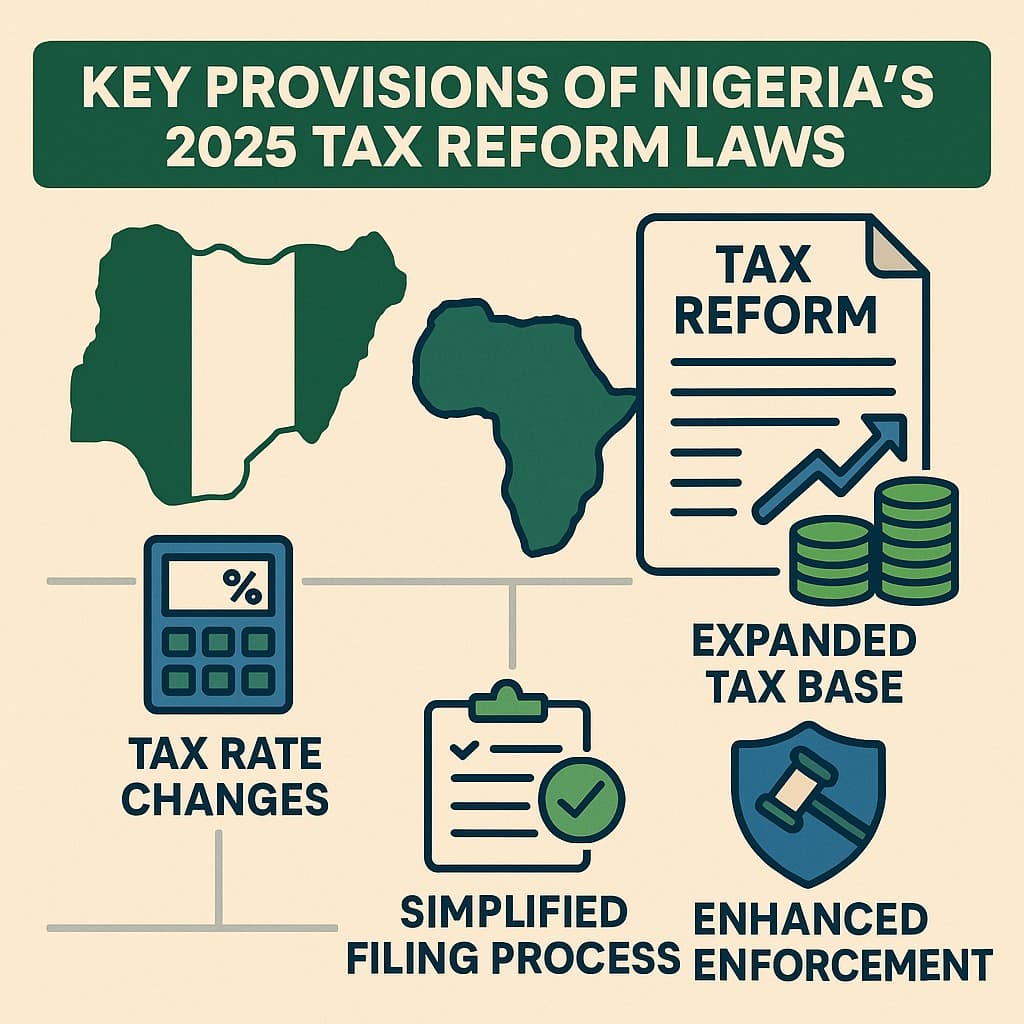
The new tax laws aim to expand the tax base, improve compliance, and modernize revenue collection. While officials describe the reforms as necessary for national development, their impact is being felt differently across businesses, young Nigerians, and policymakers.

Nigeria’s tax-to-GDP ratio remains one of the lowest in Africa, estimated at between 6 and 8 percent, compared to the continental average of over 16 percent. This gap has limited government spending on infrastructure, healthcare, education, and security.
Economic analysts say the reforms are designed to address:
-
Heavy dependence on oil revenue
-
Widespread tax evasion and informality
-
Inefficiencies in tax administration
According to a public finance expert:
“Nigeria’s challenge is not high tax rates, but low compliance. The reforms are meant to fix that imbalance and strengthen domestic revenue.”
For formal businesses, particularly medium and large enterprises, the reforms promise:
-
Improved digital tax filing and payment systems
-
Greater transparency and reduced human interference
-
Clearer rules around incentives and exemptions
Tax professionals argue that a predictable tax environment can improve investor confidence.
“Businesses thrive when tax rules are clear and consistent. Transparency reduces uncertainty and operational risk,” a Lagos-based tax consultant said.
Small and informal enterprises face a tougher adjustment:
-
Increased documentation requirements
-
Limited access to tax education
-
Higher compliance costs
Without targeted support, critics warn that small businesses may struggle to keep up with enforcement measures.
With over 60 percent of Nigeria’s population under the age of 25, young people are central to the success of the tax reforms—especially as more youths earn income through digital platforms, freelancing, and entrepreneurship.
Potential Benefits
-
Formal recognition of the digital and gig economy
-
Improved public services funded by tax revenue
-
Stronger economic foundations for future employment
An advocate once stated:
“When tax revenue is managed properly, young people benefit through better schools, healthcare, and digital infrastructure. The key issue is trust.”
Key Concerns
-
Risk of taxing low-income gig workers too aggressively
-
Limited awareness of tax obligations among young earners
-
Fear that taxation may grow faster than job creation
Experts stress that public education and gradual implementation are essential to prevent backlash.

Implications for policymakers.
For policymakers, the reforms represent both a fiscal opportunity and a political challenge.
Policy Advantages
-
Increased domestic revenue reduces reliance on borrowing
-
Stronger fiscal independence from oil price volatility
-
Improved credibility with international investors and lenders
Government officials have framed the reforms as a step toward economic self-reliance.
“A fair and efficient tax system is the foundation of sustainable national development,” a senior government official stated.
Risks to Manage
-
Public resistance if reforms are seen as punitive
-
Weak coordination between federal and state tax authorities
-
Failure to link tax revenue to visible development outcomes
Pros and Cons of Nigeria’s Tax Reforms
Pros
-
Higher and more stable government revenue
-
Modernized and digitized tax administration
-
Fairer distribution of tax responsibility
-
Reduced dependence on oil income
Cons
-
Increased burden on small businesses
-
Risk of over-taxing vulnerable earners
-
Implementation and capacity challenges
-
Persistent public skepticism
Political Narrative and Public Trust
The government’s political narrative emphasizes shared responsibility, fairness, and nation-building. Officials argue that a functional tax system is essential for funding development and strengthening Nigeria’s economy.
However, analysts caution that public trust will determine success.
“Tax systems work when citizens see a clear connection between what they pay and what they receive,” an economist said. “Trust is the real currency of compliance.”

in conclusion, Nigeria’s tax reforms mark a turning point in the country’s economic policy. For businesses, they offer structure alongside new pressures. For youths, they promise long-term gains with short-term uncertainty. For policymakers, they test governance credibility and accountability.
As implementation continues, transparency, communication, and visible results will determine whether the reforms achieve their intended goals or deepen public resistance.


