

Tinubu’s Visit to Türkiye: What It Means for Nigeria’s Economy
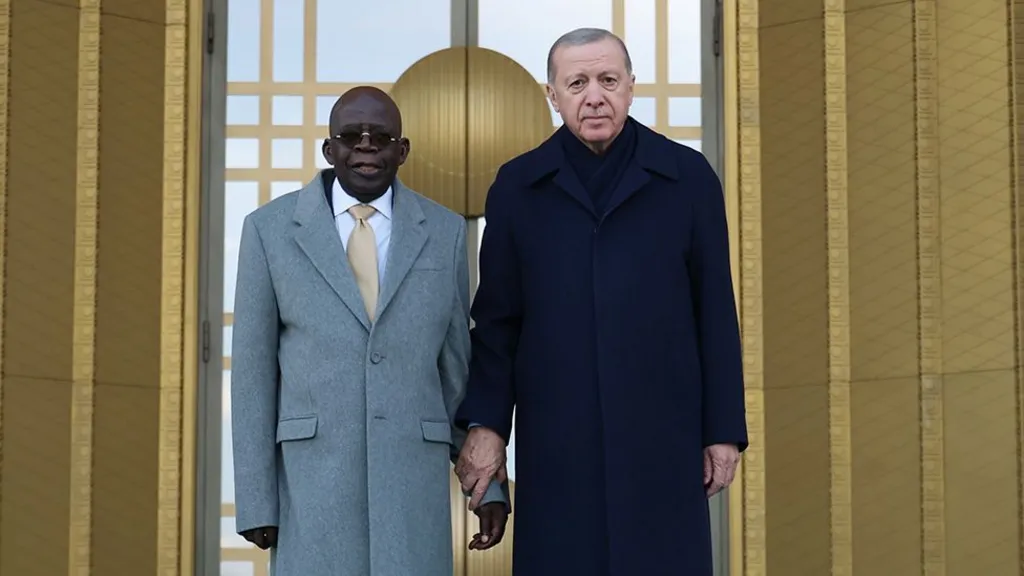
President Bola Ahmed Tinubu’s state visit to Türkiye marks a calculated push to lock in new partners for Nigeria’s economic recovery, security priorities, and foreign policy agenda. It is more than a courtesy trip; it is an attempt to turn long‑standing diplomatic ties with Ankara into concrete trade, investment, and defence outcomes that can be felt at home.
Tinubu travelled to Ankara on an official state visit at the invitation of President Recep Tayyip Erdoğan, with a clear brief to upgrade Nigeria–Türkiye relations to a deeper, more strategic level. Both sides placed security, trade and investment, education, aviation, defence production, and social development on the table, signalling that this engagement cuts across multiple sectors rather than a single project.
The visit also allowed both leaders to align positions on regional and global issues, including counter‑terrorism, stability in West Africa, and cooperation in multilateral organisations. By doing so, Nigeria is seeking to add Türkiye to its list of reliable partners at a time when it needs external support to stabilise its economy and confront security threats.
One of the central outcomes of the trip is the creation and strengthening of joint structures to manage economic and trade cooperation, including a high‑level committee to address barriers and encourage investment flows. Alongside this, Nigeria and Türkiye signed multiple agreements and memoranda of understanding touching on higher education, defence collaboration, scientific research, energy, technical assistance, media, diaspora matters, halal certification, and military cooperation.
Defence is a standout area because Türkiye has built considerable capacity in drones, armoured vehicles, and other military technologies, while Nigeria is looking for partners to boost local production and better equip its forces. On the economic side, the state visit was paired with business engagements aimed at showcasing Nigeria’s reform agenda and convincing Turkish investors that sectors such as infrastructure, construction, manufacturing, and consumer goods offer attractive long‑term opportunities.
Current trade between the two countries is estimated at around 2 billion dollars, but both governments and business leaders now speak of pushing that figure sharply higher in the medium term. Projections from the Türkiye–Nigeria business community suggest that with the new agreements, bilateral trade could cross 10 billion dollars over time, while Nigerian officials have floated a nearer‑term ambition of exceeding 5 billion dollars.
In practical terms, this would likely mean more Turkish companies setting up or expanding operations in Nigeria in areas such as construction materials, textiles, household goods, agriculture‑related industries, and light manufacturing. If those investments are structured properly, they could translate into more factories on Nigerian soil, additional jobs, technology transfer, and stronger local supply chains instead of a one‑way flow of finished imports.

For Nigeria, the potential economic benefit lies in using this partnership to support diversification away from oil, something every administration has promised but struggled to achieve. Increased Turkish interest in manufacturing, services, and infrastructure could help expand the non‑oil export base, raise government revenues, and gradually reduce over‑reliance on crude oil earnings.
Security cooperation is another economic issue dressed as a defence topic: better equipment, training, and technology from partners like Türkiye can, over time, contribute to reducing insecurity that currently disrupts farming, mining, transportation, and rural commerce. Improved aviation links, educational exchanges, and social sector partnerships could also encourage more tourism, business travel, and professional collaboration, supporting airlines, hotels, and service industries in Nigeria.
If the promises made in Ankara are followed through, the visit could position Nigeria as Türkiye’s key entry point into West Africa and a preferred African partner for trade and investment. That status would give Abuja additional leverage as it negotiates future deals and seeks capital, technology, and markets for Nigerian businesses.

Despite the positive optics, Nigerians are rightly cautious; the country has a long history of high‑profile state visits and MoU signings that never moved beyond photo opportunities. The biggest question is whether the new committees and working groups created by this visit will remove real obstacles—such as bureaucracy, insecurity, policy inconsistency, and infrastructure gaps—that often discourage investors.
Another concern is how increased trade will affect local producers if imports from Türkiye grow faster than genuine investment in Nigerian factories and value‑addition. Policymakers will need to design and enforce rules that protect local industries, encourage joint ventures, and ensure that Nigerians are not reduced to consumers in a relationship that is framed as a partnership.
Ultimately, Tinubu’s trip to Türkiye will be judged not by the number of agreements signed but by the tangible results: new plants, new jobs, better security, stronger exports, and a more resilient economy. If those outcomes begin to materialise, this state visit could be remembered as a key moment in reshaping Nigeria’s economic diplomacy and expanding the country’s room to manoeuvre in a tough global environment.


